Being told you are partly at fault for an accident in California can feel like the end of your claim. It is not. California operates under one of the most plaintiff-friendly fault systems in the country — a rule called pure comparative negligence that allows you to recover meaningful compensation even when you share responsibility for what happened. Understanding exactly what that means for your specific situation, how fault percentages get assigned and challenged, and what your recovery actually looks like is the difference between walking away with nothing and recovering what you are legally entitled to.
Partly at Fault for Accident in California: The Direct Answer
California’s direct answer to being partly at fault is straightforward: your compensation is reduced by your fault percentage — not eliminated. California follows pure comparative negligence, adopted by the California Supreme Court in Li v. Yellow Cab Co. (1975) 13 Cal.3d 804. Under this rule, every party involved in an accident — including the injured plaintiff — can be assigned a percentage of fault, and the injured party’s recoverable damages are reduced proportionally by their share.
There is no threshold that bars recovery in California. A plaintiff found 30% at fault can recover 70% of their damages. A plaintiff found 60% at fault can recover 40%. A plaintiff found 90% at fault can still recover 10% of proven damages. The question California courts and insurance adjusters ask is never “did you contribute to this accident?” — it is “how much did you contribute, and what does that mean for the dollar amount you recover?” According to California Civil Code Section 1714, the negligence standard applies to all parties — and no single party’s negligence automatically excuses another’s.
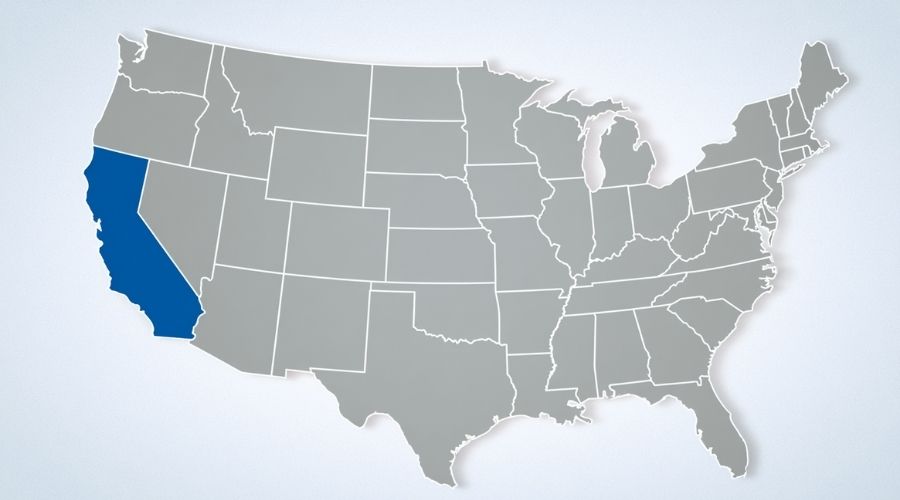
How California Compares to Other States
Understanding what makes California’s system distinctive requires knowing what most other states do instead. The majority of US states use modified comparative negligence — a system that cuts off recovery entirely once a plaintiff reaches a specific fault threshold, typically 50% or 51%. In those states, a plaintiff found 51% at fault recovers absolutely nothing, regardless of how serious their injuries are or how much the defendant contributed.
Four states — Alabama, Maryland, North Carolina, and Virginia — still use contributory negligence, the old common law rule that bars recovery completely if the plaintiff bears any fault at all, even 1%. California abolished contributory negligence in 1975 specifically because of how unjust that outcome is in real accidents where fault is genuinely shared. The pure comparative negligence rule California adopted replaced it with a proportional system that treats recovery as a matter of degree rather than an all-or-nothing determination. That distinction has real financial consequences — especially in the significant portion of accidents where both drivers contributed in some way to what happened.
The Math — What Different Fault Percentages Actually Mean
The calculation itself is simple once you understand the structure. Your total damages — medical expenses, lost wages, property damage, and pain and suffering — are established first. That total is then multiplied by the percentage of fault assigned to the other party to arrive at your net recovery.
If your total damages are $150,000 and you are found 10% at fault, you recover $135,000. If you are found 25% at fault, you recover $112,500. If you are found 40% at fault, you recover $90,000. If you are found 50% at fault — a genuinely equal responsibility scenario — you recover $75,000. The proportional reduction continues at any fault level, with no cutoff. On a $200,000 claim, the difference between being assigned 15% fault and 35% fault is $40,000 in your pocket. That gap is why fault assignments are worth challenging rather than accepting, and why every percentage point the insurer can shift toward you represents a direct financial gain for them.
For a more detailed breakdown of how comparative fault interacts with different damage categories and multi-defendant cases, see our complete guide on how comparative negligence in California affects your payout.
How Fault Percentages Are Actually Assigned
Fault percentages do not arrive from a neutral calculation — they are negotiated, contested, and ultimately determined either by agreement between the parties or by a jury. Before any trial is involved, fault is a negotiating position: the insurer proposes a percentage based on their reading of the evidence, your attorney challenges it with contrary evidence, and the negotiation continues until both sides reach an agreement or the case proceeds to formal dispute resolution.
At trial, the jury uses CACI No. 405 — the Judicial Council of California Civil Jury Instructions on comparative fault — to assign each party a percentage of responsibility. Jurors are instructed to consider each party’s conduct, weigh it against what a reasonable person would have done in the same circumstances, and assign percentages that add up to 100% across all parties. The jury’s fault assignment then controls the damages calculation. Most cases settle before reaching this point, but the jury’s likely assignment is the reference point that both sides use in negotiating a pretrial settlement — which is why evidence matters so much in shaping fault expectations before any trial takes place.

What Insurers Do to Inflate Your Fault Percentage
The financial incentive to overstate your fault is direct and substantial. Every additional percentage point the insurer successfully assigns to you reduces their payout by the same proportion on a proportional basis. On a serious injury claim, inflating the plaintiff’s fault from 10% to 30% saves the insurer tens of thousands of dollars. This incentive is built into how adjusters are evaluated, and the tactics they use to exploit it are predictable.
In car accident cases, adjusters commonly argue that you were following too closely, traveling at an unsafe speed, distracted by your phone, in an unsafe lane position, or failed to take evasive action that a reasonable driver would have taken. In bicycle and pedestrian cases, they point to crossing behavior, helmet use, and lighting conditions. In slip and fall cases, they argue distracted walking or inappropriate footwear. In motorcycle cases, they invoke lane splitting or gear choices — even when the conduct was entirely legal. Our post on 5 tactics insurance adjusters use to lower your settlement covers these strategies in detail and how to counter each one effectively.
The critical point is that an adjuster’s fault assignment is a negotiating position — not a legal determination. It can be challenged with evidence. A recorded statement you gave in the first days after the accident, before your full injury picture was clear, can lock in facts that support an inflated fault assignment. This is one of the most concrete reasons why speaking with an attorney before giving any statement to an insurer is so important. For more on handling that first call, see our guide on how to talk to an insurance adjuster after an accident.
How to Challenge an Inflated Fault Assignment
Every fault argument an insurer makes has an evidentiary foundation — and every evidentiary foundation can be challenged with contrary evidence. The most effective challenges are fact-specific and document-driven rather than general disagreements with the insurer’s conclusion.
Dashcam footage from your vehicle or a nearby vehicle captures the actual sequence of events rather than one party’s reconstruction of them. Black box data from modern vehicles records speed, braking force, and throttle position in the seconds before impact — objective data that contradicts adjuster assumptions about what you were doing. Witness statements from people who observed the accident from a neutral position carry more weight than either driver’s account. Accident reconstruction experts analyze road markings, vehicle damage patterns, debris fields, and physical evidence to establish what the evidence actually shows about speed, position, and the sequence of events — without relying on either party’s self-serving account.
Vehicle Code violations by the other party are among the most powerful fault evidence available. When the other driver violated a specific statute and that violation directly caused the crash, it constitutes negligence per se under California Evidence Code Section 669 — meaning the violation itself establishes negligence without requiring additional proof of careless conduct. Identifying those violations requires knowing what the applicable Vehicle Code sections say and how they apply to the specific facts of the crash — which is one of the areas where experienced legal representation produces the most concrete value.
Partial Fault Across Different Case Types
Pure comparative negligence applies across all California personal injury cases, but the specific fault arguments used by the defense vary by case type. In rear-end collisions, fault arguments against the rear driver focus on following distance and speed, while fault arguments against the lead driver involve sudden braking, non-functioning brake lights, and unsafe lane changes. Our post on who is at fault in a rear-end collision in California covers these distinctions in detail.
In pedestrian cases, crossing behavior and signal compliance are the primary fault arguments against the pedestrian — subject to the “take you as they find you” standard that requires drivers to exercise reasonable care even when a pedestrian acted imperfectly. In slip and fall cases, distracted walking and footwear arguments are standard defense positions that require specific factual rebuttal. In motorcycle cases, lane splitting legality under CVC 21658.1 and helmet compliance under CVC 27803 are the first things an insurer examines. Each of these case types has its own fault-argument playbook — and its own evidence-based rebuttal strategy that an attorney with specific experience in that case category brings most effectively.

Is It Worth Pursuing a Claim When You Were Partly at Fault?
The honest answer is: almost always yes, when injuries are involved. The question to ask is not “was I perfect in this accident?” — it is “does the other party’s negligence represent a meaningful share of what caused my injury?” In California, even a 30% share of fault assigned to the other party on a $100,000 injury claim produces a $30,000 recovery. A 70% share produces $70,000. The proportional system means that partial blame from the other party translates directly into proportional compensation — and the insurer’s incentive is to minimize that percentage, not to assess it neutrally.
The free consultation with a personal injury attorney costs nothing and gives you a specific answer about whether your particular fault situation leaves meaningful recovery value on the table. In most cases involving any injury at all, the answer is yes — and the financial difference between accepting the insurer’s initial fault assessment and challenging it with evidence frequently exceeds the cost of legal representation by a significant margin. For more on how case value is calculated across different damage categories, see our guide on what your personal injury case is worth in California.
Frequently Asked Questions
Can I still recover compensation if I was partly at fault for an accident in California?
How does partial fault affect my settlement amount in California?
What is pure comparative negligence and how is California different from other states?
Can insurance companies inflate my fault percentage to reduce what they pay?
Does partial fault affect all types of personal injury cases in California?
Told You Were Partly at Fault? Get a Second Opinion Before You Accept Anything
An insurer’s fault assignment is a negotiating position — not a legal verdict. Oracle Law Firm | Accident & Injury Attorneys evaluates comparative fault situations throughout Southern California at no cost and with no obligation. We will tell you directly whether the fault percentage being applied to your claim is supported by the evidence — and what challenging it could mean for your recovery. Contact our team today before you respond to any offer.