An uninsured driver hit me in the Inland Empire — what now? It is one of the most common and most urgent questions we hear after a crash, and the immediate assumption that follows it — that the claim is worthless — is wrong. That assumption is wrong, and acting on it costs money that California law was designed to protect. About one in five California drivers is uninsured according to the Insurance Research Council — and the Inland Empire’s rate across Riverside and San Bernardino counties is higher than the state average. The combination of high-volume freeway corridors, significant logistics and agricultural workforce populations, and income levels that make insurance a discretionary expense makes uninsured driver collisions a daily reality on the 215, 91, 60, and 15. This guide covers every option available to you right now.
Uninsured Driver Hit Me in the Inland Empire: Your Options at a Glance
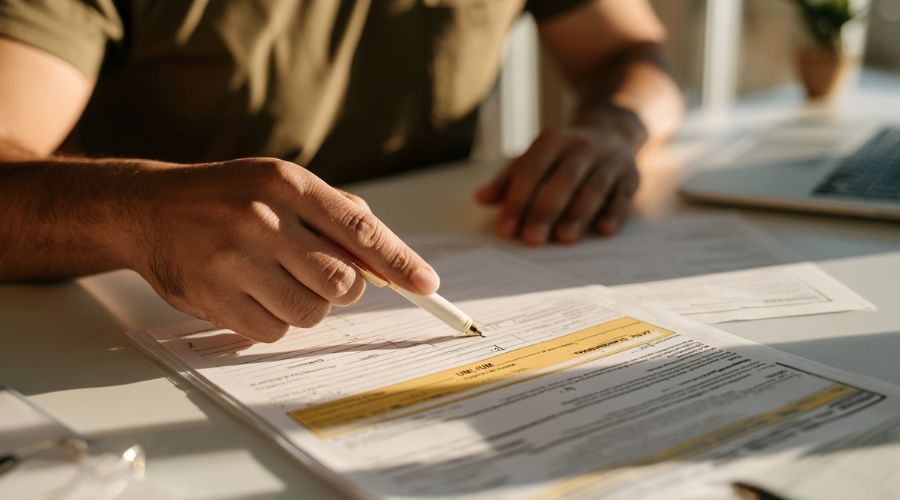
California law gives Inland Empire drivers four distinct pathways to compensation after being hit by an uninsured driver. The right combination depends on your own policy, the at-fault driver’s assets, and the specific circumstances of the crash. None of these pathways closes automatically — each requires specific steps taken within specific timeframes. Missing those steps costs recovery that would otherwise be available.
The four options are: your own uninsured motorist coverage under California Insurance Code Section 11580.2, a direct civil lawsuit against the uninsured driver, third-party liability claims against any other party who contributed to the crash, and your own MedPay or collision coverage as a bridge for immediate bills. According to the California Department of Insurance, California law requires every auto insurer to offer UM/UIM coverage to every policyholder — meaning if you never specifically rejected it in writing, there is a strong likelihood you have it and may not know the limits. For a broader explanation of how UM coverage works in hit-and-run and uninsured driver scenarios, see our post on hit-and-run accidents in Orange County: what are your rights.
Option 1 — Your Uninsured Motorist Coverage
Your own uninsured motorist coverage is almost always the most practical and most financially significant recovery pathway after an uninsured driver collision in the Inland Empire. Under California Insurance Code Section 11580.2, your insurer steps into the role of the at-fault driver’s nonexistent insurer and pays your medical expenses, lost wages, and pain and suffering up to your UM policy limits. The at-fault driver’s lack of insurance does not reduce what you can recover — it simply changes which company you recover it from.
To trigger UM coverage, you must notify your insurer promptly that the at-fault driver is uninsured and that you intend to make a UM claim. Pull your policy declarations page immediately and check your UM/UIM limits — the number that appears there is the ceiling on what your insurer will pay under this pathway. Under SB 1107, effective January 1, 2025, California’s minimum liability coverage increased to $30,000 per person/$60,000 per accident — but UM coverage limits are a separate figure on your own policy and may be higher or lower depending on what you selected. A serious injury claim that exceeds your UM limits moves to the UIM stack if the at-fault driver had any coverage at all, or may require a direct lawsuit against the driver for the excess.
One critical thing to understand: a UM claim against your own insurer is not automatically paid. Your insurer has the same financial interest in minimizing the payout as any other insurer — they evaluate the claim, dispute injuries, and negotiate the settlement just as an opposing insurer would. The difference is that California’s bad faith doctrine under Insurance Code Section 790.03 gives you stronger protections against unreasonable handling by your own insurer than against a third-party carrier. Do not give a recorded statement to your own insurer before consulting an attorney. Do not accept a UM settlement offer without having the claim fully evaluated first. For more on what insurers do to minimize payouts and how to counter it, see our guide on 5 tactics insurance adjusters use to lower your settlement.
Option 2 — Suing the Uninsured Driver Directly
You can file a personal injury lawsuit directly against an uninsured driver in California civil court — the same lawsuit you would file against any at-fault driver. Winning that lawsuit produces a civil judgment that is collectible against the defendant’s wages, bank accounts, and property. The two-year statute of limitations under CCP Section 335.1 applies to this lawsuit just as it applies to any personal injury claim.
The practical challenge is collectibility. Many uninsured drivers in the Inland Empire lack the assets to make a civil judgment financially meaningful — no significant property, limited income available for garnishment, and the ability to file for bankruptcy protection that can discharge the judgment entirely. A judgment you cannot collect does not pay your medical bills or replace your lost wages. Before recommending whether a direct lawsuit is worth pursuing — either alongside a UM claim or instead of one — an experienced attorney investigates the driver’s financial situation: whether they own property, what income sources they have, whether they are employed by someone else whose commercial insurance may apply, and whether collectibility is realistic given those facts.
In some situations, the direct lawsuit becomes significantly more valuable than the UM claim — particularly when the uninsured driver was operating a vehicle owned by someone else who has insurance, when the driver was on the clock for an employer at the time of the crash, or when the driver has collectible assets that are not immediately obvious. An attorney who investigates the full picture before advising you on which pathway to pursue produces better outcomes than one who defaults to the UM claim without exploring the alternatives.
Option 3 — Third-Party Liability You May Not Have Considered
The uninsured driver is not always the only party responsible for your crash. Several third-party liability sources are worth investigating in any Inland Empire uninsured driver case — and they are sources that most people never consider because the focus naturally falls on the driver who hit them.
If the uninsured driver was operating someone else’s vehicle with the owner’s permission, the vehicle owner’s insurance may cover the crash under California’s permissive use doctrine — even though the driver had no insurance of their own. If the driver was on duty for an employer at the time of the crash, the employer’s commercial auto insurance may apply under respondeat superior liability — covering the crash even though the driver’s personal policy does not exist. If the crash was caused or contributed to by a road defect on a Caltrans or county-maintained highway — a pothole, inadequate signage, or failed traffic signal — the government entity maintaining that road may bear partial liability for a crash the uninsured driver caused but did not cause alone. Government entity claims carry the six-month Government Tort Claim deadline, making early identification of any infrastructure contribution critical. For more on identifying all applicable insurance layers and liability sources, see our post on dealing with an accident caused by an uninsured driver.
Option 4 — MedPay and Collision Coverage as Immediate Bridges
While the UM claim, direct lawsuit, and third-party investigation are being pursued, two additional coverages on your own policy can provide immediate financial relief without waiting for those processes to resolve. Medical payments coverage — MedPay — pays your medical bills up to its limit regardless of fault and regardless of whether the at-fault driver has insurance. It is first-party coverage that pays quickly and does not require a fault determination. If you have MedPay on your policy, filing that claim immediately after the crash provides a financial bridge while the larger UM claim is being resolved.
Collision coverage pays for your vehicle repair or replacement regardless of fault — again, without waiting for the uninsured driver’s liability to be established. If you have collision coverage, using it to address your vehicle damage immediately while the UM claim addresses your injuries is the most practical approach. Your insurer may pursue subrogation against the uninsured driver for the collision payment, but that is your insurer’s process to manage — not something that affects your ability to use the coverage. Both MedPay and collision coverage are subject to their own deductibles and limits, which your declarations page will show.
The IE Corridors Where Uninsured Driver Crashes Happen Most
The Inland Empire’s freeway network — the I-215, I-15, SR-91, SR-60, and I-10 — generates some of Southern California’s highest uninsured driver crash volumes. The 215 corridor through Riverside and San Bernardino, in particular, carries an enormous volume of logistics and warehouse commuter traffic where cost-cutting on insurance is common. The 91 freeway connecting Riverside to Orange County produces peak-hour multi-vehicle crashes in which discovering one of the drivers is uninsured is a regular occurrence rather than a rare event.
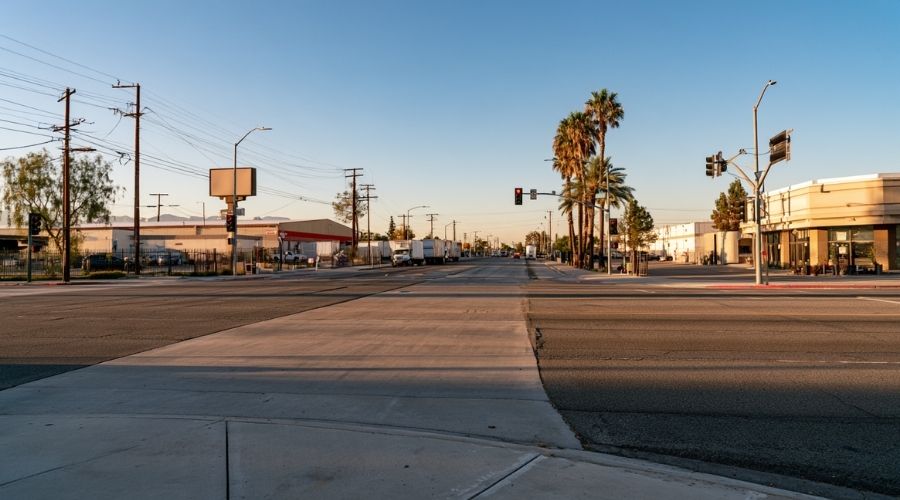
Surface street collisions in Riverside, San Bernardino, Ontario, Fontana, and Moreno Valley also generate significant uninsured driver claim volumes — particularly at high-traffic intersections where local commercial and residential traffic intersects with commuter routes. In these surface street collisions, the investigation into third-party liability — road defects, signal timing failures, employer liability for on-duty drivers — is often more productive than on high-speed freeway corridors where speed and following distance dominate the liability analysis. For more on how fault is established in the most common crash types on these corridors, see our post on who is at fault in a rear-end collision in California.
What to Do at the Scene and in the First 24 Hours
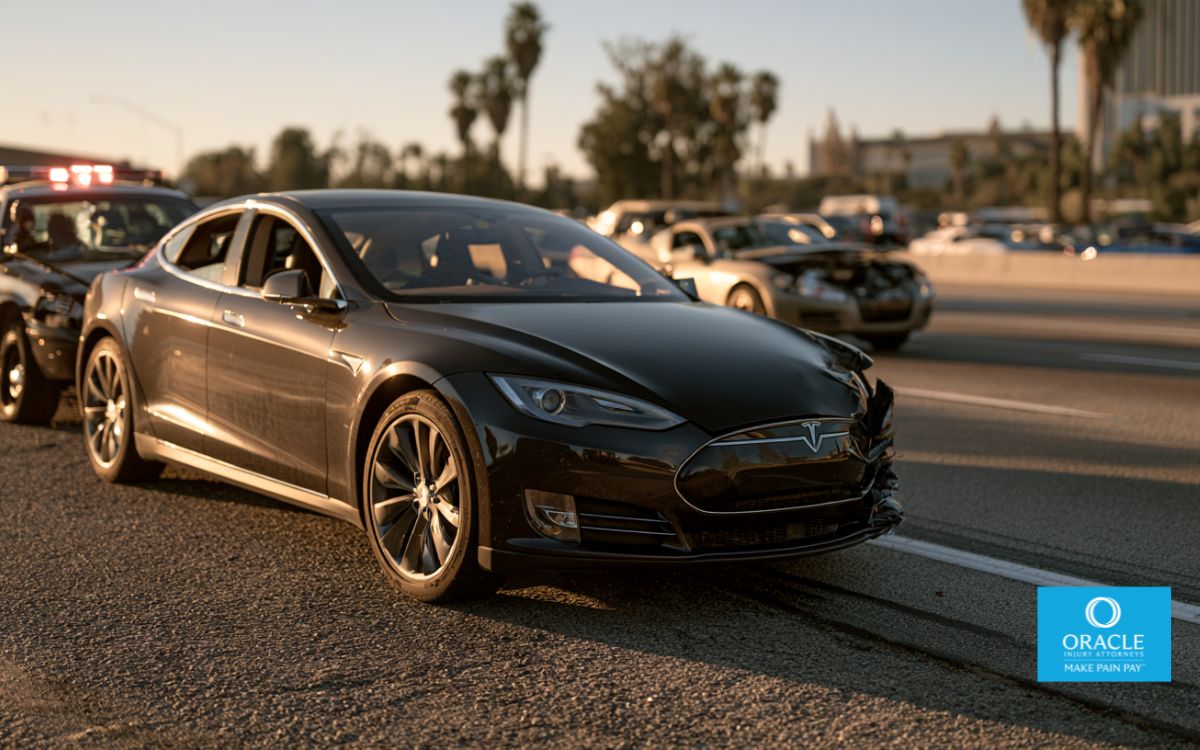
Call 911 and request a police response — a police report is not optional when the at-fault driver is uninsured. The report documents the uninsured status officially, establishes the at-fault driver’s identity, and creates the evidence record that your UM claim and any direct lawsuit will be built on. Do not let the at-fault driver talk you out of calling police with promises to pay out of pocket — those promises are unenforceable and almost never kept.
Photograph everything at the scene: all vehicle damage, the road section and any relevant signage, the license plate of the at-fault vehicle, any visible injuries, and the positions of all vehicles before they are moved. Collect the at-fault driver’s name, address, driver’s license number, and vehicle registration — all of which are needed for both the UM claim and any direct lawsuit. Get contact information from any witnesses before the scene disperses. Seek medical attention the same day, even when injuries seem minor — delayed symptom onset from soft tissue injuries and concussions is well documented and creates the gap that insurers use to challenge injury claims filed weeks later. For a full step-by-step guide to what to do immediately after any California car accident, see our post on how long you have to file a car accident claim in California.

Your Rate Cannot Go Up for Filing a UM Claim
One of the most common reasons Inland Empire drivers hesitate to file a UM claim against their own insurer is the fear that doing so will increase their premiums. California Insurance Code Section 1861.02 prohibits insurers from raising your rates solely because you were the victim of an uninsured driver collision and filed a UM claim. You were not at fault. California law specifically prevents your insurer from treating a UM claim the same way they treat an at-fault accident for rating purposes. This protection is worth knowing before you call your insurer — because some policyholders are made to feel that any claim has rate consequences, and that perception is legally incorrect in a UM scenario. For more on your rights when dealing with your own insurer after an uninsured driver crash, see our post on what to do when the insurance company denies your claim.
Frequently Asked Questions
What do I do if an uninsured driver hit me in the Inland Empire?
Can I file a UM claim if I have uninsured motorist coverage in California?
Can I sue an uninsured driver directly in California?
What if I do not have uninsured motorist coverage in the Inland Empire?
Will my rates go up for filing a UM claim in California?
Hit by an Uninsured Driver in the Inland Empire? Your Options Are Not Gone
An uninsured driver does not end your claim — it changes who you pursue and how. Oracle Law Firm | Accident & Injury Attorneys helps Inland Empire drivers identify every available recovery source after uninsured driver collisions, from UM negotiations to direct lawsuits to third-party liability investigations. No upfront fees, no obligation. Contact our team today before any UM claim deadline passes or any recorded statement is given.