Rear-end collision fault in California is not as automatic as most people assume. The driver in the back is usually the one who ends up paying — but “usually” is doing a lot of work in that sentence. California law starts with a presumption against the rear driver, then immediately allows that presumption to be overturned with the right evidence. If you were rear-ended and are being told it is partly your fault, or if you are the rear driver and believe the front driver caused the crash, understanding how fault actually gets determined is where your case begins.
The Starting Point: The Rear Driver Is Presumed at Fault — But It’s Not Automatic
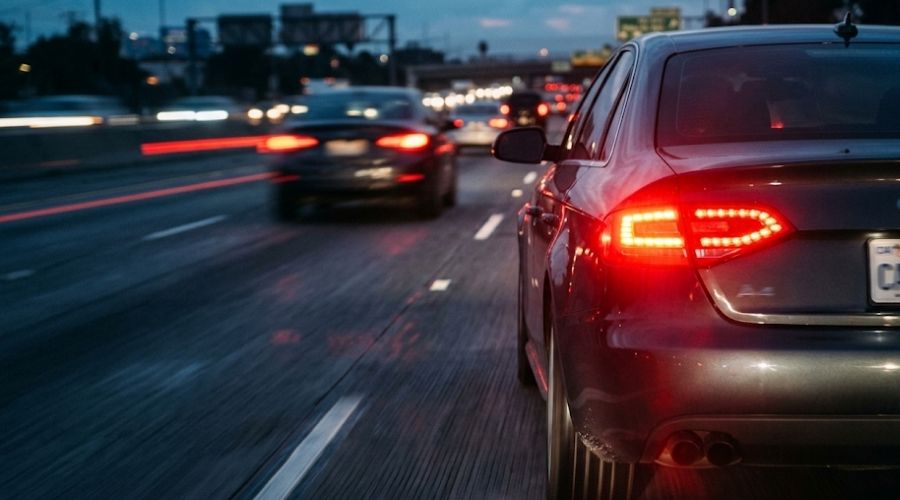
California does not make the rear driver automatically liable. Fault is decided under negligence and the Vehicle Code. What California law does is create a rebuttable presumption — a starting assumption — that the rear driver bears responsibility, based on two specific statutes. Vehicle Code Section 21703 requires drivers to maintain a reasonable and prudent following distance. Vehicle Code Section 22350 — California’s basic speed law — requires drivers to travel at a speed that is safe for conditions. A rear driver who violates either rule and causes a crash is negligent per se.
The word “rebuttable” is the important one. A presumption is not a verdict. It is a starting point that can be challenged and shifted with evidence. California law recognizes situations where the lead driver shares some or all of the blame, and those exceptions matter more than most people realize. Fault determines who pays for your medical bills, lost wages, and vehicle damage. Get it wrong — or let an insurance adjuster frame the story — and you could end up covering costs that someone else should owe. According to the California Legislative Information portal, Vehicle Code 21703 is the primary statute underlying the rear-driver presumption — and Evidence Code Section 669 governs how that presumption can be rebutted at trial.
Rule 1: Sudden, Unnecessary Braking
If the lead driver slammed on the brakes without a legitimate reason — no obstacle, no traffic change, no emergency — they may share fault for the resulting collision. This is particularly true if the sudden stop was intended to cause harm or inconvenience to the following driver. California Vehicle Code Section 22109 prohibits a driver from stopping or decelerating suddenly without first giving an adequate signal to drivers behind them. A violation of this statute is evidence that fault shifts toward the lead driver — not just morally, but legally.
The challenge is proving it. Establishing that a stop was sudden and unnecessary requires more than your word against theirs. Dashcam footage is the most persuasive evidence, since it captures the gap between the lead car’s brake lights and the impact in real time. Witness statements and the pattern of vehicle damage can also help reconstruct whether the lead driver’s deceleration was sudden enough to be unreasonable.
Rule 2: Non-Functioning Brake Lights
Every driver behind a lead vehicle is legally entitled to rely on that vehicle’s brake lights as their primary warning of deceleration. California Vehicle Code Section 24603 requires all vehicles to have properly functioning stop lamps visible from at least 300 feet. If the lead vehicle’s brake lights are not working correctly, the rear driver may not be fully liable — a malfunction is a contributing factor, and the lead driver may share some responsibility.
This exception carries real weight. A rear driver who had no reasonable warning that the car ahead was stopping cannot be held to the same standard as one who had a clear visual signal and ignored it. Establishing a brake light failure requires documenting it immediately after the crash — photographs of the brake light housing, a mechanic’s inspection report, or police documentation of the defect are all useful. If brake light failure is a factor, the vehicle’s manufacturer or a repair shop that recently serviced the brakes may also bear product or professional liability.
Rule 3: Unsafe Lane Changes
When a lead driver cuts into a lane without adequate space — leaving the rear driver no reasonable room or time to react — that maneuver can make the lead driver partially or fully responsible for the resulting collision. California Vehicle Code Section 22107 requires drivers to make lane changes only when it is safe to do so and only after giving an appropriate signal. A lane change that violates this statute is negligence per se.
Our practice routinely shifts 10 to 40 percent of fault back when dashcam or vehicle data recorder evidence exists in cases involving unsafe lane changes. The physical evidence — where the impact occurred on each vehicle, the angle of the damage, and the position of the vehicles when they came to rest — often tells a clearer story than either driver’s account of what happened.
Rule 4: Reversing or Stopping Illegally
A lead driver who reverses unexpectedly in traffic, or who stops in a location where stopping is prohibited — in a travel lane, on a freeway, or at a no-stopping zone — creates a hazard the rear driver was not reasonably expected to anticipate. When a rear-end collision results from one of these maneuvers, fault can shift entirely or substantially to the lead driver.
This exception comes up most often in parking lot crashes, on freeway ramps, and in situations where a driver makes an abrupt decision to stop short of a turn or intersection. The police report’s documentation of where the vehicles came to rest, and whether any traffic violations were cited against the lead driver, is critical evidence in establishing this fault shift.
Rule 5: Chain-Reaction and Multi-Vehicle Crashes
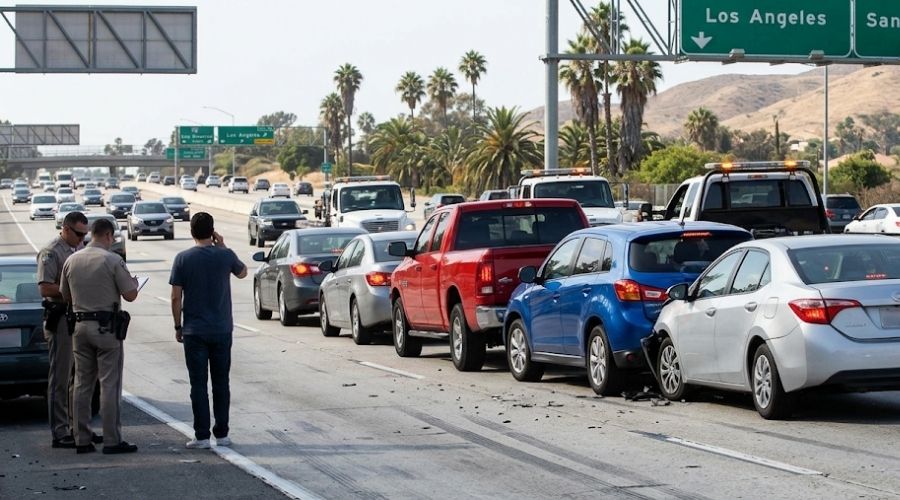
When a rear-end collision involves three or more vehicles, the fault analysis multiplies in complexity. In chain-reaction accidents involving multiple vehicles, determining fault can be more complex — multiple drivers may share the blame depending on their actions leading up to the collision. The driver who caused the initial impact typically bears the greatest share of responsibility, but subsequent drivers in the chain can share liability if they were also following too closely to react in time.
California’s Proposition 51 (Civil Code Section 1431.2) governs how liability is divided among multiple defendants in these cases. For economic damages — medical bills, lost wages, property damage — defendants remain jointly and severally liable, meaning one party can be held for the full amount. For non-economic damages like pain and suffering, each defendant is only responsible for their own proportionate share. In a serious chain-reaction crash, identifying every party’s role — and the insurance coverage behind each one — requires early legal involvement to ensure nothing is missed.
Rule 6: Road Defects and Government Entity Liability
When factors such as large potholes, unexpected debris, inadequate signage, or poorly designed intersections contribute to a rear-end collision, local government agencies may be held liable. A rear driver who hit their brakes suddenly to avoid a pothole and was struck from behind may have a claim against the agency responsible for the road’s maintenance — alongside whatever claim they have against the other driver.
These government entity claims carry a strict six-month deadline for filing a Government Tort Claim — much shorter than the two-year personal injury statute of limitations. If there is any chance that a road condition contributed to your crash, documenting that condition with photographs immediately after the accident and contacting an attorney as soon as possible is essential. Government agencies repair road defects quickly once they become the subject of litigation, which means the evidence window closes fast.
How Comparative Fault Affects What You Recover
Regardless of which side of the crash you were on, California’s pure comparative fault system means your compensation is reduced — not eliminated — by your assigned percentage of fault. Your total payout gets reduced by whatever percentage of responsibility is assigned to you. If a jury finds you 20% at fault, your award drops by 20%. That is not a legal formality — that is real money you may need for ongoing medical care.
Insurance adjusters understand this math well. Assigning an extra 15 to 20 percentage points of fault to the opposing party on a $150,000 claim saves the insurer $22,500 to $30,000. That financial incentive is why adjusters push fault arguments aggressively in rear-end cases, even when the evidence does not fully support them. Challenging those assignments — with dashcam footage, black box data, witness statements, and accident reconstruction — is where experienced legal representation makes its most measurable difference. Our car accident attorneys at Oracle Law Firm handle rear-end collision claims throughout Southern California and know which fault arguments hold up and which do not.
The Evidence That Decides Rear-End Fault Cases
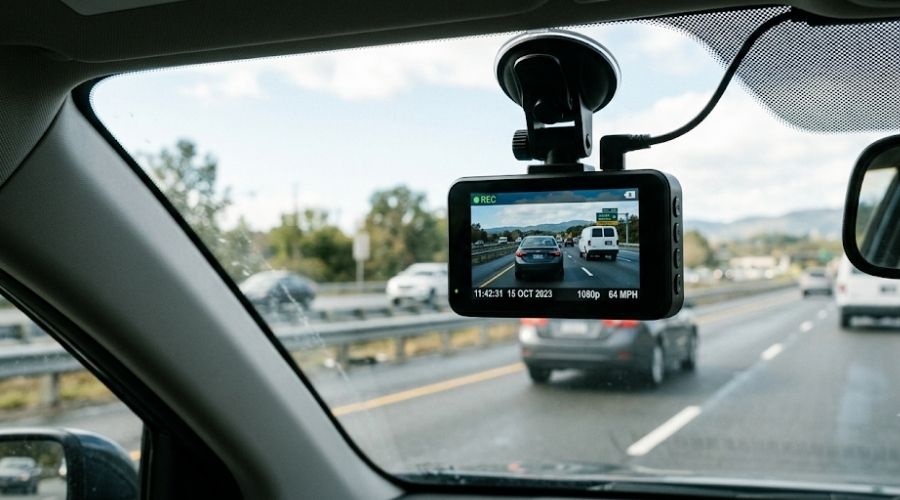
Fault in a rear-end collision is ultimately decided by evidence, not by who was in the front and who was in the back. The most influential pieces in most cases are dashcam footage — which can show the actual gap, the brake light sequence, and the timeline of the impact — and black box or event data recorder information from either vehicle, which captures speed, braking force, and throttle position in the seconds before impact.
Police reports document observable facts at the scene: vehicle positions, debris patterns, skid marks, road conditions, and any citations issued. Witness statements provide independent accounts of what each driver was doing before impact. Vehicle damage patterns — where on each car the contact was made, the angle and severity — help accident reconstruction experts establish the relative speeds and positions of the vehicles. Each of these evidence types is most complete closest to the time of the crash, which is why preserving evidence immediately — and involving an attorney early — changes outcomes.
Frequently Asked Questions
Is the rear driver always at fault in a California rear-end collision?
What does “rebuttable presumption” mean in a rear-end collision case?
What if the front driver’s brake lights were not working?
How does comparative fault affect my rear-end collision settlement?
Can a road defect cause a rear-end collision and shift fault to a government entity?
Being Blamed for a Rear-End Crash? Get the Full Picture First
Fault in a rear-end collision is rarely as settled as the other driver’s insurance company wants you to believe. Oracle Law Firm | Accident & Injury Attorneys handles rear-end collision claims throughout Southern California — no upfront fees, and you only pay if we recover compensation for you. Contact our team today before you accept any fault assignment or settlement offer.