Tesla’s Autopilot and Full Self-Driving (Supervised) are driver-assist systems, not self-driving cars, so the driver is still responsible for watching the road. But Tesla can share the blame when a defect or misleading design contributes to a crash. In 2025, a federal jury found Tesla 33% at fault for a fatal Autopilot crash. If a Tesla hit you, your claim usually starts with the driver’s insurance, and evidence from the car itself can be critical.
The other driver climbed out of their Tesla and said, “It was on Autopilot.” Now you are hurt, your car is wrecked, and you are wondering whether that changes anything. If you are searching for a Tesla Autopilot accident lawyer, you are probably asking the right question: who is actually responsible here?
The short answer is that “the car was driving” does not excuse the driver from responsibility. In California, the person behind the wheel is still expected to pay attention. But that does not always mean the driver is the only one to blame.
Tesla has faced a wave of legal trouble over its driver-assist systems, including a major jury verdict and a California ruling that its marketing misled drivers. This guide explains how liability works, when Tesla may share fault, and what you should do if you were hurt in a crash involving a Tesla on the I-405, the 73, or anywhere in Orange County.
Who Is Liable in a Tesla Autopilot Crash?
In most Tesla Autopilot crashes, the driver is primarily responsible because the system requires constant human supervision. Tesla may also share liability if a defect in the system, its design, or its warnings contributed to the crash. California’s comparative fault rules allow them to share responsibility.
Think of it this way. The driver chose to turn the system on and was required to stay alert and ready to take over. If they were looking at their phone, dozing off, or ignoring warnings, that is their negligence.
At the same time, a company that designs and sells a product can be held responsible when that product is unreasonably dangerous. If the system failed in a way it should not have, or if it encouraged drivers to trust it more than they should, Tesla may share the blame.
California does not force an all-or-nothing answer. Under its comparative fault system, a jury can assign a percentage of responsibility to each party. That is exactly what happened in the most famous Autopilot case to date.
Autopilot and FSD Are Not Self-Driving: Why the Driver Is Still Responsible
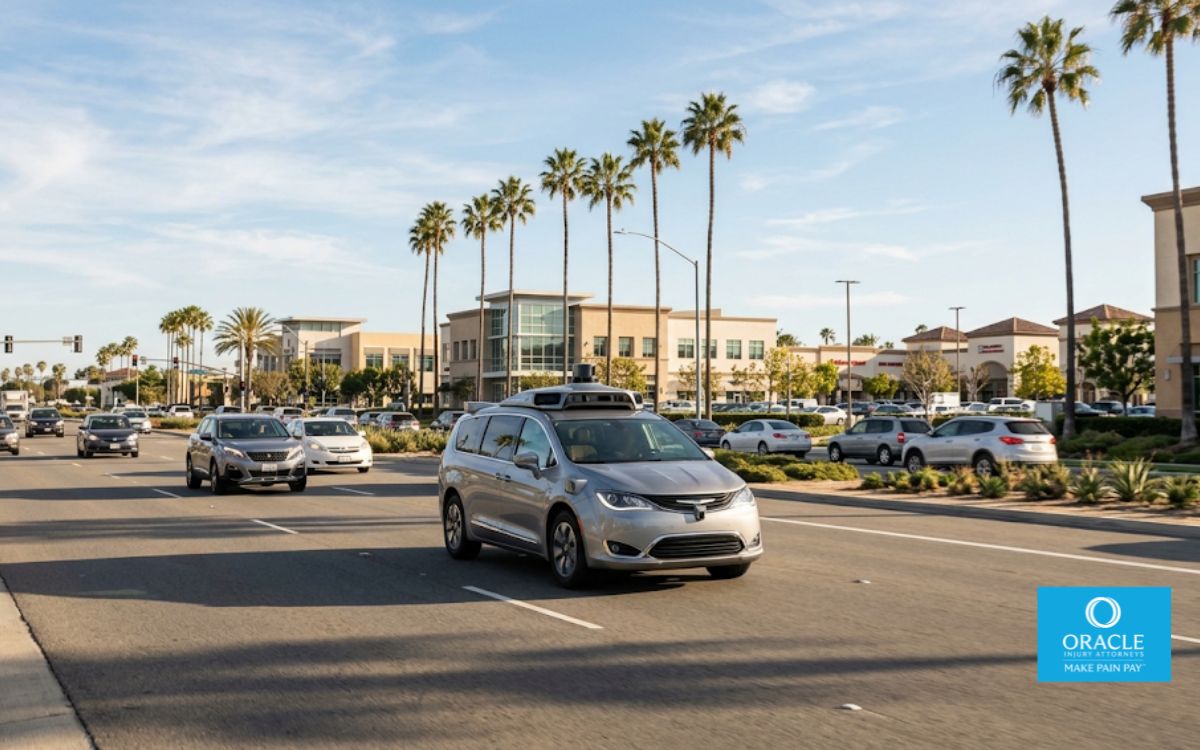
Tesla’s Autopilot and Full Self-Driving (Supervised) are classified as Level 2 driver-assist systems. They can steer, brake, and accelerate, but they require a human driver to supervise at all times. That is different from true driverless robotaxis, where no human is expected to drive.
This difference matters a lot in an injury case. When a fully driverless robotaxi causes a crash, the company running the car is in the driver’s seat, legally speaking. When a Tesla on Autopilot crashes, a human is supposed to be in control.
Tesla’s own instructions tell drivers to keep their hands on the wheel and their eyes on the road. In late 2023, Tesla recalled about two million vehicles in the U.S. to add more driver-attention alerts to Autopilot, following a federal safety investigation. Those warnings make it harder for a distracted driver to claim they did nothing wrong.
So if a Tesla hit you, the starting point is the same as any crash: the driver had a duty to drive safely, and their auto insurance is usually the first source of compensation.
When Tesla Can Share the Blame
Tesla may share responsibility when a defect in its driver-assist system, an unsafe design, or inadequate warnings contributed to a crash. California law on product liability can hold manufacturers responsible for defective products even without proof that anyone was careless, and juries have assigned partial fault to Tesla before.
Product liability in plain English
“Product liability” means a company can be responsible when the product it sold was defective and caused harm. In California, the law generally falls into three types:
- Design defect: the product was built as intended, but the design itself was unreasonably dangerous
- Manufacturing defect: something went wrong in how a specific vehicle or part was made
- Failure to warn: the company did not give adequate warnings or instructions about known risks
California’s official civil jury instructions, published by the Judicial Council, lay out how juries decide these claims. In a driver-assist case, the questions often focus on whether the system should have detected a hazard, whether it should have done more to keep drivers engaged, and whether its limits were clearly explained.
The $243 million verdict
In August 2025, a federal jury in Miami decided Benavides v. Tesla, a case involving a 2019 crash in Florida. A Tesla Model S on Autopilot hit a parked vehicle at about 62 mph while the driver reached for his phone. A 22-year-old woman was killed and her boyfriend was badly injured.
The jury found the driver 67% responsible and Tesla 33% responsible and awarded $243 million, including $200 million in punitive damages. As Claims Journal reported, a federal judge refused to throw out that verdict in February 2026. Tesla has disputed the case, and results in any one case do not predict another.
California’s ruling on Tesla’s marketing
In December 2025, a California administrative law judge found that Tesla’s “Autopilot” and “Full Self-Driving” marketing misled consumers. According to Electrek, Tesla stopped using “Autopilot” in its California marketing and added “(Supervised)” to Full Self-Driving to avoid a license suspension, then filed a lawsuit challenging the ruling, as CNBC also reported.
Why does marketing matter in an injury case? Because if drivers were led to trust a system more than they should, that can support arguments about how the product was designed and presented.
Calling it Autopilot does not make the driver a passenger or the company blameless.
Did a Tesla hit you in Orange County? How Your Claim Works
If a Tesla driver hit you, your claim usually starts with the driver’s auto insurance, just like any car accident claim. If the driver-assist system may have played a role, your attorney can investigate whether Tesla should also be part of the claim, especially when injuries are serious and insurance limits are low.
Orange County has many Teslas on the road, especially around Irvine, Newport Beach, and the commuter corridors on the I-405 and SR-73. Many crashes involving these cars look like ordinary rear-end or lane-change collisions. You may not even know Autopilot was on unless the driver tells you or the police report notes it.
Here is how a typical claim unfolds:
- The driver’s insurance is the primary source of compensation for your injuries and damage
- Your own coverage, including uninsured or underinsured motorist coverage, may help if the driver’s limits are not enough
- A product liability claim against Tesla may be possible if evidence shows the system contributed to the crash
Product claims against a major manufacturer are complex and expensive. They usually make the most sense when injuries are severe. For crashes involving life-changing injuries, our catastrophic injury attorneys can evaluate whether a claim against Tesla is worth pursuing.
The Evidence That Matters in a Tesla Autopilot Accident Case
Tesla vehicles record detailed data, including camera footage and information about whether Autopilot was engaged, the car’s speed, and driver inputs. Federal crash reports, recall records, and witness statements also matter. Because Tesla controls much of this data, an early preservation request is important.
Modern Teslas are rolling data recorders. Depending on the model and settings, the car may store dashcam video, logs of when driver assistance was engaged, steering and braking inputs, and alerts given to the driver. That data can show whether the driver ignored warnings and whether the system behaved as it should have.
Federal regulators also track these crashes. Under NHTSA’s Standing General Order, manufacturers must report many crashes involving Level 2 driver-assist systems. These reports, along with recall history and prior complaints, can help show whether anyone knew about a problem.
The challenge is that we cannot access the data. Tesla stores much of the most useful data, either on the vehicle itself or in its systems. If the car is repaired, sold, or scrapped, evidence can be lost. A lawyer can send a preservation letter quickly and, if needed, use the legal process to obtain it.
The car remembers what the driver forgets. Get that data before it disappears.
If You Were Driving the Tesla
If you were driving a Tesla on Autopilot and crashed, you may still be partly responsible, but that does not end the analysis. If a defect contributed, you may have a claim against Tesla. Your purchase agreement may also include rules about how disputes are resolved, so review it with a lawyer.
California’s comparative fault rule means your share of blame reduces, but does not erase, what you might recover from another responsible party. If another driver also contributed to the crash, they may share responsibility too.
Be careful about what you say after the crash. Insurers and Tesla can use statements like “I wasn’t paying attention” against you. Stick to the facts, get medical care, and talk to an attorney before giving any recorded statement.
As with any California injury claim, timing matters. Most lawsuits must be filed within two years under Code of Civil Procedure section 335.1.
The Bottom Line
A Tesla on Autopilot is still a car with a human driver responsible for it. But when the technology fails or invites misuse, Tesla can share the blame, and juries have said so. The key is preserving the vehicle’s data and understanding every source of compensation.
Whether you were hit near the Spectrum in Irvine, on PCH in Newport Beach, or on the 405 through Costa Mesa, our team can help you sort out who is responsible.
Been in an accident or hurt on the job? You don’t have to navigate insurance companies alone. Oracle Law Firm fights to get you the compensation, control, and clarity you deserve.
Get a Free Consultation or call 888.597.4099.
Disclaimer: This article is for general information only and is not legal advice. Reading it does not create an attorney-client relationship. Every case depends on its own facts, and past results do not guarantee future outcomes. For advice about your situation, speak with a licensed California attorney.
Frequently Asked Questions
Who is at fault if a Tesla on Autopilot hits me?
Usually the driver is primarily responsible, because Autopilot and Full Self-Driving (Supervised) require constant human supervision. Tesla may also share responsibility if a defect, unsafe design, or inadequate warning contributed to the crash. California allows fault to be divided among multiple parties.
Can I sue Tesla after an Autopilot crash?
Possibly. California law on product liability allows claims against manufacturers when a defective product causes harm. These cases are complex and depend heavily on vehicle data and expert analysis, so they are most common when injuries are serious. A lawyer can evaluate whether the evidence supports a claim.
What was the $243 million Tesla Autopilot verdict?
In August 2025, a federal jury in Miami found Tesla 33% responsible for a 2019 Autopilot crash that killed a young woman and injured her boyfriend, awarding $243 million, including punitive damages. A federal judge refused to overturn the verdict in February 2026. Every case is different, and one verdict does not predict another.
Is Tesla Full Self-Driving actually self-driving?
No. Tesla’s Full Self-Driving (Supervised) is a Level 2 driver-assist system that requires the driver to watch the road and be ready to take control. In December 2025, a California judge found Tesla’s prior marketing of Autopilot and Full Self-Driving misleading, and Tesla changed its California marketing.
How long do I have to file a claim after a Tesla crash in California?
Most California personal injury lawsuits must be filed within two years of the injury. Because Tesla crash cases often depend on vehicle data that can be lost, it is wise to speak with a lawyer quickly so evidence can be preserved.