Understanding the rights, responsibilities, and safety rules that apply to cyclists on California roads.
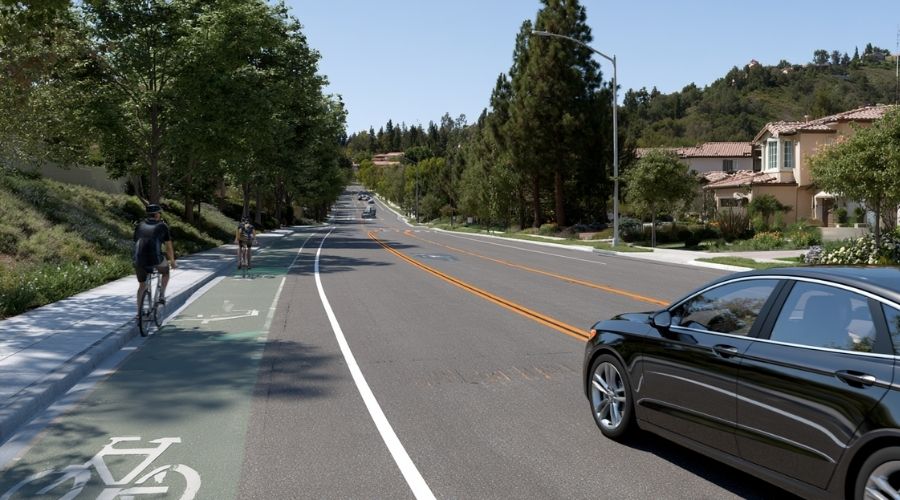
Cycling has become an increasingly popular form of transportation, recreation, and exercise throughout California. In condado de Orange alone, thousands of cyclists use local roads, bike lanes, coastal routes, and recreational trails every day. Whether riding for fitness, commuting to work, or simply enjoying the outdoors, cyclists share the road with cars, trucks, motorcycles, and pedestrians.
Unfortunately, bicycle accidents remain a serious concern. Many collisions occur because motorists and cyclists misunderstand the laws that govern bicycle travel. Some drivers mistakenly believe bicycles do not belong on the roadway, while some cyclists are unaware that they are required to follow many of the same rules that apply to motor vehicles.
California has enacted numerous bicycle safety laws designed to improve safety, reduce accidents, and clarify the responsibilities of everyone using the road. Understanding these laws can help cyclists protect themselves, avoid citations, and strengthen their position if an accident occurs.
For riders throughout Orange County and across California, knowing your legal rights and obligations is an important part of staying safe on every ride.
California law generally treats bicycles as vehicles, giving cyclists many of the same rights and responsibilities that apply to motorists.
Cyclists Have the Same Rights as Motorists
One of the most important concepts in California bicycle law is that cyclists generally have the same rights to use public roadways as drivers.
Many motorists incorrectly assume bicycles belong only in designated bike lanes or recreational areas.
In reality, cyclists are legally permitted to ride on most California roads unless specifically prohibited.
This means cyclists have the right to:
- Use public roadways
- Travel through intersections
- Occupy traffic lanes when legally appropriate
- Expect drivers to follow traffic laws
- Receive the same legal protections against negligent drivers
At the same time, cyclists must comply with many of the same traffic regulations imposed on motorists.
Understanding this balance of rights and responsibilities helps create safer roadways for everyone.
Cyclists Must Obey Traffic Signals and Signs
Because bicycles are considered vehicles under California law, riders are generally required to obey traffic control devices.
Cyclists must:
- Stop at red lights
- Stop at stop signs
- Yield when required
- Follow lane-control signals
- Observe traffic signs
Failing to comply with traffic controls can increase the risk of accidents and may affect liability if a collision occurs.
For example, if a cyclist rides through a stop sign and collides with a vehicle that had the right-of-way, the cyclist may bear partial or complete responsibility for the accident.
Following traffic laws not only improves safety but can also strengthen a cyclist’s position should a legal dispute arise later.
Understanding California’s Three-Foot Passing Law
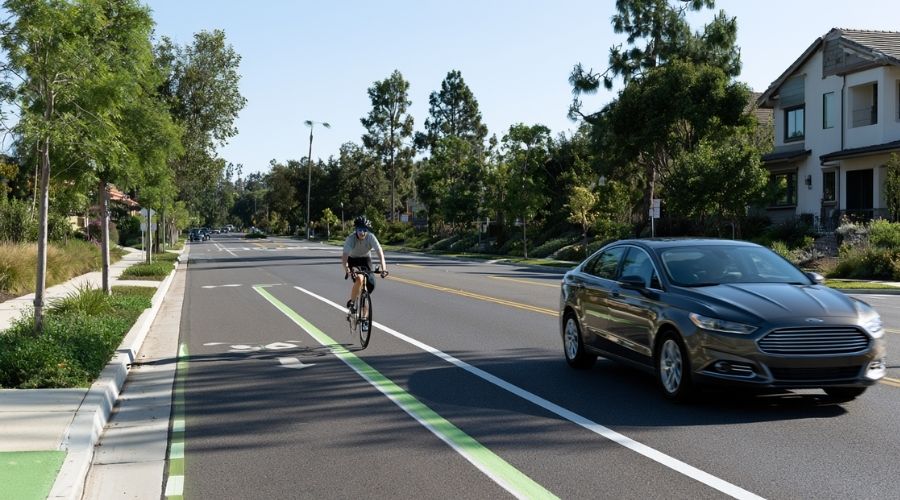
One of the most important bicycle safety laws for motorists is California’s Three Feet for Safety Act.
Under this law, drivers must provide at least three feet of clearance when passing a cyclist traveling in the same direction.
If traffic or roadway conditions make three feet of clearance impossible, the driver must:
- Slow to a reasonable speed
- Pass only when it can be done safely
This law exists because close passes can create significant risks for cyclists.
Even when physical contact does not occur, a vehicle passing too closely can:
- Force a cyclist off the roadway
- Cause loss of balance
- Create dangerous wind effects
- Trigger evasive maneuvers
Violations of the three-foot rule may become important evidence in bicycle accident claims.
When Cyclists Can Ride Outside Bike Lanes
Many drivers assume cyclists must always remain inside designated bicycle lanes.
California law does not require this in every situation.
Cyclists may legally leave a bike lane when:
- Passing another cyclist
- Avoiding debris or hazards
- Preparing for a turn
- Avoiding unsafe conditions
- Overtaking pedestrians or obstacles
Additionally, cyclists may occupy portions of a travel lane when necessary to ride safely.
Road hazards frequently encountered by cyclists include:
- Baches
- Broken pavement
- Parked vehicles
- Construction zones
- Debris
- Drainage grates
Cyclists are not required to place themselves in danger simply to remain within a designated bicycle lane.
Safe Positioning on the Roadway
California law generally requires cyclists traveling slower than surrounding traffic to ride as close as practicable to the right side of the roadway.
However, the law recognizes many exceptions.
Cyclists may move away from the right-hand edge when:
- Passing another vehicle or cyclist
- Avoiding hazards
- Preparing for a left turn
- Traveling on a roadway too narrow for safe side-by-side sharing
The phrase “as close as practicable” is important because it does not mean riding directly against the curb.
Safe positioning often requires cyclists to maintain adequate space to:
- Avoid road hazards
- Remain visible
- Prevent dangerous passing situations
Determining what is safe depends on the specific roadway conditions.
Bicycle safety laws are designed not only to regulate cyclists but also to give riders the flexibility needed to avoid dangerous situations.
Equipment Requirements for California Cyclists
California law requires certain safety equipment depending on the circumstances.
Bicycle Helmets
All cyclists under 18 years of age must wear a properly fitted bicycle helmet.
While adults are generally not required to wear helmets, doing so is strongly recommended.
Nighttime Lighting
When riding after dark, bicycles must typically have the following:
- A white front light visible from a specified distance
- Rear reflectors
- Pedal or ankle reflectors
- Side reflectors in many situations
These requirements help improve visibility and reduce nighttime accident risks.
Functional Brakes
Bicycles must generally be equipped with working brakes that can stop the bicycle safely.
Proper maintenance of safety equipment is an important part of responsible riding.
Common Causes of Bicycle Accidents
Despite existing safety laws, bicycle accidents continue to occur throughout California.
Common causes include:
Conducción distraída
Drivers using phones or other devices may fail to see cyclists.
Unsafe Passing
Passing too closely remains a frequent cause of collisions.
Failure to Yield
Many accidents occur at:
- Intersecciones
- Driveways
- Crosswalks
- Parking lot entrances
Dooring Accidents
These accidents occur when a vehicle occupant opens a door directly into the path of an approaching cyclist.
Left-Turn and Right-Turn Collisions
Drivers often focus on vehicle traffic and overlook cyclists traveling nearby.
Understanding these risks can help cyclists remain alert and defensive while riding.
How Bicycle Laws Affect Personal Injury Claims
When a bicycle accident occurs, compliance with traffic laws often becomes an important issue.
Insurance companies frequently investigate whether:
- The cyclist obeyed traffic signals
- Proper equipment was used
- The cyclist was riding lawfully
- The driver violated applicable traffic laws
California follows a pure comparative negligence system.
If both parties contributed to an accident, fault may be divided accordingly.
Por ejemplo:
- Driver fault: 80%
- Cyclist fault: 20%
The cyclist may still recover compensation, although the court could reduce damages by their percentage of fault.
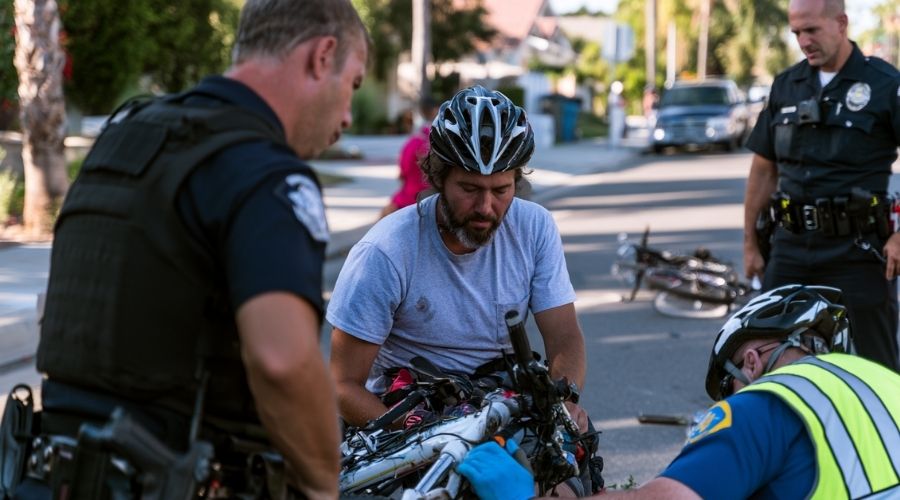
What Cyclists Should Do After an Accident
After a collision, taking the right steps can help protect both health and legal rights.
Important actions include:
- Llamar a los servicios de emergencia
- Buscando atención médica inmediata
- Reportar el accidente
- Taking photographs
- Collecting witness information
- Preserving damaged equipment
- Maintaining medical records
- Documenting lost income and expenses
Even injuries that initially appear minor should be evaluated by a medical professional.
Prompt treatment often benefits both recovery and future legal claims.
Preguntas frecuentes
Do bicycles have the same rights as cars in California?
Generally, yes. Cyclists are granted many of the same rights and responsibilities as motorists under California law.
What is California’s three-foot passing law?
Drivers must provide at least three feet of clearance when passing cyclists whenever possible.
Must cyclists always use bike lanes?
No. California law allows cyclists to leave bike lanes under various circumstances, including avoiding hazards and preparing for turns.
Are bicycle helmets required for adults?
Generally, no. California’s mandatory helmet law primarily applies to riders under 18.
Can a cyclist recover compensation if partially at fault?
Yes. California’s comparative negligence laws may allow recovery even when a cyclist shares some responsibility for an accident.
Protect Your Rights After a Bicycle Accident
California’s laws for bicycle safety protect cyclists and promote safer interactions between riders and motorists. Understanding these laws can help cyclists ride more confidently, avoid preventable accidents, and better understand their rights when a collision occurs.
Unfortunately, negligent drivers can injure even the safest cyclists. When that happens, determining fault often requires a detailed investigation of the accident and the applicable traffic laws.
If you or a loved one has been injured in a bicycle accident, the experienced legal team at Oracle Injury Attorneys can help evaluate your case and pursue compensation for medical expenses, lost income, pain and suffering, and other damages. Contacte hoy mismo con los abogados especializados en lesiones de Oracle. to learn how we can help protect your rights and guide you through the recovery process.