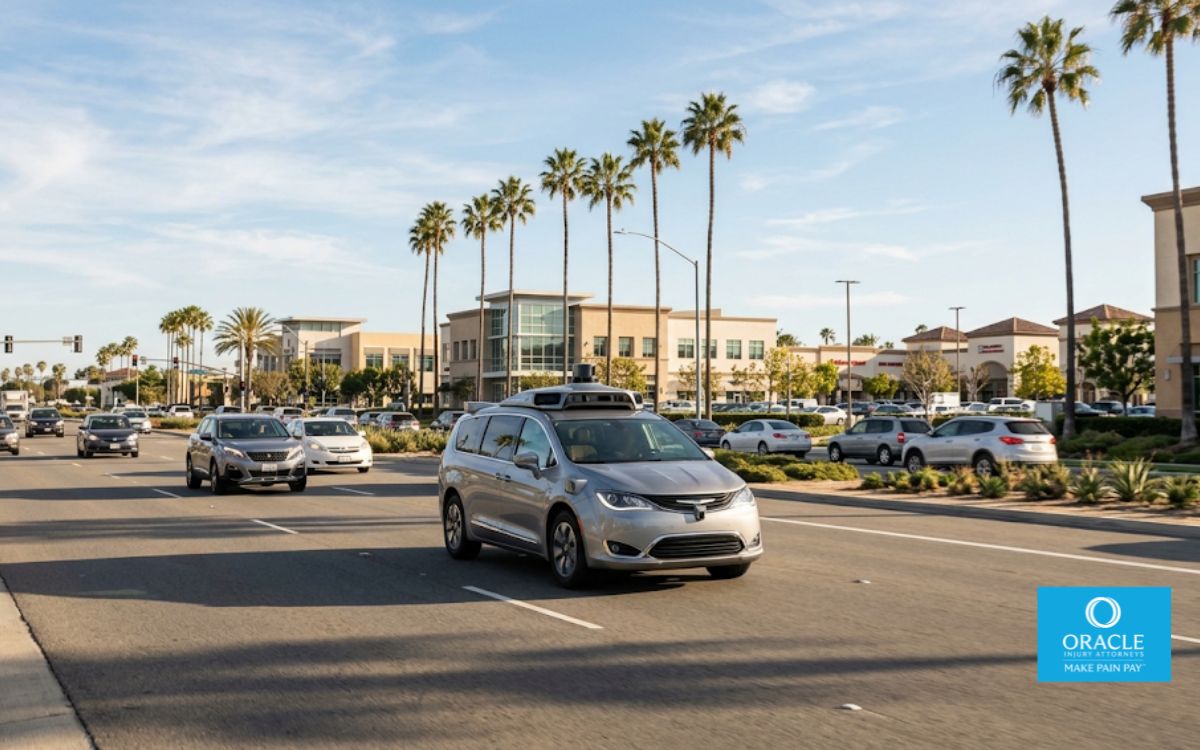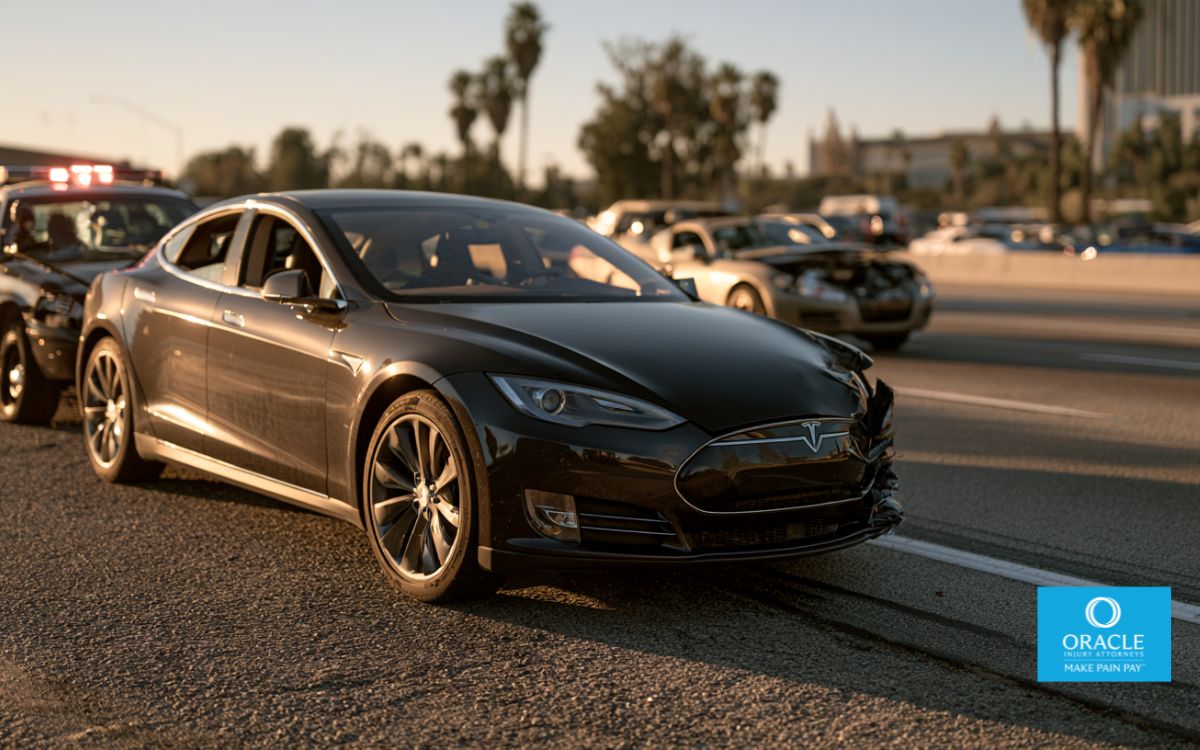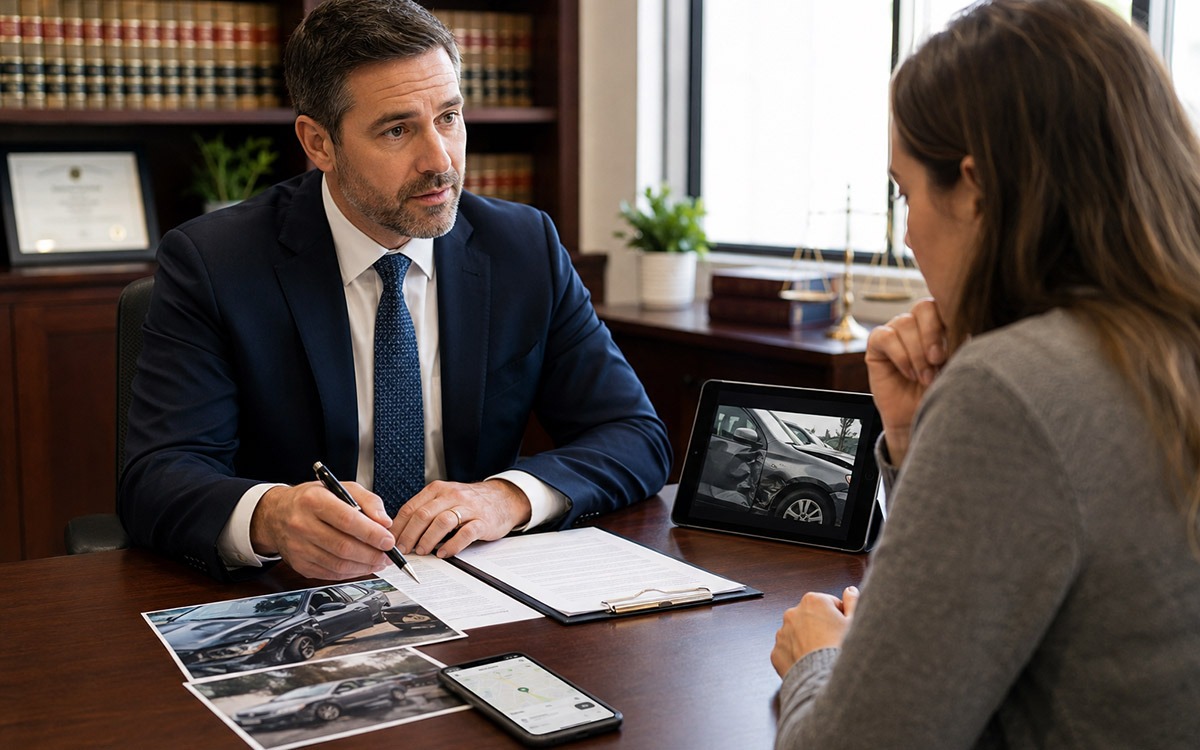
After a rideshare crash, the insurance that applies depends entirely on what the Uber or Lyft driver’s app was doing at the moment of impact: offline, waiting for a ride, en route to pick you up, or driving you to your destination. Coverage can swing from a basic $30,000 policy to a $1 million commercial policy. A rideshare accident lawyer in Los Angeles can pin down the right policy and push back when insurers try to shrink your claim.
Getting hurt in an Uber or Lyft is disorienting in a way a normal car accident isn’t. You didn’t choose the car, you don’t know the driver’s insurance, and you’re not even sure whose policy is supposed to pay. That confusion is exactly what insurance companies count on. A rideshare accident lawyer in Los Angeles exists precisely because these claims are layered, technical, and built to confuse the person who got hurt.
Los Angeles has more rideshare traffic than almost anywhere in the country. Between LAX pickup zones, the 101 and 405 corridors, and a driver base that’s constantly logging on and off the app, crashes involving Uber and Lyft vehicles happen every day across the county. Figuring out who pays starts with understanding the insurance rules that California built specifically for this industry.
Rideshare Accident Lawyer in Los Angeles: How Insurance Coverage Works
The insurance that applies depends on the driver’s “period” at the time of the crash, a framework set by California regulators specifically for transportation network companies (TNCs), the legal term for app-based rideshare services like Uber and Lyft. There are three main phases, and each one carries a different coverage amount.
California’s Public Utilities Commission regulates TNCs as charter-party carriers and requires them to carry specific minimum insurance depending on the driver’s app activity. When the app is completely off, the driver’s personal auto policy is the only coverage in play, typically the state minimum of $30,000 per person and $60,000 per accident. Once the driver logs in and starts looking for a fare, Uber and Lyft’s own contingent coverage kicks in behind the driver’s personal policy.
That’s the part most crash victims never see coming. A driver can be a Lyft or Uber driver on paper and still leave you with almost nothing if the crash happens at the wrong moment in that cycle.
The Four App Statuses That Change Everything
Think of a rideshare driver’s shift like a switch with four settings, not two. Every setting changes who is financially responsible if something goes wrong, and the gap between one setting and the next can mean the difference between a few thousand dollars and a seven-figure policy.
Offline (Period 0). The driver hasn’t opened the app. They’re just a regular motorist, and their personal auto insurance is the only source of recovery, subject to the standard California minimums.
Waiting for a ride request (Period 1). The app is on, and the driver is available, but no passenger has been matched yet. During this window, Uber and Lyft provide contingent liability coverage of roughly $50,000 per person, $100,000 per accident, and $25,000 in property damage, but only if the driver is at fault and their insurer denies the claim.
En route to pick up a passenger (Period 2). A ride has been accepted and the driver is heading to the pickup location. This phase is where the real money shows up: Uber and Lyft’s $1 million commercial liability policy applies from this point forward.
Passenger in the car (Period 3). From pickup to drop-off, the same $1 million commercial policy stays active, along with up to $1 million in uninsured/underinsured motorist coverage if another driver causes the crash and doesn’t carry enough insurance.
That jump between Period 1 and Period 2, from $50,000 to $1 million, is the single biggest reason rideshare claims get contested. Insurance companies know exactly where the money is, and they know precisely how to argue a driver wasn’t quite there yet.
If You Were a Passenger, What Coverage Protects You?
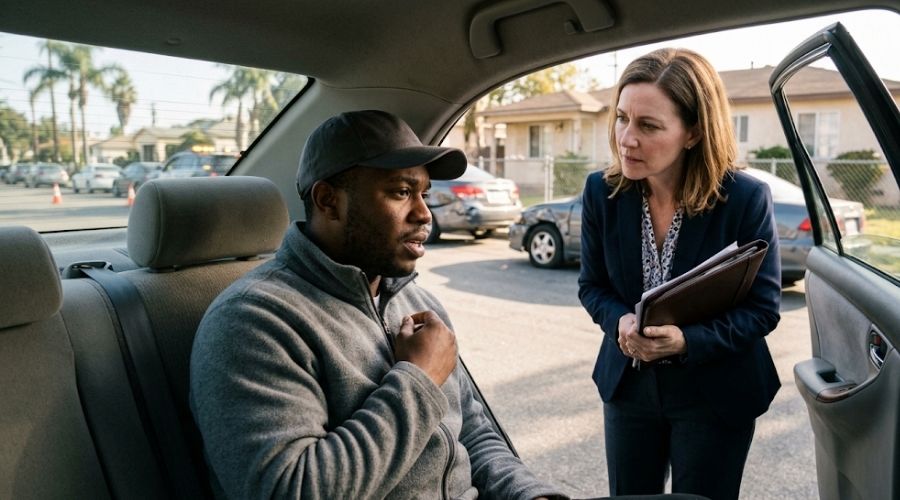
Passengers injured while riding in an Uber or Lyft are almost always covered by the rideshare company’s $1 million commercial policy, since an accepted trip automatically triggers Period 2 or Period 3 coverage. You weren’t driving, had no control over the vehicle, and California law rarely assigns you fault for the crash.
That said, “covered” doesn’t mean “paid without a fight. ” Uber and Lyft’s insurers still investigate the crash, still dispute the extent of your injuries, and still look for any reason to devalue your claim. If another driver caused the wreck and doesn’t carry enough insurance, the rideshare company’s uninsured motorist coverage is supposed to fill the gap, but getting that policy to actually pay out is its battle.
A $1 million policy on paper means nothing until an insurer agrees to actually pay it.
Passengers also need to know about the arbitration clauses buried in Uber and Lyft’s terms of service. When you accept the app’s terms, you may have agreed to resolve disputes through private arbitration instead of a courtroom. That doesn’t eliminate your right to compensation, but it changes the process, and it’s precisely the kind of fine print an experienced attorney reads before you file anything.
What If You Were the Other Driver or a Pedestrian?
If you were hit by a rideshare driver while driving your own car, riding a bike, or walking, your claim depends on proving the driver was logged into the app and what phase of a ride they were in. Fault still comes down to negligence, but the insurance pool available to pay you can range from $30,000 to $1 million based on that app status alone.
Los Angeles makes the situation especially messy. Picture a Lyft driver merging off the 405 onto surface streets near LAX’s designated rideshare pickup lot, weaving through pickup-zone traffic while glancing at a phone screen for a passenger’s location. Or a driver crawling along the 101 corridor during rush hour, half paying attention to the road and half to a ride request. These are the exact conditions where rideshare crashes involving other drivers, cyclists, and pedestrians happen constantly throughout the city.
Pedestrians and cyclists struck by a rideshare vehicle face the same coverage tiers as anyone else hit by a negligent driver, but they’re often dealing with more severe injuries and a driver who has every incentive to claim the app was off. Our car accident team regularly deals with this exact dispute: a driver insisting they weren’t working, and evidence that says otherwise.
Why Insurance Companies Fight Rideshare Claims So Hard
Every rideshare insurer runs the same playbook, and it starts with the app status question. If they can argue the driver wasn’t quite logged in yet or hadn’t quite been matched with a rider, they get to write you a much smaller check instead of the big one.
Uber and Lyft’s insurers aren’t sympathetic to your situation, and they aren’t supposed to be. Their job is to pay as little as legally required. That means they’ll comb through app data, GPS logs, and trip records looking for any gap between when the driver claims to have accepted a ride and when the crash actually occurred.
They’ll also try to shift blame onto you. If you’re a passenger who wasn’t wearing a seatbelt, expect that to be raised as a reason to reduce your payout. If you’re a pedestrian, expect questions about whether you were crossing legally. California’s comparative negligence rule means you can still recover damages even if you’re found partly at fault, but your compensation gets reduced by whatever percentage of fault they pin on you, so every one of these arguments matters to your bottom line.
How Do You Prove the Driver’s App Status After a Crash?
Proving app status usually requires trip data, GPS records, and time-stamped screenshots that Uber or Lyft controls, not something a crash victim can access on their own. An attorney can send preservation letters and pursue subpoenas to lock down that electronic evidence before it disappears or gets disputed.
This is genuinely one of the hardest parts of a rideshare claim. Drivers sometimes misstate their own status, whether out of confusion or self-interest, and the rideshare companies aren’t in a hurry to hand over data that increases their own liability. Police reports rarely capture app activity in enough detail to settle the question on their own.
Getting this evidence locked down early matters more than almost anything else in a rideshare claim, because once it’s gone, it’s gone.
What Should You Do After a Rideshare Accident in Los Angeles?
After any rideshare crash, get medical attention even if you feel fine; report the crash through the Uber or Lyft app and to police; and photograph the vehicle, the scene, and your injuries. Then talk to a lawyer before giving a recorded statement to any insurance company involved.
A few practical steps make a real difference in how your claim plays out:
- Screenshot your trip details in the app immediately, including the driver’s name, license plate, and trip status, before that information can change or disappear.
- Get medical care right away. Soft tissue injuries and concussions often don’t show symptoms for days, and a gap in treatment gives insurers an excuse to question your injuries.
- Avoid giving a detailed statement to Uber’s or Lyft’s insurance adjuster until you’ve spoken with an attorney, since anything you say can be used to minimize your claim later.
- Keep records of medical bills, lost wages, and any communication with the rideshare company or its insurers.
California generally gives injury victims two years from the date of the crash to file a personal injury lawsuit, but rideshare claims often move faster in practice because evidence like app data has a shorter shelf life. Waiting rarely helps you and frequently helps the insurance company instead.

Why You Need a Rideshare Accident Lawyer in Los Angeles
You shouldn’t have to master TNC insurance law while healing from an accident. That’s the job of a rideshare accident lawyer in Los Angeles: knowing which policy period applies to your crash, securing the right evidence before it disappears, and pushing back hard when an adjuster tries to undervalue your pain, your medical bills, and your recovery.
The gap between what an insurer offers and what your claim is worth is rarely an accident.
Oracle Law Firm handles these cases across the Los Angeles area, from crashes near LAX’s pickup lanes to collisions on the 101 and 405. We don’t let insurance companies decide what your claim is worth.
Conclusion
Rideshare accidents don’t follow the same rules as a normal car crash. The insurance that applies to your case depends entirely on a driver’s app status at the exact moment of impact, and insurance companies know how to use that complexity against you. Whether you were a passenger, another driver, or a pedestrian, your coverage could be tens of thousands of dollars or a full $1 million policy, and figuring out which one applies isn’t something you should have to sort out alone while you’re recovering.
Been in an accident or hurt on the job? You don’t have to navigate insurance companies alone. Oracle Law Firm fights to get you the compensation, control, and clarity you deserve.
Get a Free Consultation or call 888.597.4099.
Frequently Asked Questions
Do I need a lawyer if I was a passenger in an Uber or Lyft accident?
You’re not required to hire a lawyer, but rideshare claims involve commercial insurance policies, arbitration clauses, and disputes over app data that most people aren’t equipped to handle alone. A lawyer helps make sure the full $1 million policy is actually accessed instead of a quick, lowball settlement.
What if the Uber or Lyft driver says their app was off at the time of the crash?
This is a common dispute, and it’s exactly why trip data, GPS records, and time stamps matter so much. An attorney can request this electronic evidence directly from the rideshare company to establish what the driver’s app status actually was.
Can I sue Uber or Lyft directly after an accident?
In most cases, you file a claim against the driver and the driver’s applicable insurance coverage, since Uber and Lyft classify their drivers as independent contractors rather than employees. Uber or Lyft may still face direct liability in specific situations, such as negligent screening of a driver with a dangerous record.
How long do I have to file a claim after a rideshare accident in California?
California generally allows two years from the date of the crash to file a personal injury lawsuit. That said, rideshare claims often benefit from moving quickly, since app and trip data can become harder to obtain the longer you wait.
What if I were hit by a rideshare driver as a pedestrian or in my own car?
Your claim still comes down to proving the rideshare driver was negligent and establishing what insurance coverage applied based on their app status at the time. Depending on that status, the available coverage ranges from a basic personal policy up to Uber or Lyft’s $1 million commercial liability policy.
This article is for general informational purposes only and does not constitute legal advice. Every accident case depends on its own specific facts, and no outcome or settlement amount is guaranteed. Contact Oracle Law Firm for a free consultation to discuss the details of your situation.