You were driving along the I-5 in San Clemente, traffic slowed, and then came the jolt from behind. Maybe it was a quiet commute, or maybe it was a crowded weekend with beach traffic backing up. Either way, you are now dealing with pain, a damaged car, and a flood of phone calls.
Many people assume a rear-end crash is the easiest kind of case, because the other driver hit you from behind. Sometimes that is true. But insurance companies still look for ways to pay less, so it helps to know what you actually need to prove and how to build that proof.
Rear-Ended on the I-5 in San Clemente: What You Need to Prove
Every rear-end claim comes down to three questions. First, was the other driver careless? Second, did that carelessness cause your injuries? Third, what did those injuries cost you? If you can answer all three with solid evidence, you have the foundation of a strong claim. Weakness in any one of them gives the insurance company something to push on.
Who Is at Fault in a California Rear-End Collision?
California requires every driver to follow other vehicles at a distance that is reasonable and prudent for the speed, the traffic, and the road conditions. That rule is in Vehicle Code Section 21703, and it is the reason the driver in back is so often found responsible. Nobody can stop instantly, so a driver is expected to leave enough room to react when traffic slows.
It is important to understand, though, that the rear driver is not automatically at fault. Courts treat negligence as a question of facts. The other driver may try to say you cut in front of them, stopped for no reason, or had broken brake lights. That is why your proof matters, even in a crash that looks simple.
Evidence That Builds Your Rear-End Claim
Start with the official record. The California Highway Patrol generally responds to freeway collisions, and its report will include the officer’s observations, statements, and sometimes a conclusion about the cause. Ask for the report number at the scene and request a copy once it is available.
Injury crashes must be reported to law enforcement within 24 hours, and the DMV generally requires an SR-1 form within 10 days if anyone was hurt or property damage was more than $1,000, so make sure those steps are handled.
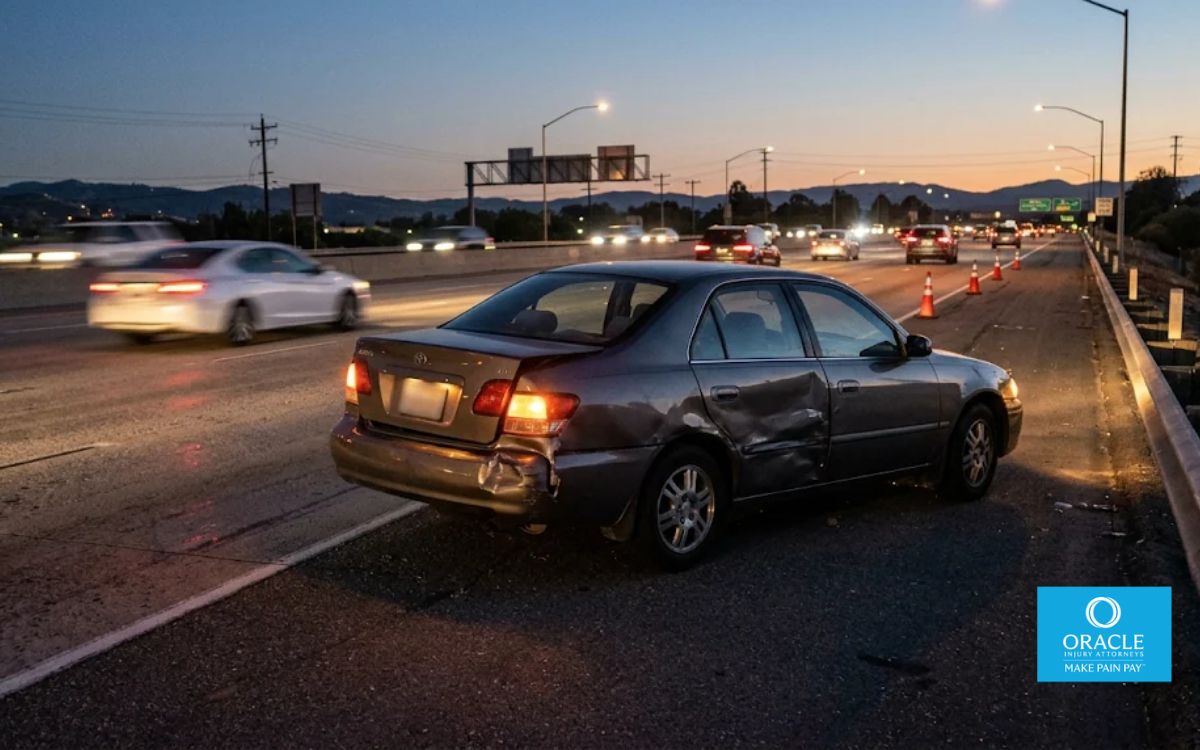
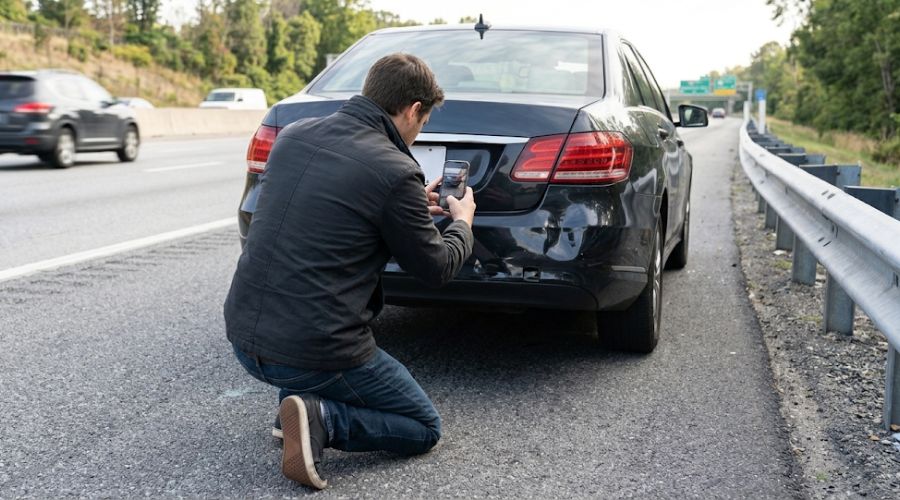
Next comes what you can capture yourself. If it is safe, take photos of both vehicles, the damage, license plates, the lane, the traffic around you, and any debris. The location and pattern of the damage tells a story, since center rear damage on your car points to a straightforward hit from behind. Get the other driver’s information and the names of witnesses, and keep in mind that freeway witnesses can leave fast. Dashcam footage, yours or someone else’s, can settle arguments before they start.
Many modern vehicles also record data about speed, braking, and impact through an event data recorder. That information can show how fast the other driver was going and whether they braked in time, but it can be overwritten or lost if the vehicle is repaired or sold. A lawyer can send a preservation letter early so that key evidence is not destroyed.
Proving the Crash Caused Your Injuries
Rear-end crashes are known for whiplash, neck and back injuries, and concussions, and these do not always hurt right away. Adrenaline hides pain, and soft tissue injuries can take a day or two to show up. See a doctor as soon as you can, even if you think you are fine, and tell them about every symptom, including headaches, numbness, dizziness, or trouble sleeping. Those early records connect your condition to the crash.
Expect the insurer to argue that a small amount of vehicle damage means a small injury. The two do not always match, because a person’s body absorbs force differently than a bumper does. The best answer is steady treatment, a clear medical record, and honest follow-through with your doctor’s plan. Long gaps between appointments hand the other side an easy argument.
If you had a prior neck or back problem, do not hide it. A crash that makes an existing condition worse can still be part of your claim, and being upfront protects your credibility.
Proving What the Crash Cost You
Damages are the dollar side of your claim. Keep your medical bills, prescriptions, repair estimates or total loss paperwork, and any receipts for rides, equipment, or home help. Track missed work, including partial days, and ask your employer for a letter that confirms your lost pay. A simple journal about your pain, sleep, and daily limits can show the impact that bills alone do not capture. To see how these pieces fit together, read what your personal injury case is worth in California.

When the Other Driver Blames You
It is common for the driver who hit you, or their insurer, to claim you stopped short, changed lanes suddenly, or had faulty brake lights. Slowing for traffic on a busy freeway is normal, and it does not by itself shift blame to you. But if you really did make an unsafe move, fault can be shared. California follows comparative fault, so your compensation is reduced by your percentage of responsibility instead of being denied. A jury that finds you 20 percent at fault on a $100,000 claim, for example, would reduce the award to $80,000.
This is where early evidence pays off. Video, witness statements, and the pattern of damage can all challenge a made-up story. Our posts on how to talk to an insurance adjuster after an accident and 5 tactics insurance adjusters use to lower your settlement explain how adjusters try to build that story.
Chain-Reaction Crashes on the Freeway
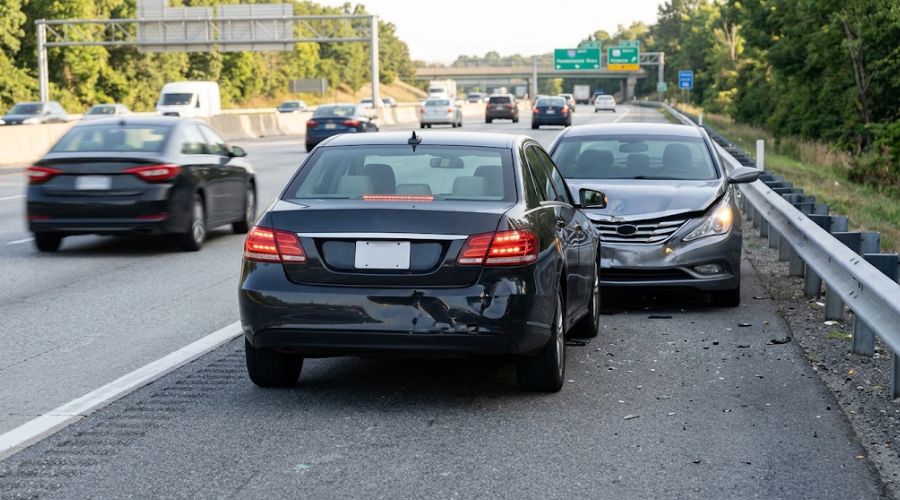
Sometimes you are not hit by one car but pushed into another. When three or more vehicles are involved, the order of impacts matters, and each driver may blame someone else. You may have claims against more than one person, and each driver’s insurance may point the finger at the others.
Photos showing where each car ended up, along with the CHP report and any video, help sort out who hit whom and in what order. If you want to see how a similar freeway crash is handled, read our guide for drivers injured at the 405/55 interchange in Costa Mesa.
Mistakes That Can Weaken Your Claim
A few common slips can hurt an otherwise strong case. Saying you are fine at the scene can be used against you later. Giving a recorded statement to the other driver’s insurer before you know the extent of your injuries can lock you into answers you did not mean.
Accepting a quick settlement can close the door on future treatment you did not yet know you needed. Posting about the crash or your activities on social media can also be taken out of context. Finally, waiting too long to get care, or skipping appointments, makes it harder to prove your injuries are real.
Deadlines for Rear-End Collision Claims in California
Most personal injury lawsuits must be filed within two years under Code of Civil Procedure Section 335.1. If a government agency may share responsibility, for instance because of a dangerous road condition, a claim generally has to be presented within six months under Government Code Section 911.2. Children may have additional time. For every California deadline in one place, see how long you have to file a claim in California. If you are still deciding whether to hire a lawyer, read do you need a personal injury lawyer in Orange County.
Frequently Asked Questions
Is the driver who rear-ends me always at fault in California?
What if my car has little damage but I am in pain?
What evidence helps prove a rear-end collision claim?
What if the other driver says I stopped suddenly?
How long do I have to file a rear-end collision claim in California?
Rear-Ended in San Clemente? Get Your Claim Started Right
Rear-end crashes may look simple, but proving fault, injuries, and losses takes care, and insurers know how to use small gaps. Oracle Law Firm | Accident & Injury Attorneys helps injured drivers and passengers throughout Orange County, including San Clemente, with a free, confidential consultation, no upfront fees, and no obligation. You only pay if we recover compensation.
Contact our team today before you speak with the other driver’s insurance company.