A personal injury lawyer for a minor accident might feel like overkill when the collision was low-speed, the damage looks manageable, and you walked away feeling more or less fine. That instinct is understandable — and it is exactly what insurance companies are counting on. The reality of minor accident claims in California is that the gap between what an unrepresented claimant accepts and what their case is actually worth is often measured in thousands of dollars, and the injuries that drive that gap are frequently invisible in the first 24 to 48 hours after impact.

Why “Minor” Accident Is Not the Same as “Minor” Injury
The most important thing to understand about low-speed collisions is that vehicle damage and injury severity do not correlate the way most people assume. A crash that produces minimal bumper damage can still produce significant soft tissue injuries — and the physics of why that happens are well documented. In a rear-end collision, even at relatively low speeds, the human neck absorbs energy in a rapid back-and-forth motion that the bumper’s crumple zone does not fully dissipate. The result can be whiplash, muscle strains, ligament sprains, or herniated discs, none of which show up on the outside of the car.
In California, these invisible injuries are fully compensable under personal injury law, but victims must seek medical evaluation within 72 hours to legally establish the connection between the crash and the injury. According to the National Highway Traffic Safety Administration, soft tissue injuries are among the most frequently underestimated outcomes of low-speed collisions — and among the most commonly disputed by insurers precisely because they are hard to see on imaging.
Delayed Injuries — The 24 to 72 Hour Window
The human body’s response to a collision includes a significant adrenaline surge that suppresses the perception of pain for hours and sometimes days after impact. This is why so many people leave an accident scene feeling relatively fine and then wake up two or three days later with neck stiffness, persistent headaches, shoulder pain, dizziness, or numbness in the arms — all of which are common symptoms of soft tissue damage that the adrenaline masked at the scene.
Neck and back pain often indicates whiplash or spinal cord injuries. Headaches could signal a concussion, TBI, or whiplash. Numbness or tingling may indicate nerve damage or a herniated disc. Abdominal pain is a major red flag for internal bleeding or organ damage. Dizziness or confusion may be symptoms of a potential brain injury. None of these present as dramatic emergencies in the first moments after a minor accident, which is exactly why people dismiss them — and why insurers exploit the dismissal.
The 72-hour window matters legally because a gap between the accident and a medical evaluation gives insurance companies room to argue that the injuries were caused by something else, or that they are not as serious as claimed. Seeking medical attention within that window, even if you are not certain anything is wrong, creates the documentation that connects your symptoms directly to the crash.
What Soft Tissue Claims Are Actually Worth
One of the most common reasons people do not pursue a personal injury claim after a minor accident is the assumption that soft tissue injuries are not worth much. The data does not support that assumption. For minor injuries like sprains or whiplash, settlements typically range from $3,000 to $15,000. More severe soft tissue injuries, such as herniated discs, can result in settlements ranging from $100,000 to $350,000. The recovery process for soft tissue damage can take anywhere from a few weeks to several years depending on severity and location of the injury — and all of that treatment cost is recoverable.
What pushes a soft tissue claim toward the lower end of that range is accepting a settlement too quickly, before the full extent of treatment is known. What pushes it toward the higher end is thorough medical documentation, a complete record of symptoms and their impact on daily life, and negotiation by someone who understands the actual value of the claim rather than the first number an adjuster offers.
The Lowball Offer — And Why It Comes So Fast
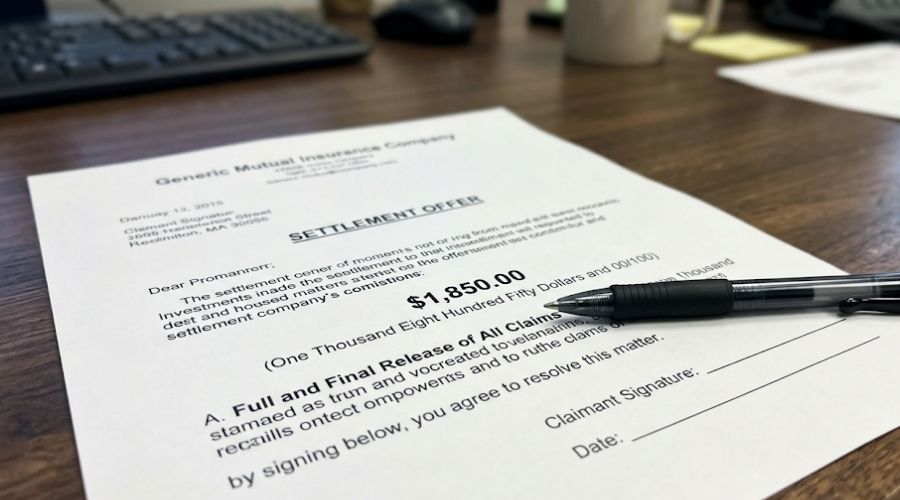
After a minor accident, many people receive a settlement offer from the other driver’s insurance company within days. The speed of that offer is not a courtesy — it is a strategy. Insurers know that the first days after a minor accident are the window in which injuries have not yet fully manifested, medical bills are minimal, and claimants are most likely to accept a quick payment rather than pursue the full value of a claim.
A fast, low offer typically covers immediate emergency or urgent care costs and little else. It does not account for ongoing physical therapy, specialist consultations, future treatment costs, lost wages during recovery, or pain and suffering. Once you sign the release that accompanies that offer, you forfeit the right to seek any additional compensation — even if you need six months of physical therapy that nobody anticipated when you signed. The offer’s speed and apparent reasonableness is the mechanism through which insurance companies close out claims for a fraction of their real value.
Why You Should Never Give a Recorded Statement First
Among the most consequential mistakes in a minor accident claim is giving a recorded statement to the other driver’s insurance company before speaking with an attorney. The call feels routine — an adjuster checking in, asking how you are doing, getting the basic facts of what happened. The questions are calibrated to sound conversational while gathering statements that limit the insurer’s exposure.
When an adjuster asks “Are you feeling okay?” and you say “I’m fine, just a little sore” — that answer becomes part of your claim record. When delayed injuries surface three days later and you report neck pain and headaches, the insurer has a recorded statement in which you described yourself as fine. That contradiction is exactly what adjusters are trained to create, and it is one of the most avoidable ways a minor accident claim gets permanently weakened. You are not legally obligated to give a recorded statement to the other driver’s insurer. An attorney should handle all communications with the insurance company from the first contact.
Do Not Settle Before Reaching Maximum Medical Improvement
Maximum medical improvement — MMI — is the point at which your treating physician determines that your condition has stabilized and that further significant improvement is not expected. It is the medical milestone that marks when a claim can be fully and fairly valued, because at MMI you know the total medical cost, whether ongoing treatment will be needed, and how the injury has permanently affected your daily life and earning capacity.
For minor injuries like soft tissue injuries or mild whiplash, MMI may be reached within weeks or a few months. Serious injuries like traumatic brain injuries or spinal cord injuries may require a year or more of treatment before the long-term prognosis becomes clear. Settling before MMI in a minor accident case locks in a number based on incomplete information — a number that may not cover the treatment you still need. Once the settlement release is signed, there is generally no going back regardless of how your condition develops.
Personal Injury Lawyer for a Minor Accident — What They Actually Do
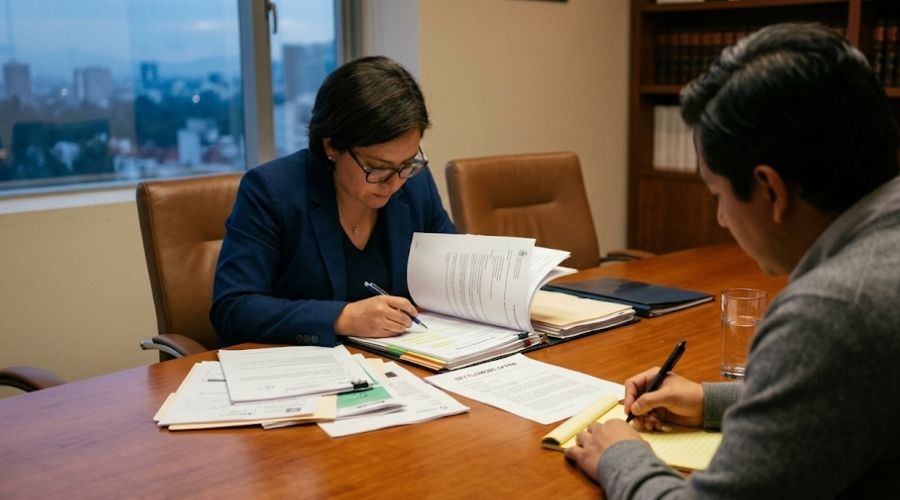
A personal injury lawyer for a minor accident in California is not there to manufacture a case that does not exist. They are there to make sure a case that does exist gets fully documented and fairly valued — and to prevent the avoidable mistakes that cost unrepresented claimants money every day. The specific ways legal representation changes outcomes in minor accident cases are concrete.
An attorney takes over all communications with the insurer, removing the risk of a damaging recorded statement. They ensure medical documentation is thorough and consistent, connecting symptoms to the accident in ways that withstand scrutiny. They identify all components of the claim — not just the immediate medical bills, but ongoing treatment, lost income, and pain and suffering — and calculate the full value before any offer is evaluated. They recognize lowball offers for what they are and push back with documented evidence rather than accepting what the insurer decides to volunteer. And they know the difference between a claim that should settle quickly and one that requires the insurer to understand litigation is on the table.
When a Minor Accident Does Not Require an Attorney
Honesty matters here. If a collision produced genuinely no injuries — no symptoms at all, no medical visits, no missed work, nothing beyond a minor vehicle repair — and liability is entirely clear, handling the property damage claim directly with the insurer is often perfectly reasonable. The case for an attorney rests primarily on the presence of injuries, disputed liability, or a sense that the offer being made does not reflect the actual impact of the accident on your life.
The problem is that most people cannot accurately assess within the first 24 to 48 hours whether injuries are present, because the delayed onset described earlier means symptoms may not yet have appeared. A free consultation with an attorney costs nothing — but the decision to handle a claim alone, made in the first days when the injury picture is still developing, can cost significantly more than attorney fees would have.
Frequently Asked Questions
Is it worth hiring a personal injury lawyer for a minor accident in California?
Can a minor accident cause serious injuries?
What is a lowball settlement offer and how do I recognize one?
What is maximum medical improvement and why does it matter for my claim?
Should I give a recorded statement to the insurance company after a minor accident?
Not Sure If Your Minor Accident Is Worth a Call? That Is Exactly When to Make One
The uncertainty itself is the reason to call. Oracle Law Firm | Accident & Injury Attorneys offers free, confidential consultations with no obligation and no upfront fees across Southern California — you only pay if we recover compensation for you. Contact our team today before symptoms develop further, before you give a recorded statement, and before any settlement offer is on the table.