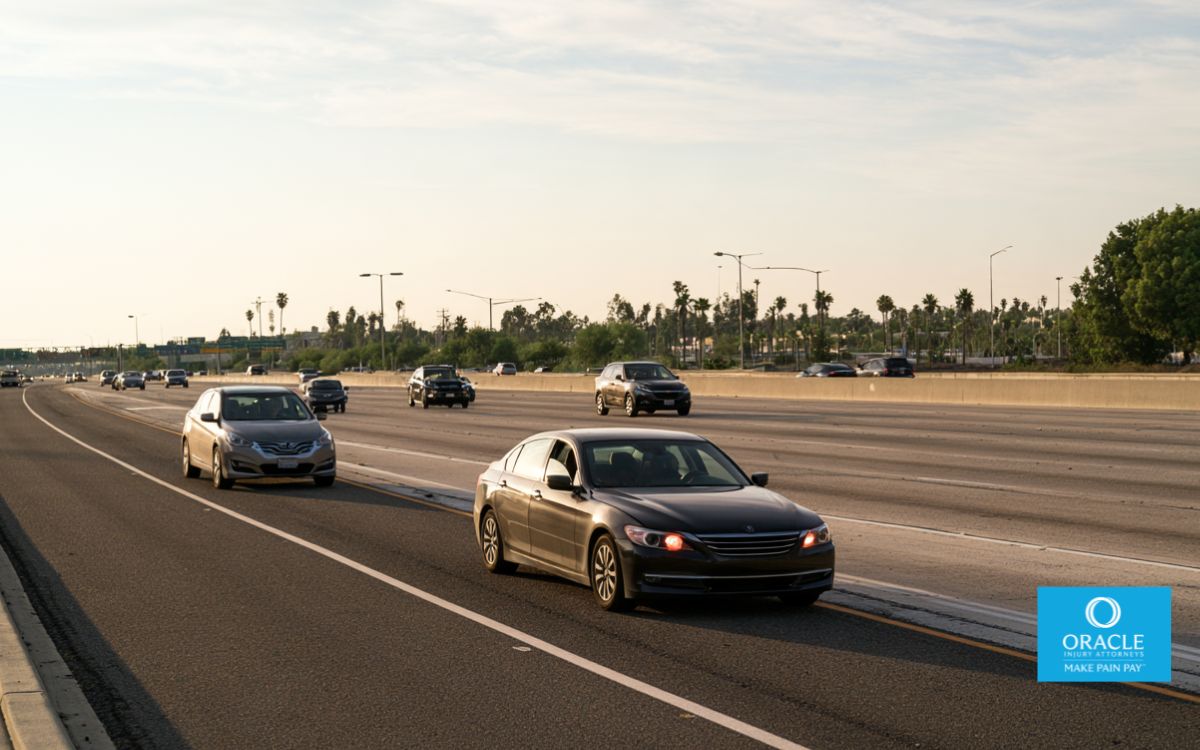
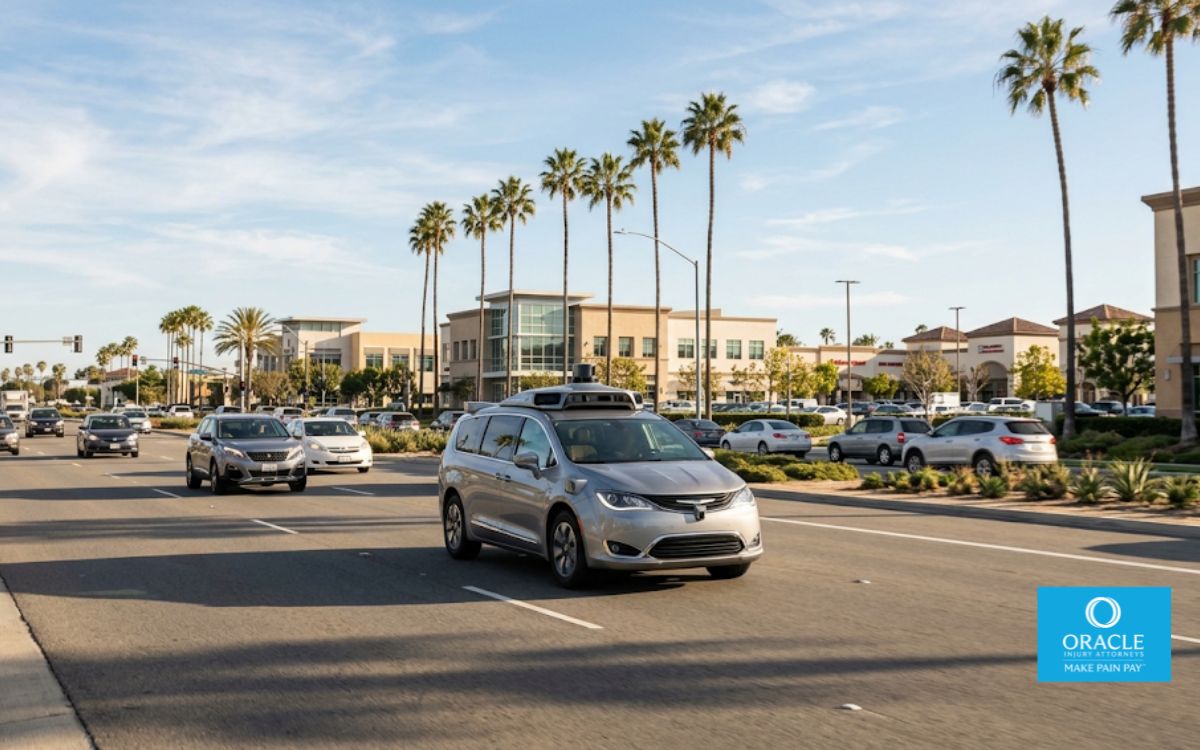
Newport Beach car accident claims carry a distinct set of characteristics that set them apart from claims in other Orange County cities. The city combines Pacific Coast Highway’s high-speed coastal curves, the SR-73 toll road corridor, a massive seasonal tourist population that peaks in July and August, and one of the highest concentrations of high-limit insurance policies and high-income earners in California. In 2023, Newport Beach recorded 494 car accidents resulting in deaths or injuries — nearly 1,900 crashes since January 2024 — with 71 involving drunk drivers and 149 involving speeding. Serious crashes in Newport Beach have continued to rise since the 2021–2022 baseline. Whether you live here or were visiting when the crash happened, understanding how Newport Beach car accident claims work is what stands between a fair outcome and a deeply undervalued one.
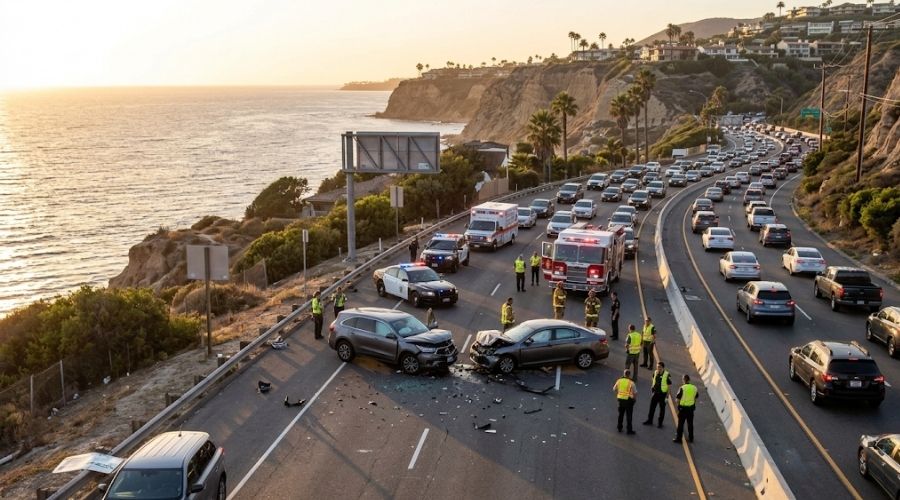
Newport Beach Car Accident Claims: The Local Risk Landscape
Newport Beach’s road network creates collision risk that does not match the city’s polished coastal image. Pacific Coast Highway — SR-1 — is the city’s most dangerous corridor: complex merges near Crystal Cove and Newport Coast Drive, limited sight lines on elevated sections, and speeds that regularly exceed the posted limit produce crashes that are more severe on average than the city’s intersection collisions. The stretch of PCH near Pelican Point and Newport Coast Drive has been the site of multiple fatal crashes. At the same time, the beach-adjacent roads — Balboa Boulevard, Newport Boulevard, and the harbor-area streets — generate a different injury pattern: lower-speed collisions with pedestrians, cyclists, golf carts, and scooters that create significant pedestrian and cyclist injury claims throughout the summer season.
MacArthur Boulevard near Fashion Island sees serious crashes tied to speeding and distracted driving during peak retail and evening dining hours. The SR-73 toll road produces high-speed freeway collisions — including the wrong-way driver incidents that make headlines — with injury severity that frequently places them at the top of Newport Beach’s settlement value range. Jamboree Road and its intersection with PCH generates T-bone crashes and unsafe lane change collisions at one of the city’s highest-volume merge points. According to data compiled from the California Office of Traffic Safety, Newport Beach consistently produces injury crash volumes that rank it among Orange County’s more dangerous cities despite its relatively smaller residential population. For more on how the most common crash type on Newport Beach’s corridors is analyzed legally, see our post on who is at fault in a rear-end collision in California.
The Summer Tourist Factor — Why July and August Change Everything
Newport Beach’s seasonal dynamic is one of the most significant local factors in car accident claims — and one that most out-of-area attorneys do not know well enough to address effectively. July and August represent the busiest period for Newport Beach roads, bringing heavy beach, harbor, pedestrian, and roadway traffic along with increased demand on parking and local services. Unfamiliar tourist drivers on PCH, Balboa Boulevard, and the harbor corridor — navigating roads they do not know, stopping suddenly for parking spots, and reacting to cyclists and scooters they were not expecting — create higher collision risk across the city during these months.
Tourist crashes create two specific claim complications. First, out-of-state drivers may carry insurance policies that are adequate in their home state but inadequate for California’s cost environment and settlement expectations. A Florida minimum policy of $10,000 per person may be the only coverage available for a Newport Beach injury that causes $80,000 in medical expenses. Second, locating out-of-state drivers and their insurers, managing cross-state claims documentation, and navigating unfamiliar insurance companies requires experience that local legal representation provides most efficiently. When a tourist’s policy limits are inadequate, your own underinsured motorist coverage becomes the primary recovery pathway — making UM/UIM coverage one of the most important policy components for Newport Beach residents. For more on how UM coverage works and when it applies, see our post on hit-and-run accidents in Orange County.

High-Net-Worth Defendants and What They Mean for Settlement Value
Newport Beach’s demographic profile creates a claim environment that differs meaningfully from other Orange County markets. The city’s high concentration of executives, professionals, and business owners means that lost earning capacity calculations frequently involve significantly higher wages than the California average. A spinal injury that limits a Newport Beach executive’s ability to work at their pre-injury level can produce a lost earning capacity claim that dwarfs the medical expense component of the case — something that must be projected by an economic expert and built into the demand from the beginning of negotiations.
High-net-worth defendants also tend to carry higher liability policy limits — often umbrella policies that stack on top of standard auto coverage — which makes the full coverage picture more important to investigate than in claims against minimum-coverage drivers. Newport Beach car accident claims typically settle between $25,000 and $500,000, with surgical, traumatic brain injury, and high-income wage-loss cases commonly reaching $1,000,000 to $10,000,000 or more. For a detailed breakdown of how all damage categories are calculated and what drives case value in serious injury situations, see our guide on what your personal injury case is worth in California.
Filing Deadlines for Newport Beach Car Accident Claims
The filing deadlines for Newport Beach car accident claims follow California’s standard framework — with one important local nuance. The standard personal injury statute of limitations under Code of Civil Procedure Section 335.1 is two years from the date of the accident for personal injury lawsuits. Property damage claims have a three-year deadline. The SR-1 DMV form must be filed within 10 days of any crash causing injury or significant property damage.
The local nuance is the frequency of government entity involvement in Newport Beach crashes. Sections of PCH within Newport Beach are Caltrans-managed — meaning a road defect, inadequate signage, or infrastructure failure on that corridor involves a government entity claim with a six-month deadline rather than a two-year one. City of Newport Beach-maintained roads that have known defect histories also trigger the six-month Government Tort Claim requirement when infrastructure contributes to a crash. Identifying whether any government entity was involved — and filing the tort claim before the six-month window closes — is one of the first priorities in any Newport Beach accident claim where road conditions played a role. For a complete guide to every applicable deadline, see our post on how long you have to file a car accident claim in California.
Comparative Negligence on Newport Beach Roads
California’s pure comparative negligence system applies to Newport Beach car accident claims the same way it applies across the state — your compensation is reduced by your assigned fault percentage, not eliminated. But Newport Beach’s specific road characteristics create predictable fault dispute patterns that local attorneys know to anticipate and counter from the start of the claim.
On PCH, fault disputes frequently center on speed — specifically, whether the injured driver was traveling at a speed appropriate for the posted limit and road conditions given the curves, sight lines, and cross-traffic patterns of the specific PCH section involved. On Balboa Boulevard, fault disputes frequently involve arguments that the driver should have anticipated pedestrian and cyclist activity given the visible beach and tourist environment. On the SR-73, fault disputes in high-speed rear-end collisions invoke following distance and speed arguments. In each of these scenarios, the insurer’s interest is in assigning as much fault as possible to the injured party — and each percentage point they succeed in assigning reduces their payout by the same proportion on what are frequently six- and seven-figure claims. For a detailed explanation of how partial fault is challenged and why every percentage point matters financially, see our post on what happens if you’re partly at fault for an accident in California.
Rideshare Accidents in Newport Beach
Newport Beach’s restaurant and nightlife corridor, harbor area, and proximity to John Wayne Airport generate significant rideshare traffic that creates a distinct liability and insurance coverage landscape. Rideshare accidents in Newport Beach — particularly near Newport Pier, Balboa Island, and the Lido Marina Village area where drivers frequently slow mid-block for app-directed pickups — involve multiple insurance coverage phases that shift based on the driver’s status in the app at the moment of impact.
A rideshare driver who was actively transporting a passenger at the time of a crash is covered by the rideshare company’s $1,000,000 liability policy. A driver who had accepted a request but not yet picked up the passenger is covered by a lower intermediate-phase policy. A driver who was logged into the app but not on a trip is covered by a limited contingent liability policy. Determining which phase applied at the exact moment of the crash — and documenting it with the rideshare company’s trip data — requires specific procedural knowledge that must be exercised quickly before app data is no longer accessible. For more on how comparative negligence interacts with rideshare accident liability, see our guide on how comparative negligence in California affects your payout.
What to Do Immediately After a Newport Beach Car Accident
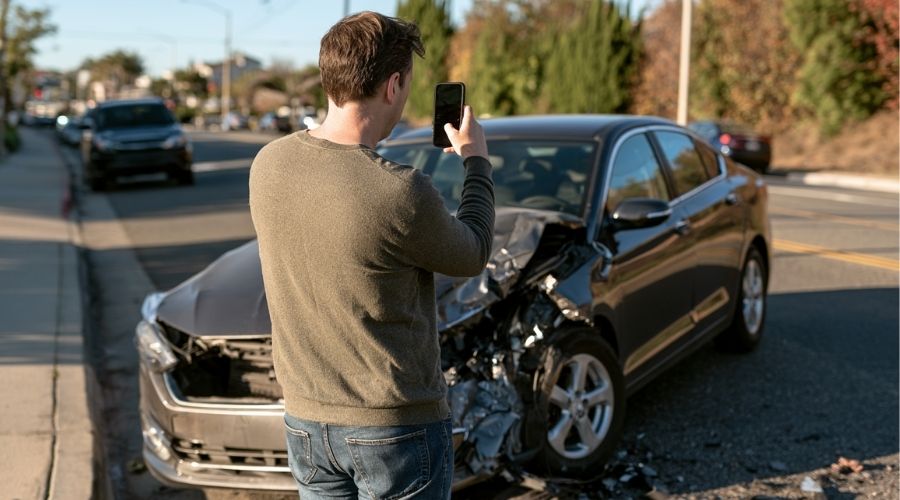
Call 911 and stay at the scene. Newport Beach Police Department or the California Highway Patrol — depending on which road the crash occurred on — will respond and file the official accident report that becomes the foundation of your claim. While waiting, collect the other driver’s license, insurance information, and vehicle registration. Photograph all vehicle damage, the road section where the crash occurred, any visible injuries, traffic signals and signage, road conditions, and any skid marks or debris. Ask any witnesses for contact information before the scene disperses.
Seek medical attention the same day — even when the injury seems minor. Delayed symptom onset from soft tissue injuries, concussions, and spinal conditions frequently presents 24 to 72 hours after the crash, and a medical record established close to the accident date is the strongest evidence of the connection between the crash and the injury. Do not give a recorded statement to any insurance adjuster before speaking with an attorney. Do not accept any settlement offer — a first-call offer from an insurer in Newport Beach, where claim values are characteristically higher than average, is almost certainly a number calibrated to your financial pressure rather than your claim’s actual value. For a full guide to handling that first adjuster call, see our post on how to talk to an insurance adjuster after an accident. And for a clear explanation of why first settlement offers should never be accepted without evaluation, see our post on should I accept the insurance company’s first offer.
Frequently Asked Questions
How long do I have to file a car accident claim in Newport Beach?
What are the most dangerous roads in Newport Beach for car accidents?
What if the driver who hit me was a tourist with out-of-state insurance?
How much is a car accident settlement worth in Newport Beach?
Does the summer tourist season affect Newport Beach car accident claims?
Injured in a Newport Beach Car Accident? Talk to an Attorney Before You Respond to Anyone
Newport Beach car accident claims involve dynamics — PCH road liability, tourist insurance complexity, high-income wage-loss calculations, and high-limit defendant coverage — that require local experience to navigate effectively. Oracle Law Firm | Accident & Injury Attorneys handles car accident claims throughout Newport Beach and Orange County, with no upfront fees and no obligation. Contact our team today before any recorded statement is given or any settlement offer is accepted.