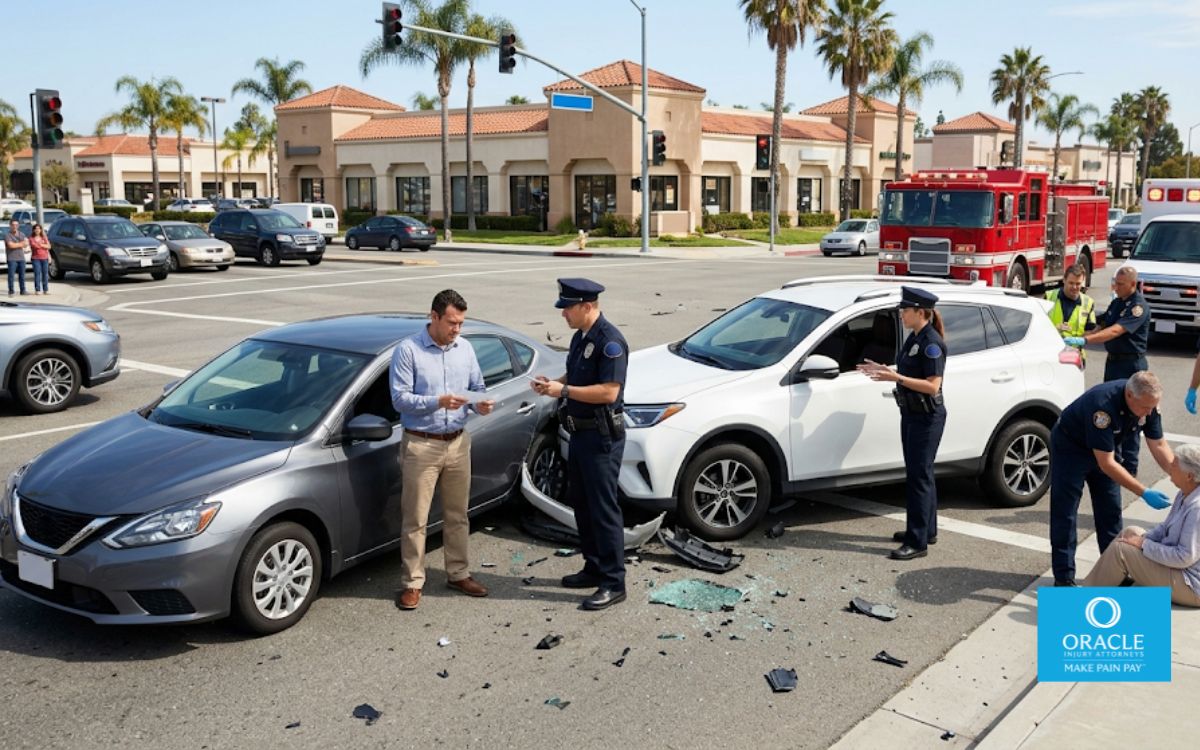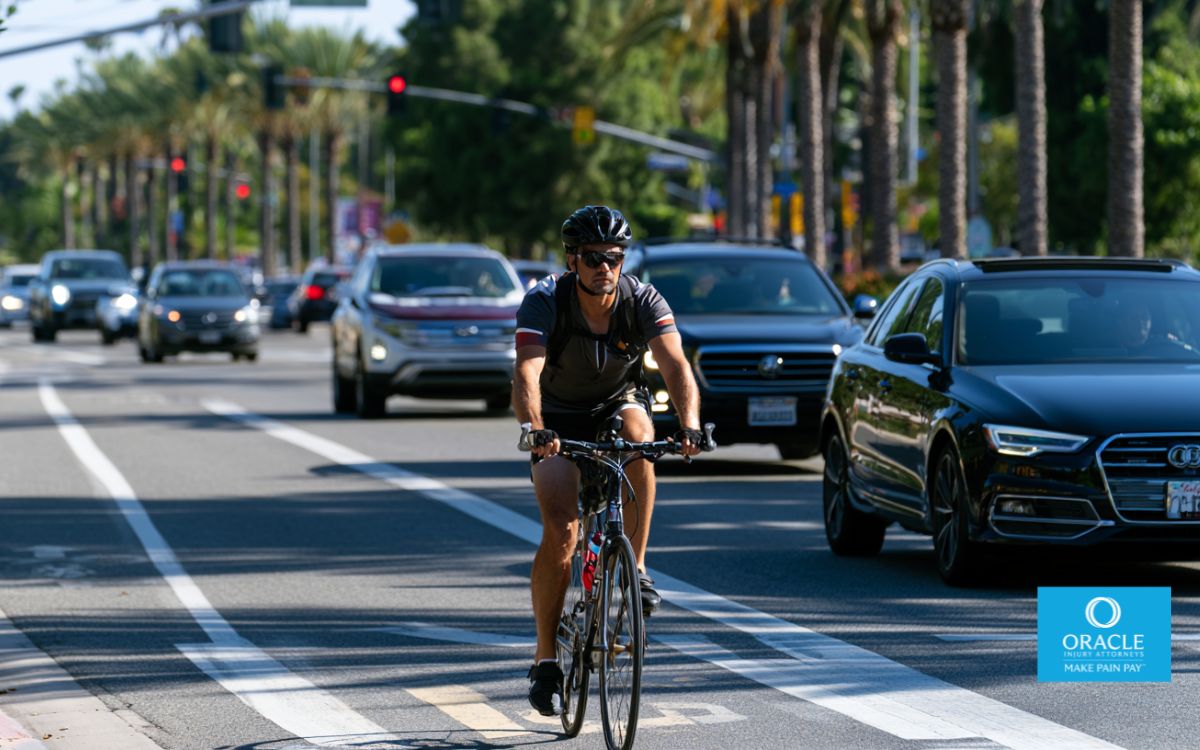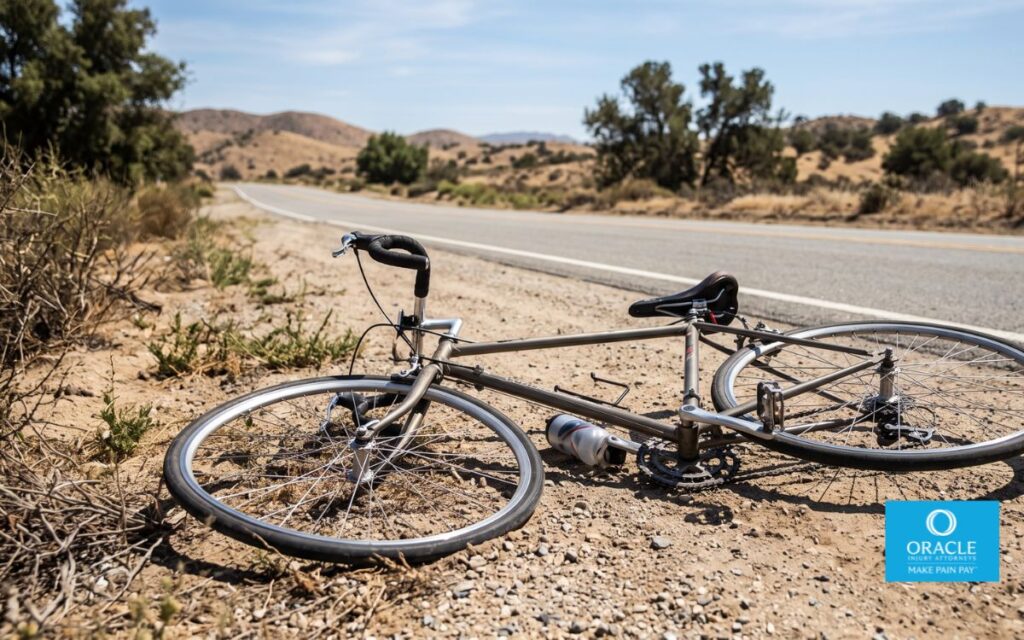
A bicycle accident in Condado de Riverside does not produce the same kind of legal claim as a car accident, even when the injuries are caused by a driver. The liability picture is often more complex, the insurance dynamics are different, and there are deadlines and procedural requirements that do not apply to standard vehicle collisions. If you were hurt while cycling, understanding those distinctions before you start the claims process can mean the difference between a fair recovery and a settlement that leaves significant compensation on the table.
Why Riverside County Is a High-Risk Cycling Environment
Riverside County consistently ranks among California’s most active counties for bicycle crashes. According to data compiled by UC Berkeley SafeTREC and the California Office of Traffic Safety, Riverside County recorded 45 bicycle fatalities in 2022 alone, placing it among the top five counties in the state for cyclist deaths. The county’s rapid population growth, high-speed arterial roads, and an expanding but still-incomplete cycling infrastructure create conditions where serious crashes are unfortunately common.
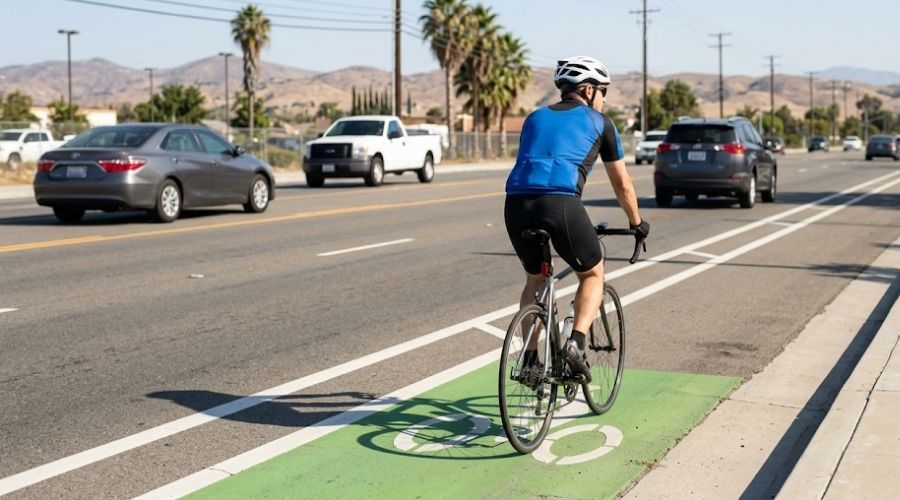
The crash types that show up most often in the data statewide — and in Riverside County specifically — include broadside collisions where a driver strikes a cyclist from the side, right-of-way violations at intersections, improper turns including right-hook crashes, and wrong-side-of-road collisions. These patterns matter for a claims perspective because each one has a distinct liability structure, and building a strong case requires identifying which pattern applies and what evidence is needed to prove it.
Who Can Be Held Liable — It Is Often More Than One Party
The most common defendant in a bicycle accident case is the driver whose vehicle struck or endangered the cyclist. Driver negligence can take many forms: distracted driving, failure to yield the right of way, passing too closely, making a turn without checking for cyclists, or intruding into a designated bike lane. When a driver violates a specific California Vehicle Code provision and that violation causes your injury, the violation itself becomes evidence of negligence under the legal principle of negligence per se — a strong foundation for liability.
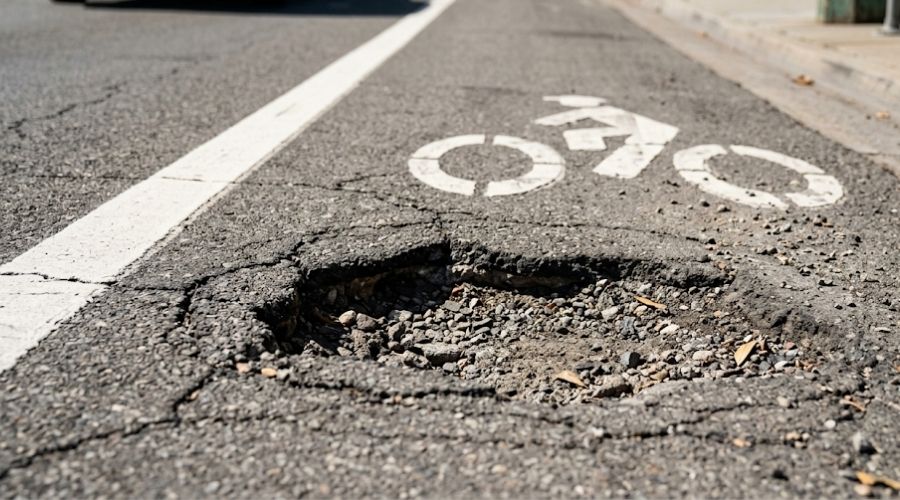
However, the at-fault driver is not always the only party with legal exposure. If the driver was operating a commercial vehicle or working at the time of the crash, their employer may also be liable under California’s respondeat superior doctrine, and commercial defendants typically carry substantially larger insurance policies than individual drivers. If a road defect — a pothole, broken pavement, missing bike lane markings, or a malfunctioning traffic signal — contributed to the crash, the government entity responsible for maintaining that roadway can be named as a defendant. If a manufacturing defect in your bicycle, e-bike, or cycling equipment played a role, a product liability claim against the manufacturer may apply independently of the personal injury claim. Identifying every potentially liable party, rather than just the most obvious one, is one of the most consequential steps an attorney takes early in a bicycle case.
The Critical Government Entity Deadline — Six Months, Not Two Years
This is the most commonly missed distinction in bicycle accident claims involving infrastructure. California’s standard personal injury statute of limitations gives most claimants two years from the date of the accident to file a lawsuit. For claims against a government entity — Riverside County, a city, Caltrans, or any other public agency responsible for the roadway — that window shrinks to six months to file a Government Tort Claim before any lawsuit can proceed.
Missing that six-month deadline almost always means losing the right to pursue that avenue of compensation entirely, regardless of how strong the underlying facts are. This deadline applies not only to obvious road-defect cases but to any scenario where a government-maintained roadway condition — missing signage, construction zone hazards, dangerous intersection design — contributed to the crash. Since cyclists frequently encounter exactly these conditions, it is a deadline worth being aware of from the very first day after an accident.
How Insurance Coverage Works Differently for Cyclists
The at-fault driver’s liability insurance is the primary source of compensation in most bicycle accident cases. As of January 2025, California’s minimum bodily injury liability coverage increased to $30,000 per person and $60,000 per accident under Senate Bill 1107 — more than double the previous minimums that had been in place since 1967. For cyclists who frequently sustain more severe injuries than car occupants in equivalent collisions, this increase provides a meaningfully larger initial recovery source, though serious injuries will still regularly exhaust minimum limits.
When the at-fault driver’s policy is insufficient, your own auto insurance policy’s uninsured or underinsured motorist coverage may apply, even though you were not in a vehicle at the time of the crash. Some homeowner and renter insurance policies also provide limited bicycle liability and theft coverage, though many do not extend to e-bikes. Understanding every coverage layer that might apply to your specific situation is something an experienced attorney will identify early in the case.
Comparative Fault — and How Insurers Use It Against Cyclists
California follows a pure comparative negligence rule, which means your compensation is reduced by your percentage of fault rather than eliminated. A cyclist found 20% responsible for a crash valued at $100,000 still recovers $80,000. This rule is genuinely protective of cyclists — but it is also a tool that insurance companies use aggressively to reduce their exposure.
Insurers frequently argue that cyclists contributed to accidents by riding outside the bike lane, failing to use hand signals, traveling at an unsafe speed, wearing dark clothing at night, or using headphones. Some of these arguments have legal merit depending on the circumstances; many do not. The defense carries the burden of proving that a specific cyclist action contributed to the crash — it is not enough to simply point out that a cyclist was not wearing a helmet or was not in the ideal lane position. An attorney familiar with bicycle accident claims knows how to identify which fault arguments are legally supportable and which ones are simply pressure tactics designed to reduce the settlement offer before negotiation even begins.
E-Bike Claims Carry Their Own Complications
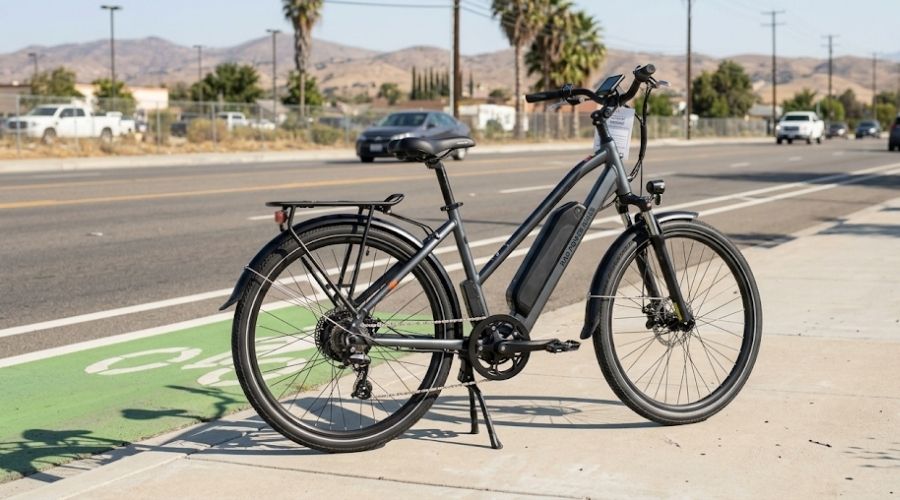
E-bike ridership in Riverside County has grown substantially in recent years, and so has the complexity of the resulting claims. Insurers handling e-bike cases commonly dispute the legal status of the bike, argue the rider was traveling too fast for conditions, or claim the e-bike was modified from its factory specifications in a way that increased risk. Each of these arguments requires a different evidentiary response.
If a manufacturing defect in the e-bike’s motor, battery, or components contributed to the crash — a battery fire, a sudden loss of motor assist, a brake failure — a separate product liability claim against the manufacturer may apply in addition to any personal injury claim against a driver. Preserving the e-bike itself, along with the battery, charger, and any purchase or service records, is critical evidence that cannot be recovered once the bike is repaired or discarded. Do not repair or dispose of the bike before speaking with an attorney.
What Your Damages Actually Include
Most bicycle accident claims in California settle between $25,000 and $100,000 for moderate injury cases, but serious and catastrophic injuries — traumatic brain injuries, spinal cord damage, multiple fractures, permanent disability — regularly produce settlements well above that range. The value of any specific claim depends on how completely damages are documented and presented, not just on how serious the injury is in isolation.
Economic damages include all medical expenses incurred and projected for the future, lost wages during recovery, diminished future earning capacity if the injury affects your ability to work long-term, and the cost to repair or replace your bicycle and any damaged equipment. Non-economic damages cover physical pain and suffering, emotional distress, loss of enjoyment of life, and the impact on relationships and daily activities. Future damages in particular — ongoing rehabilitation, specialist care, lifetime income impact — require careful documentation through medical expert projections and, where applicable, expert economic analysis to give them the legal weight they deserve in negotiation.
Steps to Take Immediately After a Riverside Bicycle Accident
Move to safety if you are able, then call the police to file a report regardless of how minor the collision may initially appear. Seek medical attention as soon as possible — head injuries and internal injuries frequently do not present obvious symptoms immediately. Photograph the accident scene, the vehicles involved, your bicycle, and any visible injuries before anyone moves anything. Gather contact information from witnesses while they are still present. Do not discuss fault with the other driver, and do not give a recorded statement to any insurance company before speaking with an attorney.
If your crash involved any road condition that may have contributed — a pothole, a broken curb, a missing traffic signal, an unmarked hazard — photograph it and note the exact location carefully. That documentation supports a potential government entity claim, and the six-month deadline on those claims means every day of delay matters. Our Abogados de lesiones personales en Riverside are experienced in identifying and preserving the full scope of a bicycle accident claim from day one.
Preguntas frecuentes
How is a bicycle accident claim different from a car accident claim in California?
How much compensation can I recover after a bicycle accident in Riverside County?
Can I file a claim if a road defect or missing bike lane caused my bicycle accident?
What happens if the insurance adjuster blames me for the bicycle accident?
Are e-bike accident claims handled differently from regular bicycle claims?
Hurt in a Riverside Bicycle Accident? Talk to an Attorney — No Cost, No Obligation
Bicycle injury claims move fast — especially when a government entity may be involved. Oracle Law Firm | Accident & Injury Attorneys offers free, confidential consultations to Riverside County cyclists with no upfront fees — you only pay if we recover compensation for you. Contacta hoy mismo con nuestro equipo. before any deadlines close.