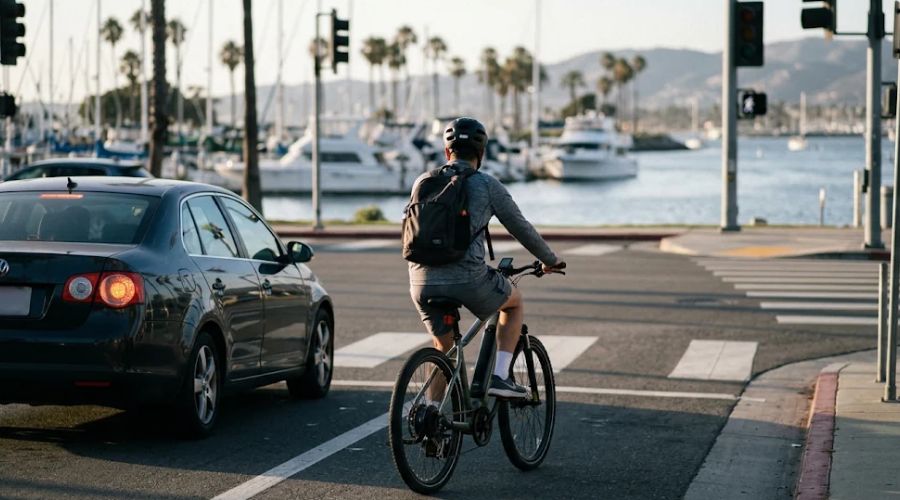
E-bikes have changed how people get around Newport Beach. Residents commute on them, teenagers ride them to school, visitors rent them for a day on the bay, and delivery riders use them all day long. They are quiet, quick, and convenient, but when something goes wrong, the injuries can be serious, and the question of who is responsible is not always obvious.
A crash could involve a careless driver, another rider, a faulty battery, a rental shop, or even the condition of the road. This guide explains how liability works so you know where you stand.
E-Bike Accident in Newport Beach: Start With the Rules
California sorts e-bikes into three classes under Vehicle Code Section 312.5. Class 1 bikes give motor help only while you pedal, up to 20 miles per hour. Class 2 bikes can also be powered by a throttle, up to 20 miles per hour. Class 3 bikes give pedal assistance up to 28 miles per hour.
Riders under 18 must wear a helmet on any bicycle, and under Vehicle Code Section 21213, Class 3 riders of any age must wear one. Children under 16 may not ride a Class 3 e-bike. A bike that meets these definitions generally does not need a license, registration, or insurance.
Newport Beach has added local rules on top of state law, including requirements to ride safely on streets, sidewalks, and parks, helmet rules for minors, and limits on riding in certain areas. These rules change, so it is worth checking the city’s current requirements. They matter in a claim because insurers often use any rule violation to argue that the rider was partly at fault.
One more point is easy to miss. Some devices sold as e-bikes go faster or have more power than the law allows, and they may not legally count as e-bikes at all. A heavily modified or overpowered bike can be treated differently, including for licensing and insurance, and that can change who is responsible after a crash.
Who Can Be Liable for Your Injuries?
There is rarely just one possible answer. Depending on the facts, responsibility can fall on a driver, another rider or pedestrian, the company that made or sold the bike or battery, a rental business, an employer, a property owner, or a public agency. More than one party can share blame at once. The sections below walk through each, so you can see how the pieces fit together.
When a Driver Is at Fault
Many e-bike crashes happen when a driver fails to see a rider. Typical examples include a driver turning left across a rider’s path, turning right into a bike lane, pulling out of a driveway or parking spot, or opening a door into the bike lane.
California requires drivers to give cyclists at least three feet when passing under Vehicle Code Section 21760, and drivers must not open a door into traffic unless it is safe under Section 22517. A driver who breaks these rules may be responsible for the injuries that follow. The same duty of care applies in the busy streets and coastal roads around Newport Beach as anywhere else.
E-bikes can look slower than they are, and drivers sometimes misjudge their speed. That is not an excuse. It is also something an insurer may try to turn around by saying the rider was going too fast, so details about your speed and the bike’s class can matter.
When an E-Bike Rider or Another Person Is at Fault
Not every crash involves a car. You might be hurt when an e-bike rider hits you on a sidewalk, boardwalk, or path, or when another rider cuts across your lane. Riders owe a duty of care to everyone around them, and those who ride recklessly, too fast for conditions, or where it is not allowed may be held responsible. If you were the rider and a pedestrian stepped out suddenly, that can also affect fault.
When a minor is involved, responsibility can sometimes reach beyond the young rider in certain circumstances, such as when a parent let a child ride a bike that was too powerful for their age. Those cases depend heavily on the facts and are worth discussing with a lawyer.
When the Bike Itself Failed
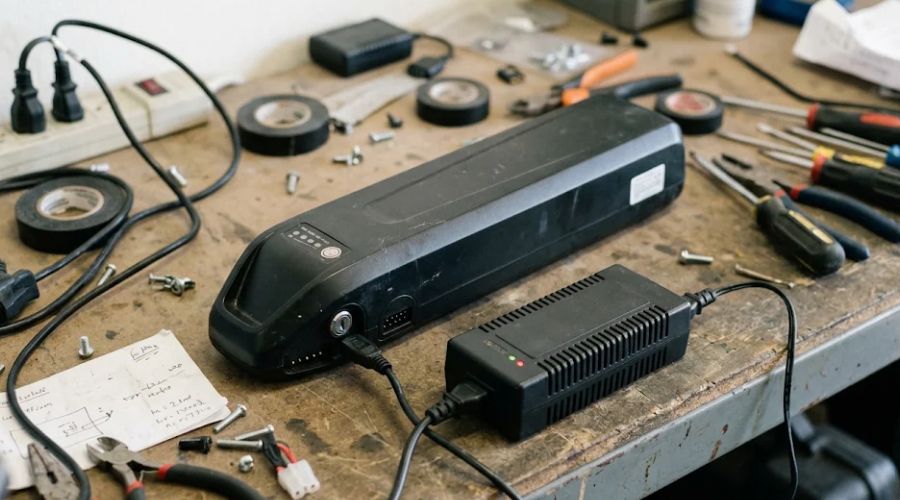
Sometimes the problem is not a person at all. Brakes that fail, a frame that cracks, a controller that surges, or a battery that overheats can cause a crash or a fire. In California, the companies that design, make, distribute, or sell a defective product can be held responsible for the harm it causes. That can include the manufacturer, an importer, or the shop that sold the bike. Battery safety has been in the spotlight, and state law now calls for third-party safety certification of e-bike batteries.
If you think the bike failed, do not repair it, charge it, or throw anything away. Keep the bike, battery, charger, receipts, and packaging exactly as they are, and photograph everything. Evidence like this can be lost or changed easily, and an expert may need to inspect it. Avoid letting the seller or the manufacturer take the equipment before you have talked to a lawyer.
Rental Shops and Waivers
Visitors often rent e-bikes near the harbor and beaches. If you were hurt on a rental, the company may have a duty to keep its bikes in safe working order, to match riders with appropriate equipment, and to explain how to use it. You probably signed a waiver before riding, and many people assume that ends the matter. It does not always.
A waiver may not protect a company from claims based on poor maintenance or a defective bike, though it can make a case more complicated. Keep your rental agreement, receipt, and any messages, and have a lawyer read what you signed.
Roads, Paths, and Public Agencies
Potholes, broken pavement, uneven transitions, missing signs, poor lighting, or unsafe work zones can send a rider to the ground. When a crash is tied to a dangerous condition of public property, California law allows claims against public entities under Government Code Section 835.
In general, that means showing that a dangerous condition existed, that it created a risk of the kind of injury you suffered, and that the agency knew about it, or should have known, in time to fix or warn about it. The city, the county, or Caltrans could be involved, depending on who controls the spot where you fell.
These claims have a short fuse. A claim for injury against a public entity generally must be presented within six months under Sección 911.2 del Código de Gobierno. If you think the road or path played a part, speak with a lawyer well before that mark.
How Helmets, Class, and Local Rules Affect Fault
California follows comparative fault, which means your compensation is reduced by your share of responsibility instead of being denied. If a jury decided you were 20 percent at fault on a $100,000 claim, for example, you would recover $80,000. In e-bike cases, insurers often point to things like no helmet, speed above what the bike’s class allows, riding where it is not permitted, or modifications to the bike.
These arguments can reduce a claim, but they do not automatically erase it. A missing helmet, for instance, may be used to argue that head injuries were worse, but it does not make another person’s careless driving acceptable. The details matter, and an attorney can help separate the arguments that carry weight from the ones that do not. Our posts on Cómo hablar con un perito de seguros después de un accidente y 5 tácticas que usan los peritos de seguros para reducir su indemnización. Explica qué debes observar.
What to Do After an E-Bike Accident
Your health comes first. Call 911 if anyone is hurt, accept medical evaluation at the scene, and see a doctor soon after, even if you feel fine, because concussions, fractures, and internal injuries can show up later. Ask for a police report number, and keep your statements short and factual. Do not guess about fault or say you are okay.
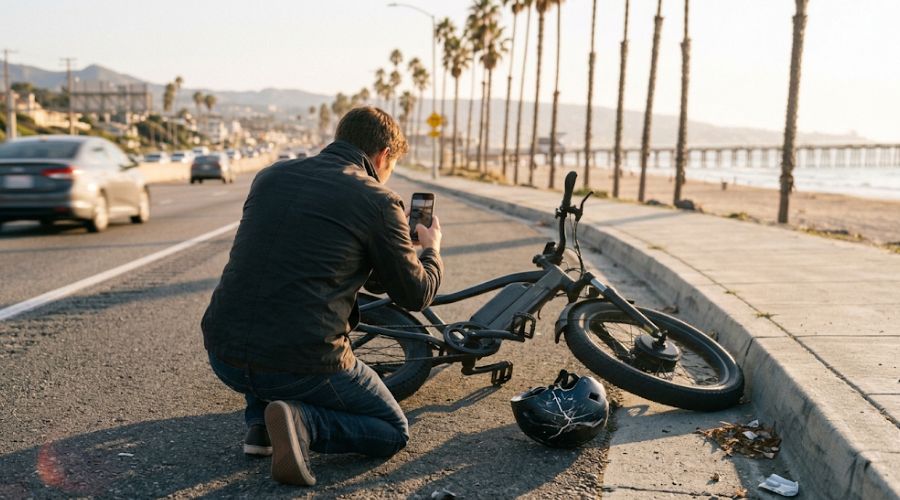
If it is safe, take photos of the scene, the vehicles, the road surface, any signs, and your injuries. Photograph your bike and helmet, and keep them as they were. Many e-bikes record speed, distance, or ride data in an app or on the display, and that information can help show what really happened, so do not delete it.
Get the names and phone numbers of witnesses, and ask whether any nearby cameras or dashcams may have caught the crash. For a similar checklist aimed at riders and walkers on a busy coastal road, see our guide for people hurt on PCH in Huntington Beach.
What Insurance May Cover
Because e-bikes usually do not require their own insurance, people are often unsure what applies. If a driver caused the crash, that driver’s liability insurance is the first place to look. If the driver had no insurance or too little, your own auto policy’s uninsured or underinsured motorist coverage may help, even though you were on a bike, depending on the wording of your policy.
Health insurance and medical payments coverage may help with early bills. If you were the one who caused a crash, a homeowner’s or renter’s policy may sometimes respond, depending on its terms. Check your policies early and avoid giving a recorded statement to any insurer before you understand your rights.
Deadlines for E-Bike Injury Claims in California
La mayoría de las demandas por lesiones personales deben presentarse dentro de los dos años siguientes a la ley. Artículo 335.1 del Código de Procedimiento Civil. As described above, a claim against a public entity usually has a six-month window instead. Children may have additional time, which an attorney can confirm. Because it is not always clear at first whether an agency or a product maker is involved, it is safer to assume the shorter deadline until a lawyer tells you otherwise.
Para conocer todas las fechas límite de California en un solo lugar, consulte ¿Cuánto tiempo tienes para presentar una reclamación en California?. Para comprender cómo se valoran las reclamaciones, lea ¿Cuánto vale su caso de lesiones personales en California?, and if you are weighing whether to hire help, see ¿Necesita un abogado especializado en lesiones personales en el Condado de Orange?.
Preguntas frecuentes
Who can be liable in an e-bike accident in Newport Beach?
Does not wearing a helmet ruin my e-bike injury claim?
What if my e-bike’s brakes or battery failed?
I signed a waiver when I rented the e-bike. Can I still bring a claim?
¿Cuánto tiempo tengo para presentar una reclamación por accidente de bicicleta eléctrica en California?
Hurt in an E-Bike Crash? Find Out Who Is Responsible
E-bike cases can involve drivers, manufacturers, rental companies, and public agencies, and each one brings different rules and deadlines. Oracle Law Firm | Accident & Injury Attorneys helps injured riders, pedestrians, drivers, and passengers throughout Orange County, including Newport Beach, with a free, confidential consultation, no upfront fees, and no obligation.
Usted solo paga si nosotros obtenemos una indemnización. Contacta hoy mismo con nuestro equipo. antes de hablar con una compañía de seguros.