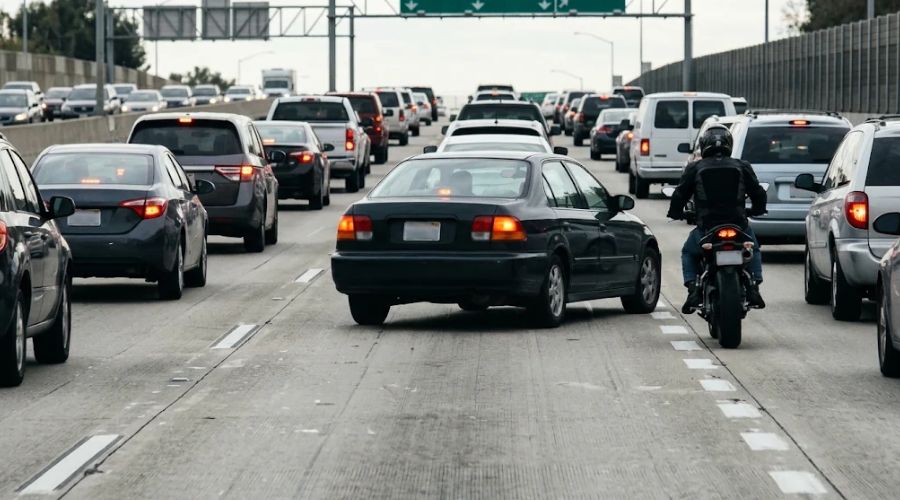
Traffic on the 405 slows to a crawl, a motorcycle eases between two lanes, and in a split second a car drifts over. If you were the rider, you may be hurt badly and dealing with an insurance adjuster who wants to blame you for splitting lanes. If you were the driver, you may be shaken, confused, and worried you will be blamed for a crash you never saw coming.
Lane-splitting crashes are some of the most disputed in California, mostly because people misunderstand the law. Here is how fault actually works when a lane-splitting crash happens in Fountain Valley.
Lane-Splitting Crash on the 405 in Fountain Valley: What the Law Says
Many people think lane splitting is illegal, but in California it is not. Since January 1, 2017, Vehicle Code Section 21658.1 has defined lane splitting as a two-wheeled motorcycle riding between rows of stopped or moving vehicles in the same lane. It applies to freeways and other roads, and it is available only to motorcycles. Cars and trucks cannot do it. Riding on the shoulder is a different thing, and it is not lane splitting.
Legal does not mean without limits. A rider is still expected to ride safely and prudently for the traffic and conditions, and the state does not set a single magic speed that makes lane splitting safe. That is why fault in these crashes turns on the facts, not on a label.
How Fault Is Decided After a Lane-Splitting Crash
California uses a negligence standard. The question is who failed to use reasonable care, and whether that failure caused the crash. The fact that a rider was lane splitting does not by itself make the rider at fault, and the fact that a driver was hit does not by itself make the driver innocent.
A driver may be mostly or entirely at fault if they changed lanes without checking mirrors and blind spots, drifted without signaling, or braked suddenly while distracted. Drivers have a duty to make sure a lane change can be done safely under Vehicle Code Section 22107, and that includes looking for motorcycles.
A rider may share fault if they were moving much faster than the surrounding traffic, squeezing through a gap too tight to be safe, riding in poor visibility, or not paying attention to traffic ahead. In many crashes, both people contributed in different amounts.
Shared Fault Does Not End Your Claim
California follows pure comparative fault, which means your compensation is reduced by your share of responsibility instead of being denied. If a jury decided a rider was 20 percent at fault and total damages were $100,000, the rider would recover $80,000. The same logic works for drivers who were hurt. That is why the percentage matters so much, and why insurers fight over it.
Expect adjusters to treat lane splitting as a red flag. Some will try to assign blame to the rider just because the motorcycle was between lanes. You can push back with facts, and our posts on how to talk to an insurance adjuster after an accident and 5 tactics insurance adjusters use to lower your settlement explain what to watch for.
Evidence That Shows What Really Happened
These cases are often one person’s word against another’s, so evidence matters. Start with the official record. The California Highway Patrol generally responds to crashes on the 405, so ask for the report number and request a copy later. Photos of the vehicles, the damage, the lane, and the traffic can show how and where the vehicles made contact. Side damage on a car and matching damage on the motorcycle can tell a clear story about who moved into whose space.
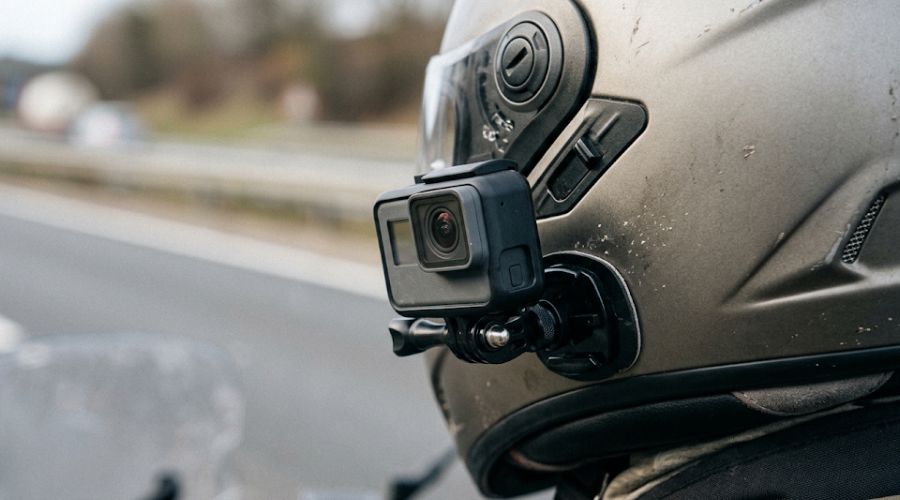
Video can be a game changer. A helmet camera, a dashcam, or footage from another driver may show the speed of traffic, whether a turn signal was used, and whether the driver looked before moving over. Witness names and phone numbers are valuable, though freeway witnesses often leave quickly. If you cannot collect any of this because you are hurt, a lawyer can later request records, look for video, and send preservation letters before important evidence disappears.
What to Do Right After the Crash
Get to safety and call 911 if you can. Motorcycle injuries tend to be serious, including broken bones, road rash, spinal injuries, and head injuries, so accept medical help at the scene and see a doctor soon after, even if you feel okay. Do not guess about fault or apologize when speaking to officers or the other person. Stick to simple facts.
Two reporting rules apply to riders and drivers alike. A crash with injury or death must be reported to law enforcement within 24 hours, and the DMV generally requires an SR-1 form within 10 days if anyone was injured or killed, or if property damage was more than $1,000. A police report does not replace the DMV report. For a broader checklist of freeway steps, see our guide for drivers injured at the 405/55 interchange in Costa Mesa.
Does Not Wearing a Helmet Hurt the Claim?
California law requires motorcyclists to wear a helmet, and insurers will look closely at this. If a rider was not wearing one, the other side may argue that it contributed to head injuries and try to reduce compensation for those injuries. That is a fight about the size of the claim, not a rule that wipes it out. A driver who caused the crash is still responsible for the harm they caused, and an attorney can help separate the arguments that matter from the ones that do not.
If You Are the Driver in a Lane-Splitting Crash
Drivers are often blamed unfairly, and sometimes fairly. If you were hurt, or you are being accused of causing a rider’s injuries, take the same steps: report the crash, document everything, and be careful with recorded statements. Do not assume you are at fault just because a rider was hurt worse than you were. Injuries to a rider tend to be greater simply because a motorcycle offers little protection, and that does not tell us who was careless.
Deadlines for Motorcycle Crash Claims in California
Most personal injury lawsuits must be filed within two years under Code of Civil Procedure Section 335.1. If a government agency may share responsibility, for example because of a dangerous road condition, a claim generally has to be presented within six months under Government Code Section 911.2. Children may have additional time.
For every California deadline in one place, see how long you have to file a claim in California. To understand how claims are valued, read what your personal injury case is worth in California. And if you are weighing whether to hire help, see do you need a personal injury lawyer in Orange County.

Frequently Asked Questions
Is lane splitting legal in California?
Is the motorcyclist automatically at fault in a lane-splitting crash?
What if a driver changed lanes without looking and hit the motorcycle?
Does not wearing a helmet ruin my motorcycle injury claim?
How long do I have to file a claim after a motorcycle crash in California?
Hurt in a Lane-Splitting Crash? Get Clear Answers
Fault in a lane-splitting crash can be argued both ways, and insurers know how to use that. Oracle Law Firm | Accident & Injury Attorneys helps injured riders, drivers, and passengers throughout Orange County, including Fountain Valley, with a free, confidential consultation, no upfront fees, and no obligation. You only pay if we recover compensation.
Contact our team today before you speak with an insurance company.