After a car accident in Victorville, one question can determine everything: who is at fault. The answer doesn’t just affect your claim. It directly impacts how much compensation you receive, how quickly your case moves forward, and whether the insurance company challenges your version of events.
Many drivers assume fault is obvious, but that is rarely the case. Accidents often involve multiple factors, and responsibility is not always clear at first glance. Determining who is legally responsible requires a careful review of what happened before, during, and after the crash.
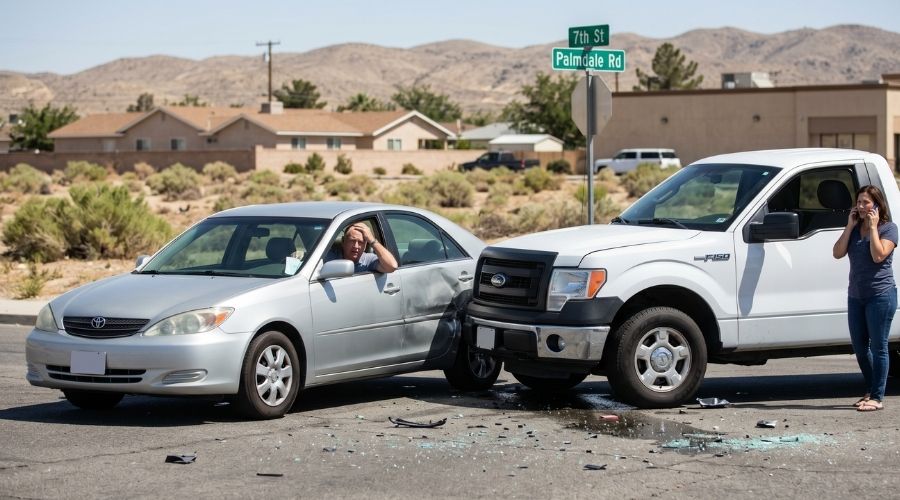
Why Fault Can Make or Break Your Car Accident Claim
Fault is the foundation of any car accident claim in California. It determines who is financially responsible for damages such as medical bills, lost income, and vehicle repairs. Insurance companies rely heavily on fault when deciding whether to pay a claim and how much compensation to offer.
If you are found partially responsible, your compensation may be reduced. This makes it critical to understand how fault works and to ensure your side of the story is clearly supported by evidence. Even a small percentage of fault can significantly impact your final recovery.
The Legal Rules California Uses to Decide Fault
California follows a fault-based system that relies on the concept of negligence. A driver is considered at fault if they failed to act with reasonable care, such as by speeding, running a red light, or driving while distracted.
To determine fault, investigators look at whether a driver’s actions contributed to causing the accident. This includes reviewing traffic laws, road conditions, and driver behavior. The goal is to establish who failed to follow the rules and how that failure led to the crash.
What Evidence Actually Proves Who Caused the Accident
Evidence plays a central role in determining fault. Photos of the accident scene, damage to vehicles, and road conditions can help recreate how the crash occurred. These details often provide a clearer picture than verbal statements alone.
Witness accounts can support your version of events, especially when there is disagreement between drivers. Police reports also carry weight, as they include an officer’s observations and initial conclusions about the accident. Medical records further strengthen your claim by linking your injuries directly to the crash.
Strong, consistent evidence can make it much harder for an insurance company to dispute your claim.

How Shared Fault Works Under California Law
California uses a system called comparative negligence, which allows more than one party to share responsibility for an accident. Each driver is assigned a percentage of fault based on their actions.
If you are partially at fault, your compensation is reduced by your percentage of responsibility. For example, if you are found to be partially responsible, your final recovery will reflect that share of fault. This system makes it essential to minimize your level of responsibility as much as possible.
How Insurance Companies Decide Who Pays
Insurance companies conduct their own investigations to determine fault. Adjusters review accident reports, examine evidence, and speak with the parties involved. Their goal is to assess liability and determine how much they are willing to pay.
While this process may seem objective, insurance companies are also focused on protecting their bottom line. They may interpret evidence in a way that reduces their financial responsibility. Being cautious when communicating with insurers and ensuring your information is accurate can help protect your claim.
Costly Mistakes That Can Shift Fault Against You
Certain mistakes can significantly affect how fault is assigned. Admitting fault at the scene, even casually, can be used against you later. Failing to gather evidence or delaying medical treatment can weaken your case.
Inconsistent statements about the accident can also create doubt and lead to a higher percentage of fault being assigned to you. These issues can reduce your compensation or complicate your claim. Avoiding these mistakes is one of the most important steps you can take after an accident.
When Fault Disputes Get Complicated
Some car accident cases are straightforward, but others become more complex when fault is disputed. This can happen when there are conflicting accounts, limited evidence, or multiple parties involved.
In these situations, resolving the claim may take longer and require additional investigation. Understanding how fault is evaluated can help you navigate these challenges and avoid being unfairly blamed.

Injured in a Victorville Car Crash? Don’t Let Fault Be Used Against You
Before moving forward with your claim, it is important to understand how fault will affect every aspect of the process. From the initial investigation to the final settlement, liability plays a key role in determining the outcome.
Taking steps to document your case, maintain consistency in your statements, and respond promptly to requests for information can help strengthen your position. Being proactive early on can prevent complications later.
Contact us for a free consultation and get answers to your questions.
Frequently Asked Questions
How is fault determined after a car accident in Victorville
Fault is determined by reviewing evidence such as police reports, witness statements, and physical damage, along with evaluating whether a driver acted negligently.
Can more than one driver be at fault in California
Yes, California follows a comparative negligence system, which allows multiple parties to share responsibility for an accident.
What happens if I am partially at fault
Your compensation may be reduced based on your percentage of fault, but you can still recover damages.
What evidence is most important in proving fault
Photos of the accident, witness statements, police reports, and medical records are all important in establishing fault.
Should I admit fault at the scene of an accident
It is best to avoid admitting fault, as the full circumstances of the accident may not be clear at that moment.