California added several new traffic laws in 2026, including an expanded Move Over law, red-light cameras, tickets for driverless cars, and stricter e-bike and DUI rules. These laws matter after a crash, too. When a driver breaks a safety law and hurts you, California law can presume that driver was careless. That can make your injury claim stronger. Document everything and act quickly, because evidence like camera data does not stay around forever.
If you were hurt in a crash this year, you probably were not thinking about the legislature. You were thinking about your pain, your car, and the insurance adjuster who keeps calling. That is normal. But the new California driving laws 2026 brought in could matter more to your case than you think.
Several new rules took effect on January 1, 2026, and more kicked in on July 1. Most drivers never heard about them. Insurance companies did. They know which rules create new duties for drivers, and they know that a broken safety law can shift fault in a claim.
Here is the good news. You do not need to memorize the Vehicle Code. You need to know which changes affect injury claims, what they mean in plain English, and what to do if one of them was broken in your crash. That is what this guide covers.
We will walk through the laws one at a time, explain how a traffic violation can become proof of fault, and give you a short list of steps to protect your claim.
What Are the New California Driving Laws for 2026?
The main new California driving laws for 2026 expand the Move Over rule (AB 390), allow civil red-light cameras (SB 720), create tickets for driverless cars (AB 1777), require e-bike reflectors at all hours (AB 544), and toughen DUI rules (AB 366 and AB 1087). Most took effect January 1, 2026.
Here is a quick rundown, based on the California DMV’s 2026 new laws summary and the CHP’s 2026 public safety laws announcement:
- AB 390: Drivers must slow down or move over for any stopped vehicle with hazard lights or warning devices, not just emergency vehicles.
- SB 720: Cities and counties can run red-light camera programs that issue civil tickets.
- SB 480: Self-driving cars may use special marker lamps that show when the computer is driving.
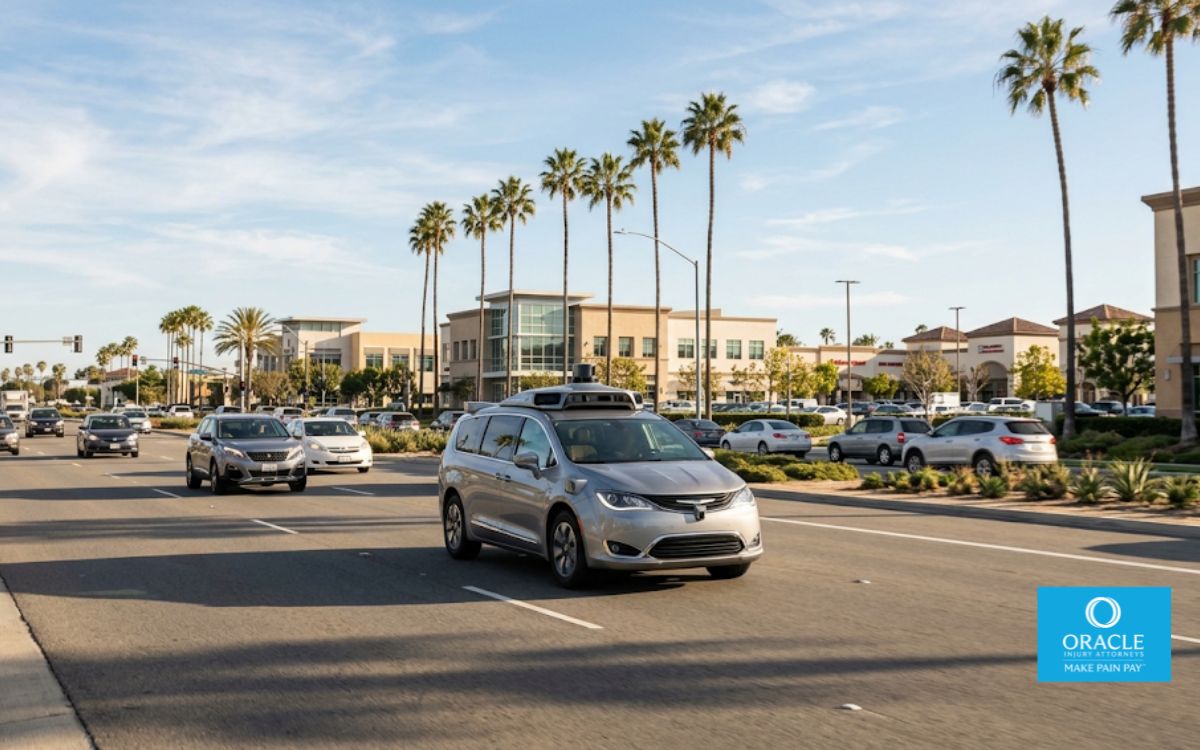
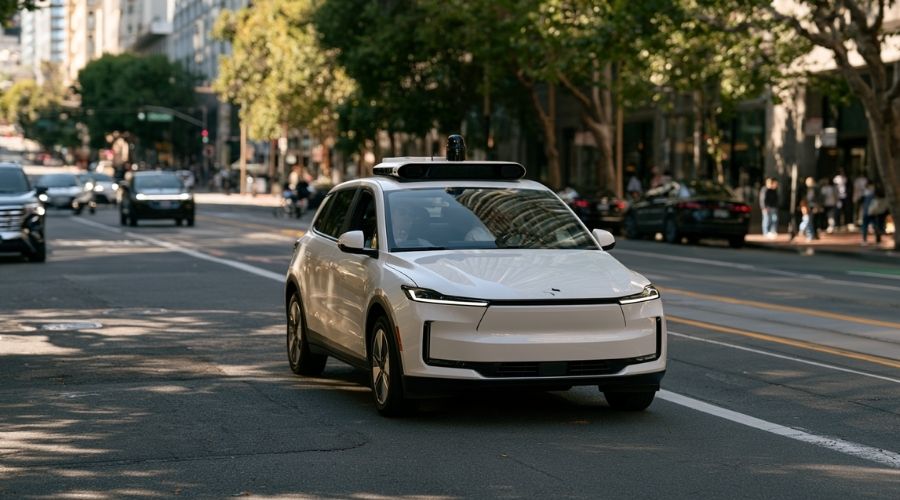
- AB 1777: Starting July 1, 2026, police can issue a “notice of noncompliance” to a driverless car company when its vehicle breaks a traffic law.
- AB 544: E-bikes need a rear red reflector or light at all hours, not only at night.
- AB 366 and AB 1087: The ignition interlock program for DUI offenders is extended, and probation for intoxicated vehicular manslaughter is longer.
One clarification: you may have seen headlines about 20 mph school zones. That law, AB 382, passed, but the DMV lists its start date as January 1, 2031. For now, the current school zone limits still apply.
Why a Broken Traffic Law Can Help Prove Fault in Your Car Accident Claim
In California, when a driver breaks a safety law and that violation causes the kind of injury the law was meant to prevent, the law presumes the driver was negligent. This is called “negligence per se.” It shifts the burden to the other driver to explain why they should not be held responsible.
What “Negligence Per Se” Means in Plain English
“Negligence” just means carelessness that causes harm. “Negligence per se” means that the carelessness is presumed because the person broke a law that was written to keep people safe. California spells out this definition in Evidence Code section 669, and juries hear it through the state’s official civil jury instructions, published by the Judicial Council of California as CACI 418.
To use it, you generally need to show four things. The driver broke the law. The violation caused your injury. Your injury is the kind of harm the law was meant to prevent. And you are in the group of people the law was meant to protect.
How This Works in a Real Claim
Say you are stopped on the shoulder of the 405 with your hazards on, changing a flat. A driver flies past in the lane right next to you and clips your door. Under the old rule, the insurer might argue there was no specific duty to move over for a regular car. Under AB 390, there is.
That does not mean your case is guaranteed to win. The other side can still argue you share some blame. But a clear violation of a safety law gives you a strong starting point, and adjusters know it.
The Expanded Move-Over Law (AB 390) and Roadside Crashes
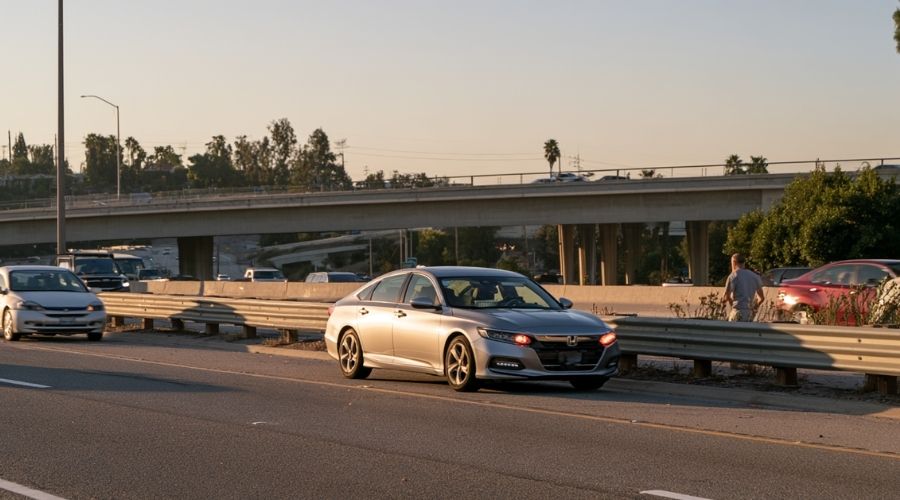
AB 390 requires California drivers to move over a lane or slow to a safe speed when passing any stopped vehicle that is showing hazard lights, flares, or other warning devices. Before 2026, the rule mainly covered emergency, tow, and Caltrans vehicles. Now it protects everyday drivers, too.
Who the Law Now Protects
The expansion covers regular drivers stopped with a breakdown, a flat tire, or after a minor crash. It also protects delivery drivers, rideshare drivers, and roadside workers who use warning devices. If you were standing next to your car on the shoulder, you are exactly the person this law was written for.
If You Were Hit While Stopped on the Shoulder
These crashes are often serious because the person hit is standing outside or sitting still. If it happened to you, write down whether your hazards were on, whether you set out flares or triangles, and what lane the other driver was in. Photos of your hazard lights, even taken after the fact, help show the setup.
Roadside crashes involving big rigs are common on freeways like the I-5 and SR-91. If a commercial truck hit you, our truck accident lawyers can explain how trucking rules add another layer of responsibility.
If your hazards were on and they hit you anyway, the law is now on your side.
Red-Light Cameras Are Back. Can They Prove Who Ran the Light?
SB 720 lets California cities and counties run red-light camera programs that issue civil tickets instead of criminal ones. A camera photo or video can be strong evidence of who entered an intersection on red. But programs are local, and data is not kept long, so you have to move fast.
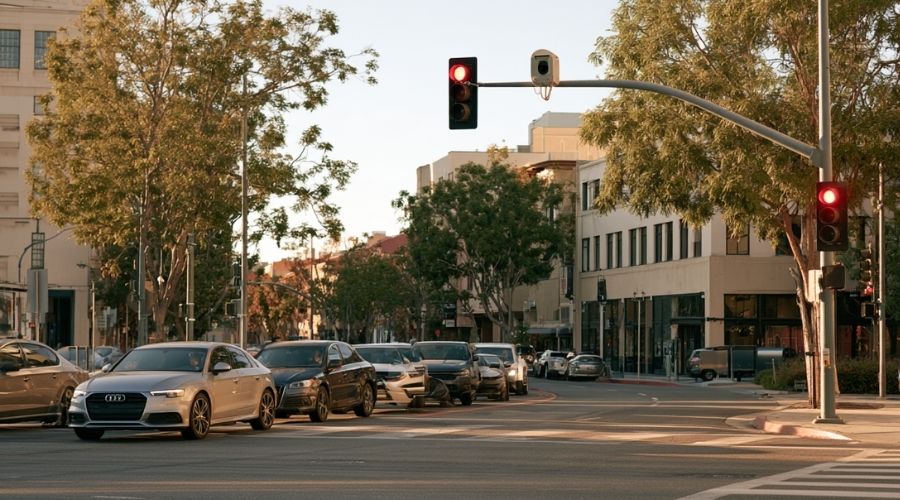
How SB 720 works
Under the new system, a red-light camera ticket is treated more like a parking ticket than a criminal citation. According to a plain-language FAQ on SB 720, first-time fines are capped at $100, and the tickets do not add points to a driver’s record. Programs are run by transportation or public works departments, not police.
Not every city has a program yet. Each city or county decides whether to adopt one.
Why You Need to Request Footage Fast
The law limits how long these programs keep personal data. That protects privacy, but it can work against you after a crash. If an intersection in your crash had a camera, you or your attorney should ask the city to preserve the records right away. Nearby business cameras, doorbell cameras, and dashcams can also fill the gap.
Insurance companies love a “he said, she said” intersection crash because it gives them an excuse to split fault or deny the claim. The video ends that argument.
Self-Driving Cars, E-Bikes, and DUI: The Rest of the New California Driving Laws 2026
The rest of the new California driving laws for 2026 cover driverless cars, e-bikes, and drunk driving. Each one can come up in an injury claim, especially as robotaxis win approval to expand into Orange County and the Inland Empire and e-bike crashes keep climbing.
Driverless cars. For years, a self-driving car with no human driver could not get a traffic ticket. That changed on July 1, 2026. Under AB 1777, police can now issue a notice of noncompliance to the company, and companies must report these incidents to the DMV, as NBC Bay Area reported. SB 480 also lets these cars use marker lamps that show when the computer is in control. Both create a paper trail that can help prove fault.
E-bikes. AB 544 requires a rear red reflector or light at all hours. If an e-bike rider without one is involved in a crash, the insurer may try to use that against the rider. On the other hand, if a rider hit you as a pedestrian, that violation may help your claim.
DUI. AB 366 extends the program that requires many DUI offenders to install an ignition interlock device. AB 1087 lengthens probation for intoxicated vehicular manslaughter to three to five years. If a drunk driver hurt you or took a loved one, a criminal case may run alongside your civil claim. Our wrongful death attorneys handle these cases with the care they deserve.
What to Do After a Crash Under the New Rules?
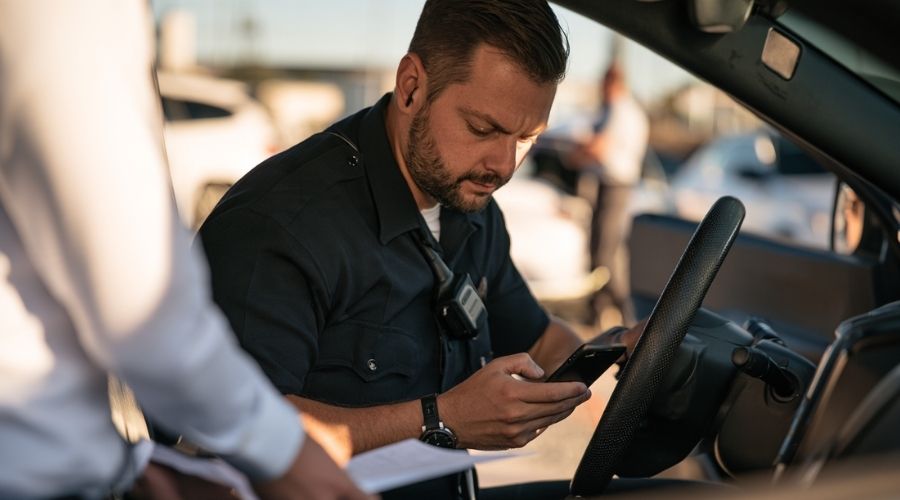
After a crash, focus on safety and medical care first. Then gather evidence that shows whether the other driver broke one of the new rules: photos, witnesses, camera locations, and the police report. Do not give a recorded statement before you understand your rights.
Here are the steps that matter most:
- Call 911 and get a police report. Ask the officer to note any violation, like failing to move over or running a red light.
- Take photos. Get your hazard lights, warning devices, the intersection, traffic signals, and all vehicles involved.
- Look for cameras. Note any red-light cameras, business cameras, or doorbell cameras nearby.
- Get medical care. Some injuries, like concussions and back injuries, do not show up right away.
- Do not guess or apologize. Stick to the facts with police and the insurer.
Watch for This Insurance Tactic
Some adjusters will say a law is “too new” to matter or that it “does not apply” to your situation. Do not just accept what they say. They work for the insurance company, not for you. A lawyer can check whether the law was in effect on your crash date and how it fits your facts.
Mind the Deadline
In most cases, California gives you two years from the date of injury to file a personal injury lawsuit under Code of Civil Procedure section 335.1. If a city or state agency is involved, you may have as little as six months to file a claim. Waiting is how good cases get weaker.
The insurance company already knows the new laws. You deserve someone who knows them, too.
The Bottom Line
The new California driving laws for 2026 are not just about tickets. When a driver ignores one of them and hurts you, that violation can become powerful evidence of fault. The key is to document what happened quickly and not let an adjuster tell you the law does not count.
Every case is different, and an experienced car accident lawyer can tell you how these changes apply to yours. Whether your crash happened in Santa Ana, Riverside, or anywhere else in Orange County and the Inland Empire, you do not have to figure the situation out alone.
Been in an accident or hurt on the job? You don’t have to navigate insurance companies alone. Oracle Law Firm fights to get you the compensation, control, and clarity you deserve.
Get a Free Consultation or call 888.597.4099.
Disclaimer: This article is for general information only and is not legal advice. Reading it does not create an attorney-client relationship. Every case depends on its own facts, and past results do not guarantee future outcomes. For advice about your situation, speak with a licensed California attorney.
Frequently Asked Questions
What new driving laws took effect in California in 2026?
Key new laws include AB 390 (expanded Move Over rule), SB 720 (civil red-light cameras), SB 480 (marker lamps for self-driving cars), AB 1777 (tickets for driverless car companies starting July 1, 2026), AB 544 (e-bike rear reflectors at all hours), and stronger DUI rules under AB 366 and AB 1087.
Can a traffic law violation prove fault in a California car accident?
It can help a lot. Under California’s negligence per se rule, a driver who breaks a safety law and causes the kind of harm that law was meant to prevent is presumed negligent. The other driver can try to rebut that presumption, but it gives your claim a strong starting point.
What does California’s new Move Over law require?
AB 390 requires drivers to move over a lane or slow down to a safe speed if they cannot move over when passing any stopped vehicle that is displaying hazard lights or warning devices. Before 2026, the rule mainly applied to emergency and service vehicles.
Can red-light camera footage be used in my accident claim?
Red-light camera records can be useful evidence of who entered an intersection on red. However, programs are run locally and data is not kept long, so it is important to request that records be preserved as soon as possible after the crash. An attorney can help with that request.
How long do I have to file a car accident claim in California?
Most California personal injury lawsuits must be filed within two years of the injury. If a government agency is involved, such as a city responsible for a dangerous road, you may need to file a formal claim within six months. Talking to a lawyer early helps protect these deadlines.