Insurance companies do not treat motorcycle accident claims the same way they treat car accident claims. The investigation is more aggressive, the opening settlement offers are lower, and the fault arguments deployed against riders are more numerous — and often less grounded in the actual facts of the crash. Understanding why this happens, and exactly which tactics to expect, is one of the most practical things a California rider can know before filing a claim.
The Numbers Behind the Risk
The legal dynamics of motorcycle claims do not exist in isolation — they grow directly out of the injury profile of motorcycle crashes. California recorded approximately 565 motorcycle fatalities in 2024, and motorcyclists remain about 28 times more likely to die than car occupants per mile traveled. For every fatality, many more riders sustain serious injuries — traumatic brain injuries, spinal damage, road rash requiring grafting, multiple fractures — that produce medical bills and long-term losses that dwarf what a typical car accident generates.
Insurance companies know those numbers. Larger claims mean larger potential payouts, which means more financial incentive to fight the claim, shift blame, and reduce the settlement through any available mechanism. The adversarial posture many riders encounter is not accidental — it is a direct response to the economics of high-value injury claims.
The Bias Problem — And How Insurers Exploit It
Motorcyclists carry a cultural stereotype that adjusters exploit directly: the assumption that riders are inherently risk-takers, that they speed, that they weave through traffic, and that when something goes wrong, their own behavior is at least partly responsible. Even assigning 10 to 30 percent of the blame to the rider can significantly reduce a motorcycle accident settlement under California’s pure comparative negligence system — and insurers know that.
This bias shows up from the very first phone call. Adjusters frequently treat riders as inherently reckless, and that assumption produces lower opening settlement offers and more aggressive comparative fault arguments than you would see in a comparable car accident case. The investigation is framed around finding rider conduct to scrutinize — speed, lane position, gear choice, helmet use — rather than starting from the actual evidence of what the other driver did wrong. Recognizing this framing for what it is, before you respond to any adjuster, is the first line of defense for your claim.
The Lane Splitting Argument — Legal, but Still Used Against You
California is the only state in the country where lane splitting is expressly recognized as legal, defined under Vehicle Code Section 21658.1 as riding a two-wheeled motorcycle between rows of stopped or moving vehicles in the same lane. A rider who was lane splitting lawfully at the time of a crash cannot be automatically assigned fault for that conduct alone — the law is clear on this point.
However, insurers often cite lane splitting as evidence of recklessness even in cases where it was lawful and not a contributing factor in the crash. They count on the fact that many jurors, adjusters, and even some attorneys are not fully familiar with the legal status of lane splitting, and that the mere mention of it can create a negative impression. An experienced motorcycle accident attorney understands exactly how to address this argument, distinguish lawful lane splitting from unsafe conduct, and prevent it from reducing a settlement it has no business affecting.
How Helmet Use — or the Lack of It — Gets Weaponized
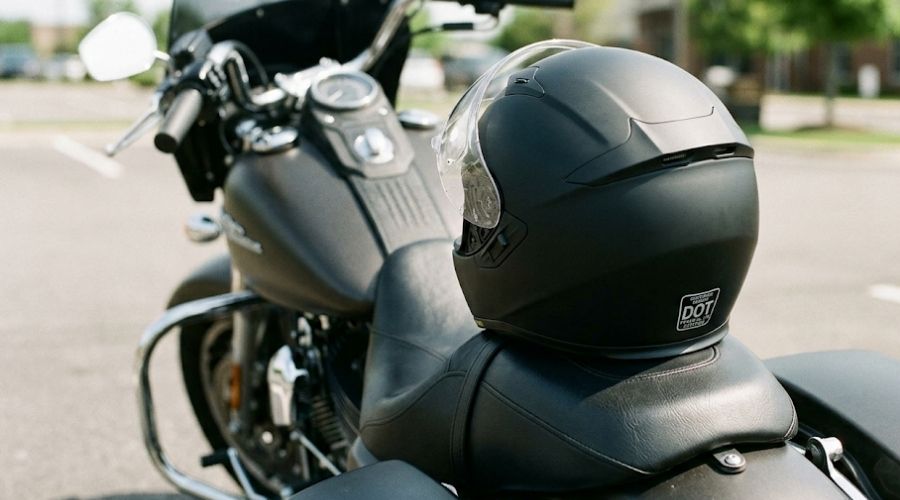
California Vehicle Code Section 27803 requires all motorcycle riders and passengers to wear a DOT-approved helmet. Unlike bicycle helmet laws, which only apply to riders under 18, this requirement applies to every motorcyclist regardless of age. Complying with it matters for your claim, since violations can complicate claims, but do not automatically prevent recovery if someone else caused the crash.
When a rider was not wearing a helmet, insurers use it as a causation argument specific to head and neck injuries, similar to the dynamic described in bicycle accident cases. The defense must prove that a helmet would have specifically reduced the injuries claimed — the absence alone is not sufficient. However, it is a line of argument that requires active rebuttal with medical expert testimony, which is one more reason motorcycle claims benefit from legal representation that is prepared to counter it rather than concede it.
Deliberate Delay as a Negotiation Strategy
One of the most consistently documented insurer tactics in motorcycle cases is deliberate delay. Adjusters may request endless forms, ask for additional documentation, or claim they are still investigating the crash. Sometimes weeks or months pass before the insurer even makes an initial offer. These delays are not accidental — they are designed to frustrate victims and pressure them into accepting less than they deserve.
California’s Fair Claims Settlement Practices Regulations require insurers to acknowledge a claim within 15 days of filing and to accept or deny it within 40 days of receiving proof of claim. These are real, enforceable deadlines — and an attorney who monitors them and holds the insurer to the timeline removes much of the delay tactic’s effectiveness. When those deadlines are violated, it can also support a bad faith insurance claim, which carries its own consequences for the insurer.
The Independent Medical Exam Trap
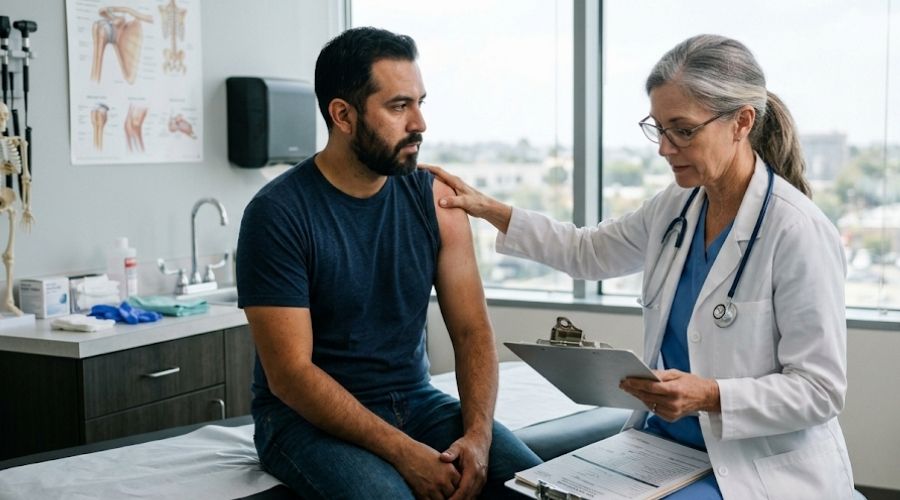
Insurance companies often request that injured riders attend an independent medical examination, or IME, conducted by a doctor of the insurer’s choosing. The word “independent” is misleading. These doctors sometimes downplay injuries or suggest a faster recovery timeline than the rider’s treating physicians indicate — tactics which insurers use to reduce what they ultimately pay.
Riders have rights in how IMEs are conducted. You are generally entitled to prepare with your own medical team beforehand, and your attorney should review any IME request before you agree to attend. The insurer’s chosen doctor’s report is not the final word on the nature or severity of your injuries — it is a document that can and should be challenged with your own treating physicians’ consistent, documented records of your actual condition and recovery timeline.
Social Media and Surveillance — What Riders Often Miss
Insurance companies also regularly review injured riders’ social media accounts and in more serious cases retain investigators to conduct surveillance. The goal is to find any evidence — a photo of you at a social event, a post about a ride, footage of you walking normally — that can be used to contradict the injury severity you are claiming.
This risk is not hypothetical. Any post, check-in, or photo that appears publicly after your accident can be used in this way. The safest approach is to avoid posting anything about your physical condition, your accident, or your activities during the claim process, and to let your attorney manage all communications with the insurer rather than responding to adjuster calls directly.
The SR-1 Deadline — A Requirement Specific to Vehicle Operators
One procedural obligation that motorcycle riders — like all California drivers — often miss is the SR-1 filing requirement. California Vehicle Code Section 16000 requires every driver involved in a crash causing any injury, death, or property damage exceeding $1,000 to file Form SR-1 directly with the California DMV within 10 days of the collision. This is a separate legal obligation from the police report. Law enforcement does not file it on your behalf, and missing the deadline can result in suspension of your California driver’s license regardless of who caused the crash.
This requirement applies to riders just as it applies to car drivers, and it is one of the most commonly missed steps in the immediate post-accident period — partly because most riders assume the police report covers everything. It does not.
What Counters All of It — Evidence, Built Early
Every tactic described above — the bias assumption, the lane splitting argument, the helmet leverage, the delays, the IME, the surveillance — shares a common vulnerability: it collapses when met with strong, specific, early-gathered evidence. An independent reconstruction expert can analyze road conditions, vehicle positions, impact angles, and speeds to establish what actually happened rather than what the insurer assumes happened. Black box and electronic data from modern vehicles can contradict an insurer’s theory of rider fault. Eyewitnesses who observed the driver’s behavior provide powerful corroborating evidence.
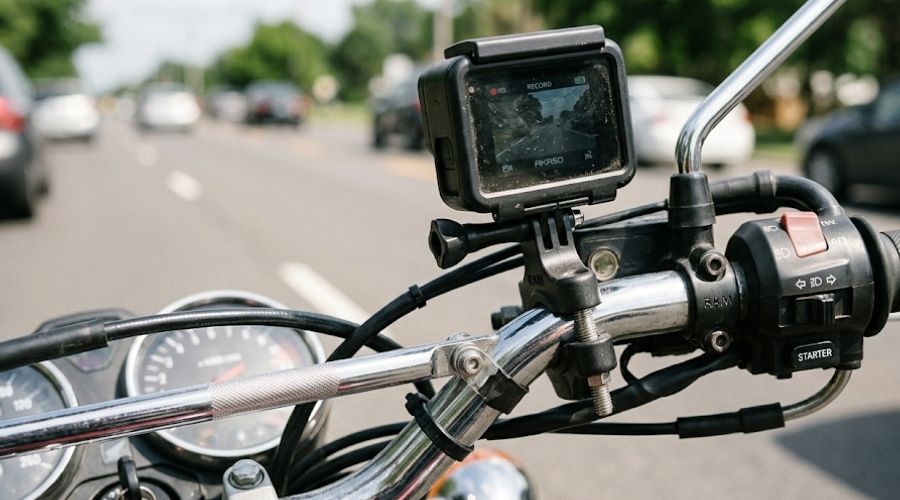
Dashcam footage, when available, is among the most persuasive evidence in any motorcycle claim. Riders who equip their bikes with cameras are consistently better positioned in disputed-liability cases. Traffic camera and intersection footage disappears quickly — often within days — which is why the first hours after a crash matter as much as what happens months later in negotiation. Our motorcycle accident attorneys at Oracle Law Firm begin preserving that evidence from the moment you contact us.
What Your Claim Is Actually Worth
Because motorcycle injuries tend to be more severe than car accident injuries, settlement values in motorcycle cases also tend to run higher — but only when the claim is built to fully capture every component of the loss. Economic damages include all medical expenses past and projected, lost income, diminished future earning capacity, and the cost to repair or replace the motorcycle. Non-economic damages cover physical pain and suffering, emotional distress, and loss of enjoyment of life. California does not cap compensatory damages in ordinary vehicle injury cases, which means severe and catastrophic injuries are not artificially limited in what they can recover.
As of January 2025, the at-fault driver’s minimum bodily injury liability coverage is $30,000 per person under Senate Bill 1107 — more than double the previous minimum. For serious motorcycle injuries, even this updated floor is frequently insufficient, which is why your own underinsured motorist coverage and any other available policy layers are critical to identify early in the process. At Oracle Law Firm, our personal injury attorneys identify every applicable coverage source, not just the most obvious one.
Frequently Asked Questions
Can I recover compensation if I was lane splitting at the time of the accident?
Does not wearing a helmet bar me from recovering compensation in California?
Do I have to file an SR-1 form after a motorcycle accident in California?
What is an independent medical exam and should I be concerned about it?
How much is a motorcycle accident settlement worth in California?
Dealing With an Insurer After a Motorcycle Accident? Talk to an Attorney First
The tactics described in this post start from the first phone call. Oracle Law Firm | Accident & Injury Attorneys represents motorcycle riders throughout Southern California, and we know exactly how to counter each of these strategies with the evidence and legal arguments they require. Consultations are free, confidential, and carry no obligation — you only pay if we recover compensation for you. Contact our team today before you say anything to an adjuster.