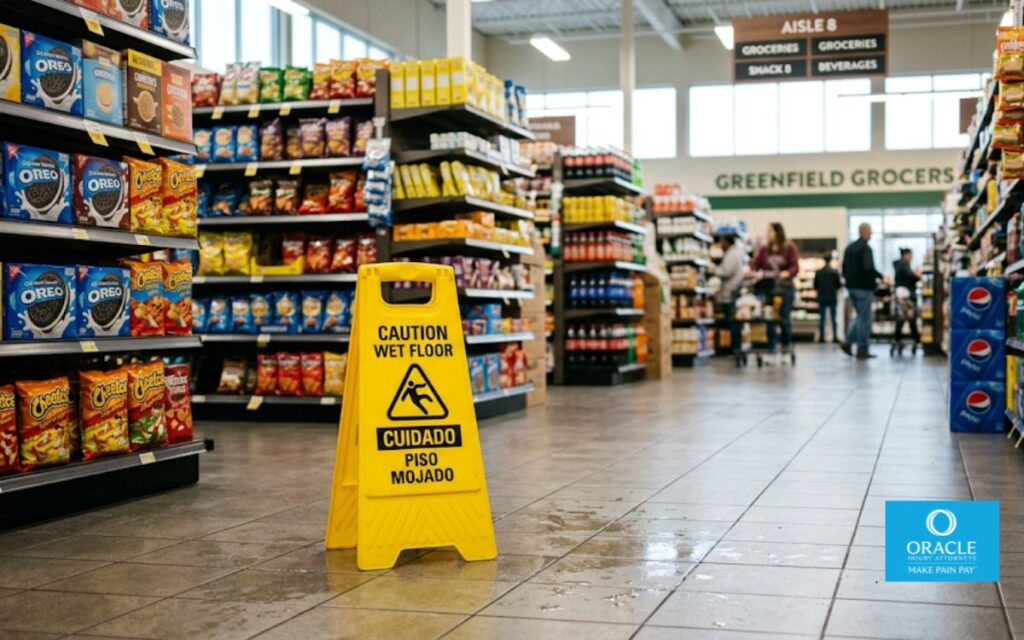
Slip and fall claims in California are not automatic just because you were injured on someone else’s property. The law does not impose liability on property owners for every accident that happens on their premises — only for those caused by their own negligence. Proving that negligence requires establishing four specific legal elements, and the notice requirement at the center of most cases is where claims are won or lost. Understanding what you need to prove, what evidence matters most, and what defenses to expect is the foundation of any successful premises liability claim in California.
The Legal Foundation — California Civil Code Section 1714
California premises liability law is rooted in Civil Code Section 1714, which establishes that every person is responsible for injuries caused by their failure to exercise ordinary care in the management of their property. This duty extends to property owners, occupiers, landlords, tenants, contractors, and anyone else who controls the premises where an injury occurs. According to the National Safety Council, falls are the leading cause of preventable injury-related deaths in the United States, and California courts handle thousands of premises liability claims annually as a result.
The duty of care under Section 1714 is not unlimited — property owners are not insurers against every accident. Liability attaches specifically when an owner knew or should have known about a dangerous condition and failed to take reasonable steps to correct it or warn visitors of its existence. That distinction — between an accident that was foreseeable and preventable, and one that was not — is the core question in every California slip and fall case.
Slip and Fall Claims California: The 4 Elements You Must Prove
Slip and fall claims in California require proving four distinct legal elements under CACI 1000, the jury instruction California courts use in premises liability cases. Each element must be supported by evidence — which is why acting quickly after an injury is critical.
The first element is ownership or control. You must show that the defendant owned, leased, occupied, or controlled the premises where you were injured. This is usually straightforward but can become contested when multiple parties share responsibility for a property — a landlord and a commercial tenant, for example, or a general contractor and a property manager on a construction site.
The second element is negligence — the most contested piece of every slip and fall case. You must prove that the defendant knew about the dangerous condition, or should have known about it through reasonable inspection, and failed to repair it, remove it, or provide adequate warning. This is where the actual versus constructive notice distinction becomes critical, and where the outcome of most cases is decided.
The third element is harm. You must show that you were actually injured as a result of the fall — not just that you fell. Medical records, emergency room documentation, and consistent treatment history are the primary evidence here.
The fourth element is causation. The dangerous condition must have been a substantial factor in causing your injury. The property owner’s negligence cannot simply exist in the background — it must connect directly to the harm you suffered.
Actual Notice vs. Constructive Notice — The Most Decisive Distinction
Of the four elements, proving that the property owner had notice of the hazard is typically where cases are fought most intensively. California law recognizes two forms of notice, and understanding the difference is essential for building an effective claim.
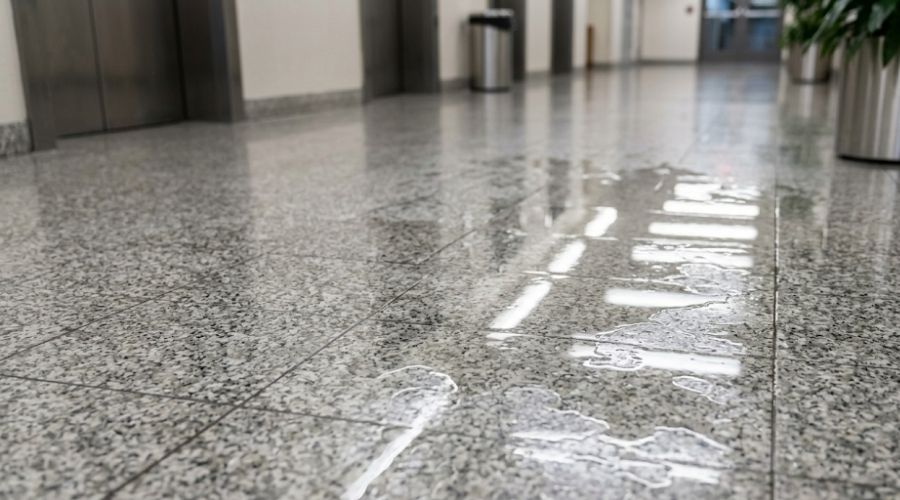
Actual notice means the property owner or their employees had direct, specific knowledge of the dangerous condition before the injury occurred. A surveillance video showing an employee walking past a spill without cleaning it, an incident report documenting a prior complaint about the same hazard, or a witness who told a manager about the wet floor an hour before you fell — all of these establish actual notice. When actual notice can be proven, liability tends to be clear.
Constructive notice is more nuanced and more common. It applies when the hazard existed long enough that a reasonable inspection program would have discovered it, even if no one specifically reported it. California courts have consistently held that a business owner who fails to implement regular inspection protocols cannot claim ignorance of conditions that would have been discovered had inspections been conducted. A tienda de comestibles that cannot produce records of regular floor inspections in the area where your fall occurred has constructive notice of whatever hazard existed there — the absence of an inspection record is itself evidence of negligence.
Your Visitor Status — Invitee vs. Licensee
Ley de responsabilidad de locales de California also considers your legal status as a visitor at the time of the fall. The two most common categories in slip and fall cases are invitees and licensees. An invitee is someone on the property for a business purpose — a customer in a store, a patient in a medical office, a guest at a hotel. A licensee is a social guest — someone invited onto the property for non-commercial reasons. The property owner’s duty of care applies to both categories, but the specific expectations for inspection frequency and hazard correction can vary in ways that affect how the case is argued.
Trespassers occupy a different legal position and generally receive less protection under California premises liability law, though property owners still owe a duty not to willfully or wantonly harm even uninvited visitors. In most commercial slip and fall cases — tiendas de comestibles, restaurants, shopping centers, apartment complexes, and parking lots — the injured party is an invitee, which places the highest standard of care on the property owner.
The Open and Obvious Defense — and Why It Does Not Always Work
One of the most common defenses in California slip and fall cases is the argument that the hazard was open and obvious — that a reasonable person would have seen it and avoided it. Property owners and their insurers raise this defense frequently, often to argue that the injured party bears the majority of fault for not watching where they were going.
In California, however, an open and obvious hazard does not automatically eliminate the property owner’s liability. It is one factor a jury considers when evaluating comparative negligence. An experienced attorney can argue that the owner still had a duty to address the hazard regardless of its visibility — particularly when the hazard was so prevalent or unavoidable that a visitor could not realistically have sidestepped it, or when the property’s own design drew a visitor’s attention away from the floor, as a merchandise display does in a retail store. The open and obvious defense reduces but rarely eliminates a property owner’s responsibility under California law.

Evidence That Wins Slip and Fall Cases
The evidence that matters most in a California slip and fall case is time-sensitive in ways that make the hours immediately after the fall critical. Surveillance footage is frequently the single most decisive piece of evidence — it can show exactly how long a hazard existed before the fall, whether employees walked past it without acting, and the conditions at the precise moment of the injury. Surveillance footage is routinely overwritten within 24 to 72 hours. Sending a spoliation letter — a formal legal notice demanding that the property owner preserve all footage and digital records — is one of the first steps an attorney takes, and it must happen fast.
Maintenance logs and inspection records are equally important. Many commercial properties require employees to complete incident reports when a customer falls. These reports frequently contain admissions — descriptions of the condition, acknowledgments of prior knowledge, employee names — that are directly useful in litigation. The absence of regular, documented inspection protocols is itself evidence of negligence: a business that cannot produce inspection records for the area where a fall occurred has constructive notice of whatever hazard was present there.
Prior incident reports from the same location are among the most powerful evidence available. If other people have fallen at the same spot before your injury, that history establishes that the property owner had actual notice of an ongoing hazard and took no action to address it. These records are obtainable through the claims process and, if not produced voluntarily, through discovery in litigation.
How Comparative Fault Is Used Against Slip and Fall Victims
California’s pure comparative negligence rule allows you to recover compensation even if you share some responsibility for the fall. Your total damages are reduced by your percentage of fault — not eliminated. A claimant found 30% at fault on a $100,000 claim still recovers $70,000. This is a genuinely protective rule, but it is also the mechanism property owners and insurers exploit most aggressively to minimize payouts.
The defendant will leave no stone unturned looking for ways to blame you for the fall. The most common arguments involve distracted walking — looking at your phone, watching your child, examining merchandise on a shelf — wearing footwear that the defense argues was inappropriate for the conditions, or being in an area of the property where visitors are not typically expected. Some of these arguments have factual merit in specific circumstances; many are overreached. The defense bears the burden of proving that your specific conduct directly contributed to the fall — not simply that you could have been more careful in some general sense. An experienced attorney will challenge inflated fault arguments before they become embedded in a settlement offer.
What to Do Immediately After a Slip and Fall
Report the incident to the property manager or business owner before leaving, and request that a written incident report be completed. Do not leave without a copy or at least the name of the person who took the report. Photograph the hazard that caused your fall, the surrounding area, any warning signs that were or were not present, and your visible injuries. If any witnesses observed the fall, collect their contact information while they are still present.
Seek medical attention the same day, even if your injuries initially seem minor. Hip fractures, knee ligament tears, spinal compression injuries, and traumatic brain injuries from backward falls are among the most common slip and fall injuries — and some do not present obvious symptoms immediately. A delay in seeking care is one of the most common arguments insurers use to minimize the severity of a claim. Keep the shoes you were wearing in a sealed bag: they may become relevant evidence in establishing that your footwear was appropriate for the conditions.
Avoid giving a recorded statement to any insurance adjuster before speaking with an attorney. Expect the defendant’s insurance adjuster or lawyer to ask where you were looking immediately before you fell. Whatever answer you give carries risk of being used to argue partial fault. Letting your attorney manage all communications with the insurer from the outset removes that risk entirely. Our Abogados especializados en lesiones personales en Oracle Law Firm handle slip and fall claims throughout Southern California and begin preserving evidence from the first day you contact us.
Government Property — The Six-Month Deadline
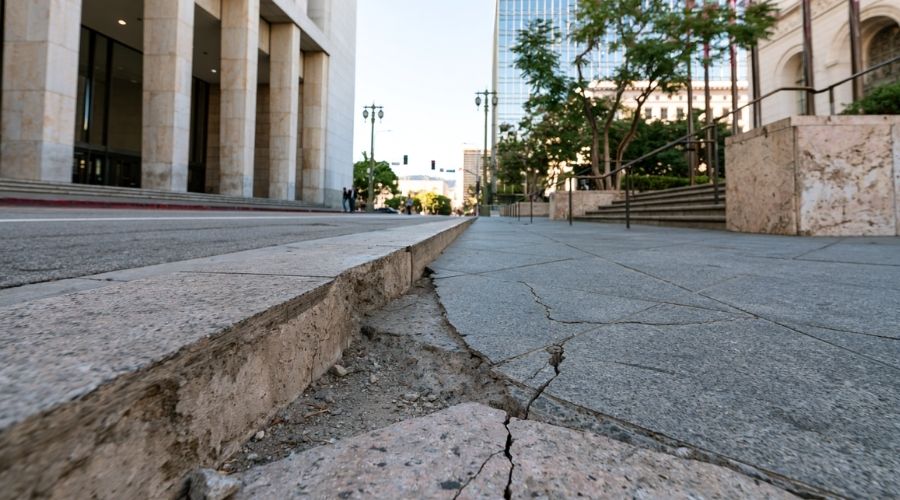
If your fall occurred on a public sidewalk, in a government building, at a school, in a public park, or on any other property owned or maintained by a city, county, or state agency, California’s Government Tort Claims Act applies. You must submit a formal government tort claim within six months of the date of your injury. This deadline is entirely separate from the standard two-year statute of limitations for private premises liability claims. Missing the six-month government claim deadline can permanently bar your right to recover — even if your injuries are severe and the government’s negligence is clear. If there is any possibility the property was government-owned or maintained, this deadline must be identified and tracked from the very first day after your injury.
Preguntas frecuentes
What do I have to prove in a California slip and fall claim?
What is the difference between actual notice and constructive notice?
Can I still recover compensation if I was partially at fault for my slip and fall?
Does an open and obvious hazard eliminate a property owner’s liability in California?
¿Cuánto tiempo tengo para presentar una reclamación por resbalón y caída en California?
Injured in a Slip and Fall? Talk to an Attorney — No Cost, No Obligation
Evidence in slip and fall cases disappears fast — surveillance footage is overwritten within days, and hazards get repaired before anyone documents them. Oracle Law Firm | Accident & Injury Attorneys offers free, confidential consultations across Southern California with no upfront fees. You only pay if we recover compensation for you. Contacta hoy mismo con nuestro equipo. — the sooner we begin preserving evidence, the stronger your claim.