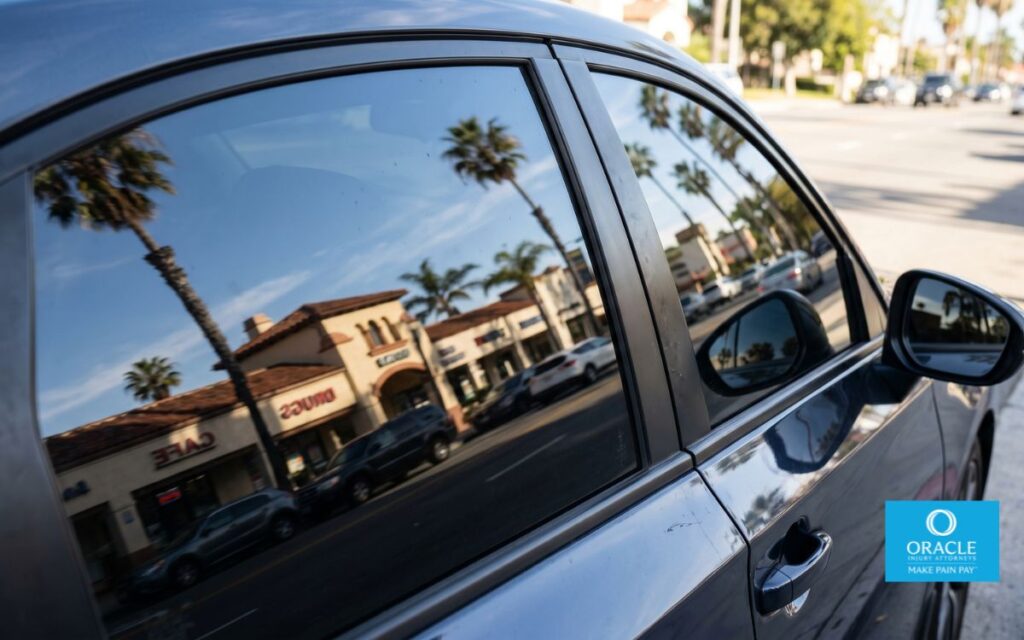
Window tint is one of those vehicle modifications most drivers think about only in terms of style and comfort — a way to keep the car cooler and add a little privacy. What rarely crosses anyone’s mind is that the darkness of a tint job can become a central issue in a car accident claim. If a driver’s visibility was compromised by illegal tint and that contributed to a crash, California law treats it as a real factor in determining fault and liability.
What California’s Window Tint Law Actually Requires
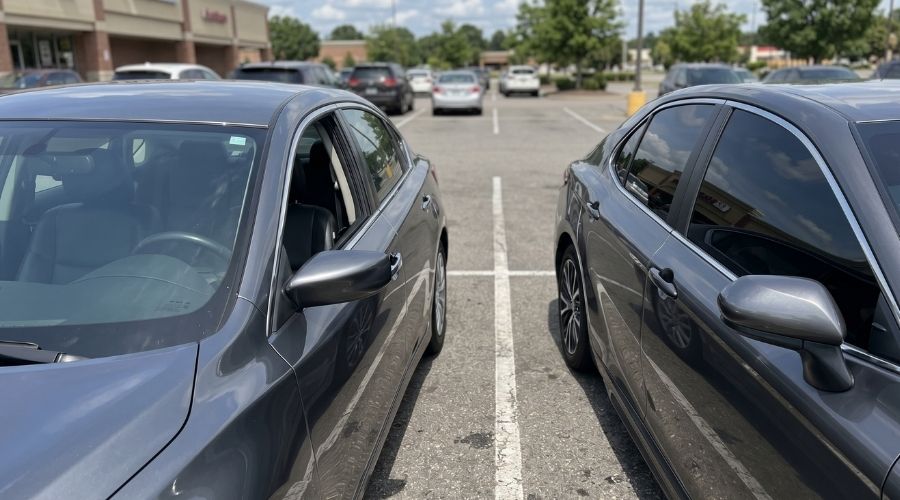
California Vehicle Code Section 26708 sets the legal framework for window tinting, and the rules are more specific than most drivers realize. Front side windows must allow at least 70% visible light transmission, commonly referred to as VLT. That means no more than 30% of light can be blocked on the windows you and your front passenger look through. Rear side windows and the rear windshield are allowed to be tinted more darkly, since restricted visibility there has less impact on a driver’s ability to see the road ahead.
Windshield tint is its own category, limited strictly to the top four inches above the manufacturer’s AS-1 line — the marked boundary near the top of the windshield. That strip must be non-reflective and completely colorless. Tint material that is red or amber in color is prohibited anywhere on the vehicle, and no lettering or pattern may be added that blocks outward visibility or reflects light into the eyes of oncoming drivers.
Why These Limits Exist — and Why They Matter More Than They Seem
The legal limits are not arbitrary. They exist to ensure two specific safety outcomes: that a driver maintains a clear, unobstructed view of the road, traffic signals, and pedestrians, and that law enforcement officers can see inside a vehicle when needed for safety reasons during a stop. When tint exceeds those limits, both of those safety functions are compromised.
Tint that blocks too much light becomes a measurable problem specifically in low-light conditions. A front side window tint that blocks more than 30% of light can severely limit a driver’s ability to see cross-traffic, pedestrians stepping off a curb, or a cyclist approaching from the side, particularly at dusk, at night, or in overcast conditions. That reduced visibility is exactly the kind of factor that turns a routine traffic stop violation into a contributing cause of a serious accident.
How an Illegal Tint Violation Can Establish Negligence
This is where window tint moves from a traffic citation into personal injury law. California recognizes a legal concept called negligence per se, which applies when a driver violates a specific safety statute and that violation directly causes an accident. Under this principle, the violation itself is treated as evidence of negligence — the injured party does not need to separately prove the driver was careless in some general sense.
If a driver’s window tint exceeded the legal VLT limits and that reduced visibility contributed to causing your accident, this is a fact pattern an experienced attorney can use to strengthen your claim. It applies most clearly when the tint affects the at-fault driver’s own ability to see you, your vehicle, or a hazard in time to avoid the collision. Establishing this connection typically requires documenting the tint level itself, along with the lighting and visibility conditions present at the time of the crash.
What Happens at a Routine Tint Stop — and What Changes After an Accident
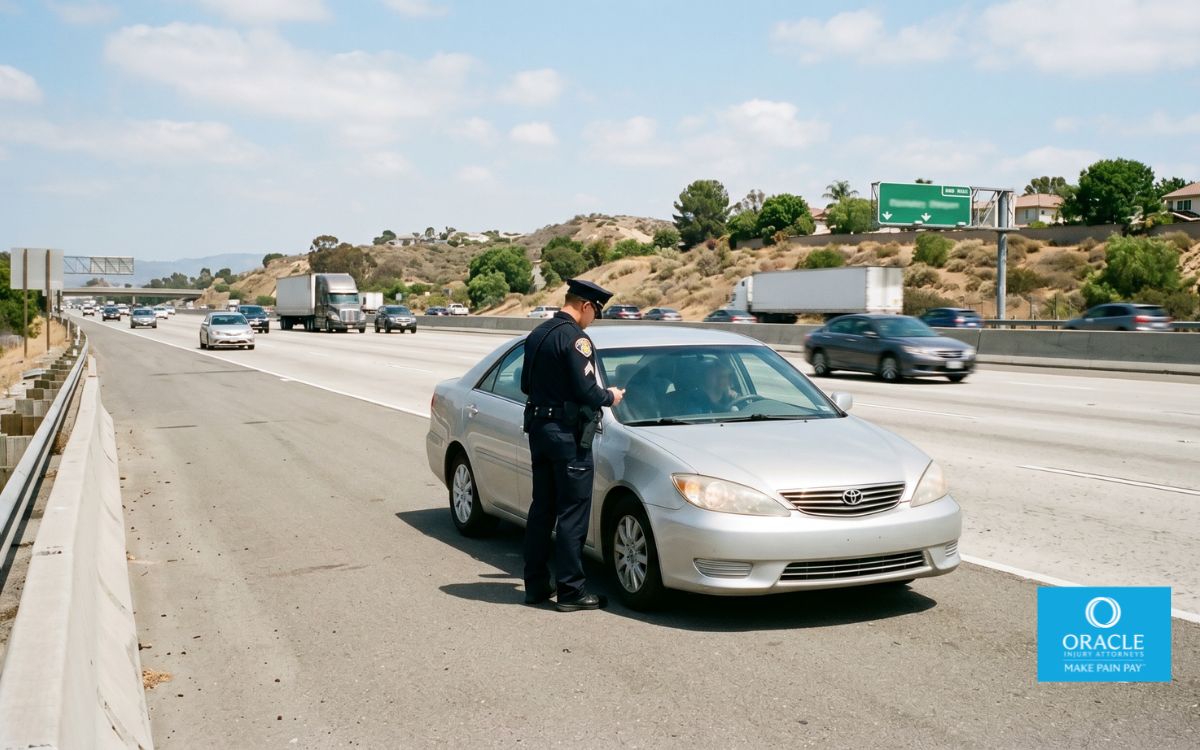
In the ordinary course of a traffic stop, a window tint citation under Vehicle Code 26708 is treated as a relatively minor matter. It is frequently issued as a correctable violation, often called a fix-it ticket. If the driver removes or adjusts the tint to bring it within legal limits and provides proof to the court within the required timeframe, the citation is often dismissed or reduced. Most tint citations also carry no DMV points, meaning they typically do not directly raise insurance premiums the way a standard moving violation would.
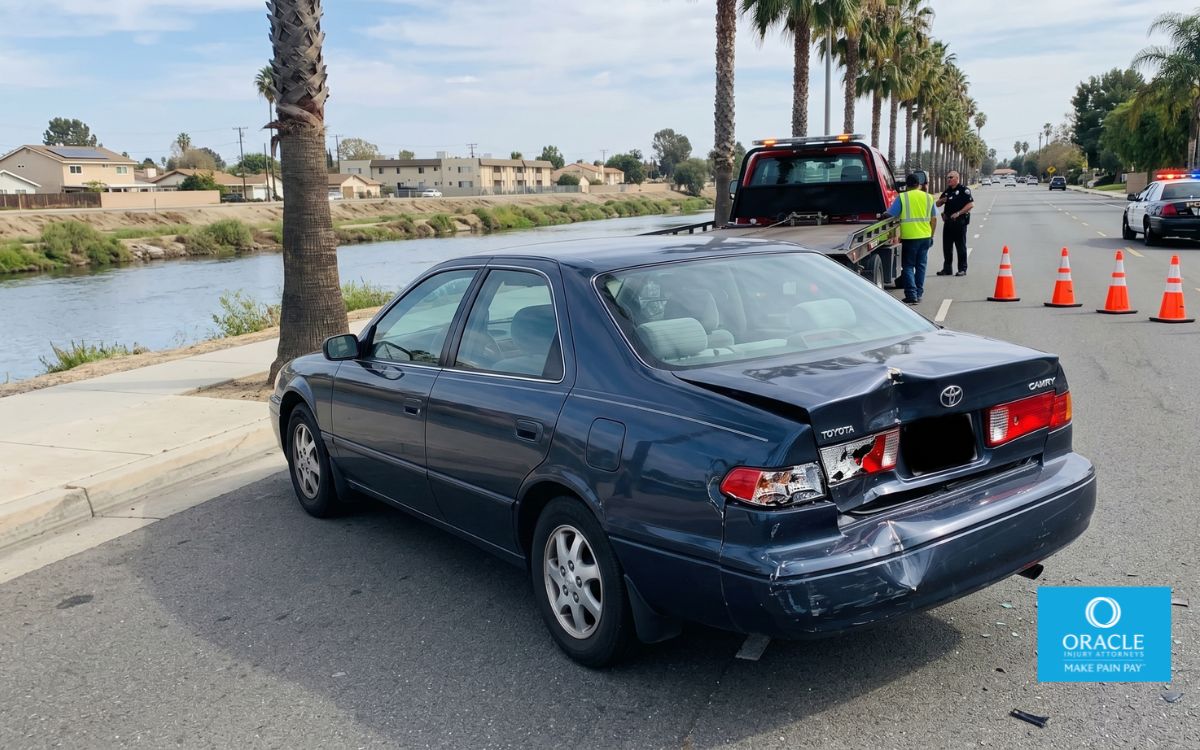
That entire calculus changes the moment an accident is involved. A fix-it ticket framework assumes the violation caused no harm beyond the equipment issue itself. Once illegal tint is connected to causing or contributing to a collision, the analysis shifts from a simple citation to a liability question with real financial consequences — for both the driver’s own legal exposure and for the injured party’s potential claim.
Building the Connection Between Tint and Causation
Proving that illegal tint contributed to an accident is not automatic just because a vehicle had dark windows. The connection between the violation and the crash has to be established with real evidence. This often includes photographs of the tinted windows taken close to the time of the accident, the police report’s documentation of lighting and visibility conditions, witness statements describing what each driver could or could not see, and in more complex cases, expert analysis evaluating how a specific tint darkness would have affected visibility under the conditions present at the time.
Insurance companies will not volunteer this analysis on their own — it has to be built proactively. An attorney experienced in Reclamaciones por accidentes de tráfico knows how to gather the right evidence early, before the at-fault driver has a chance to correct the tint and erase the most visible proof of the violation.
What If the Tint Violation Was on Your Own Vehicle?
It is worth addressing the reverse scenario directly. If your own vehicle had illegal tint at the time of an accident, that fact alone does not eliminate your right to compensation if another driver caused the crash through their own negligence. California’s comparative negligence rule applies here just as it does in other contexts: your compensation could be reduced by a percentage if the defense can show your tint specifically contributed to the accident, but it does not bar your claim entirely, and the burden remains on the defense to prove that causal connection.
This is precisely the kind of nuanced argument where having legal representation makes a measurable difference. An insurance company will look for any available reason to shift blame and reduce a payout, and a tint violation — even an unrelated one — can become exactly that kind of leverage point if left unchallenged.
Why This Matters for Your Car Accident Claim
Window tint may seem like a minor detail compared to the more obvious factors in an accident case, like speed or right-of-way. But in cases where visibility played any role in how a collision unfolded, it can become a meaningful piece of the liability puzzle. Whether you are trying to establish that the other driver’s illegal tint contributed to causing your accident, or you are defending against an insurance company trying to use your own vehicle’s tint against you, the underlying legal principles are the same: the violation has to be connected to causation with real evidence, not assumption.
En Oracle Law Firm, nuestros abogados de accidentes automovilísticos know how to identify these less obvious liability factors and build them into a complete case. We offer free, no-obligation consultations and handle car accident claims on a contingency basis, meaning you owe nothing unless we recover compensation for you.
Preguntas frecuentes
What are California’s legal limits for window tint darkness?
Can a window tint violation be used as evidence in a car accident case?
Does a window tint ticket affect my driving record or insurance rates?
Is a window tint citation usually a fix-it ticket?
What should I do if I was hit by a driver with illegally tinted windows?
Think Window Tint Played a Role in Your Accident? Talk to an Attorney
Visibility-related liability factors like illegal window tint are easy to overlook without the right legal experience — and easy for an insurance company to ignore if no one raises them. Oracle Law Firm | Accident & Injury Attorneys offers free, confidential consultations across Southern California with no upfront fees. Contact our team today to find out how the full details of your accident affect your claim.