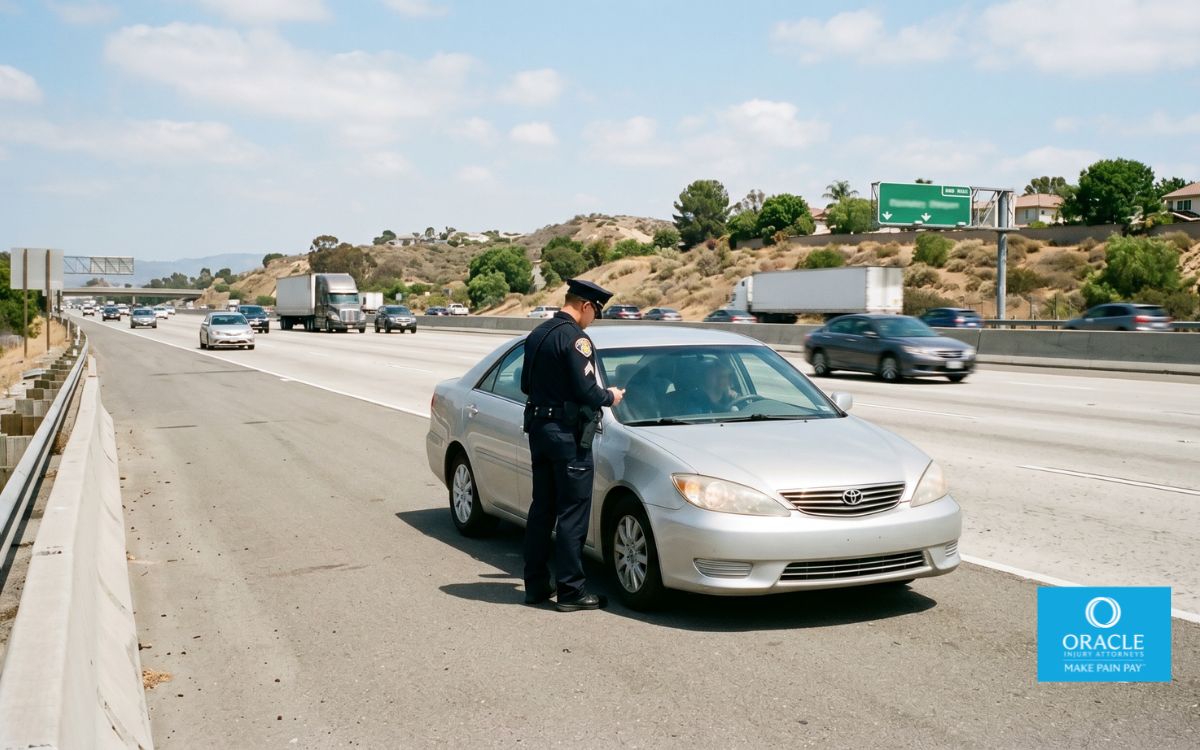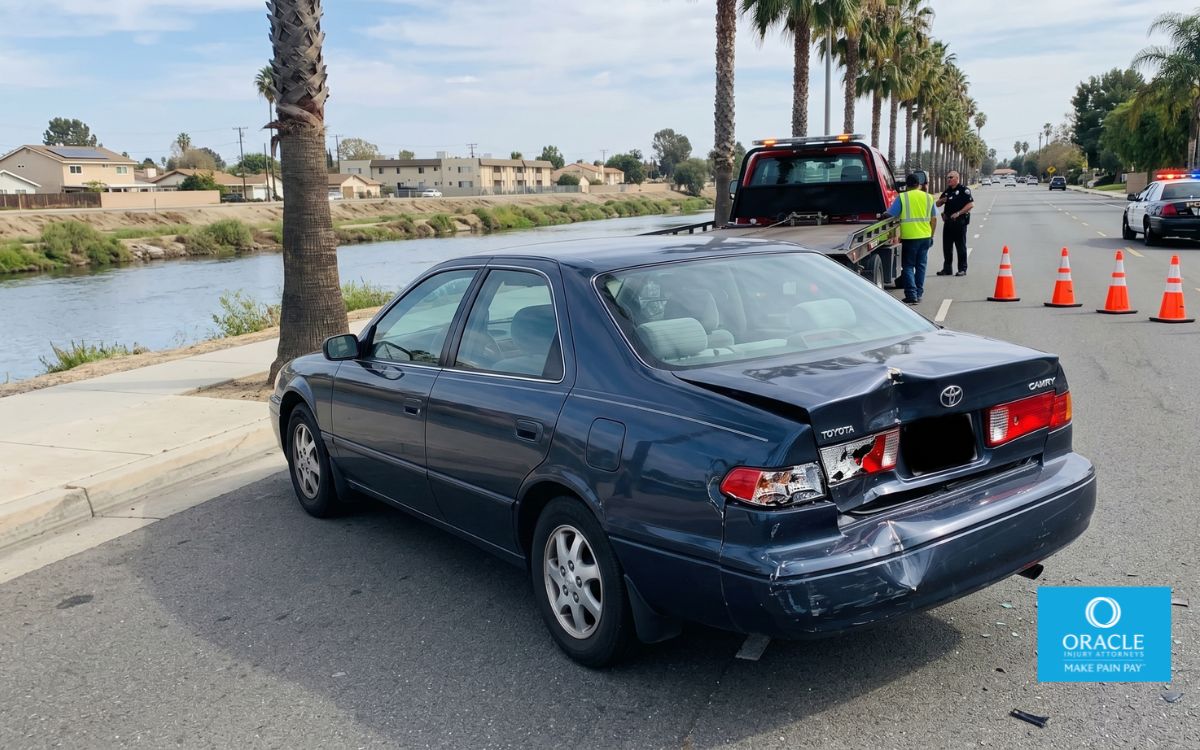
California’s licensing laws are more layered than most people realize. There is not a single rule that covers every situation — there are multiple Vehicle Code sections, each addressing a different scenario, each carrying its own legal weight and its own path through the court and DMV system. Whether you never obtained a license, let yours expire, had it suspended, or simply left it at home, the legal framework that applies to you is different. We’ll walk through the full structure of California’s unlicensed driver laws so you understand exactly what applies to your situation.
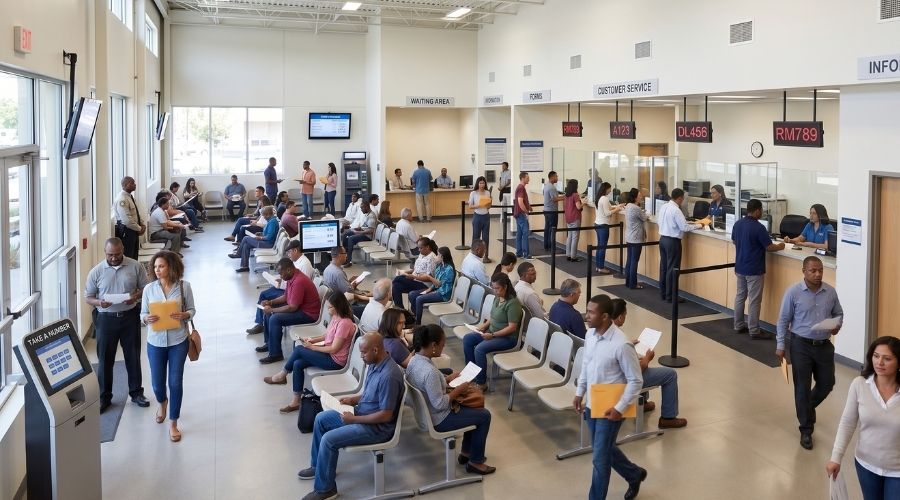
Who Is Required to Hold a California Driver’s License
The starting point under California law is straightforward: anyone who operates a motor vehicle on a public road in California must hold a valid driver’s license issued by the California DMV, and that license must be appropriate for the class of vehicle being driven. This applies to passenger cars, motorcycles, commercial trucks, buses, and motor scooters alike.
The requirement extends to new California residents. If you move to California from another state, California law requires you to obtain a California driver’s license within 10 days of establishing residency — your out-of-state license does not grant indefinite driving privileges here. Visitors from other states or countries may drive on a valid out-of-state or foreign license for a limited time, but the moment California residency is established, that grace period ends and a California license becomes legally required.
The Vehicle Codes That Define Unlicensed Driving — and How They Differ
Understanding which law applies to your situation is the most important step in understanding your legal exposure. California uses several distinct Vehicle Code sections to address different unlicensed driving scenarios, and they are not interchangeable.
Vehicle Code 12500 is the primary statute governing unlicensed driving. It applies when a person operates a motor vehicle without ever having obtained a valid California license, when their license has expired, or when it has been suspended or revoked. This is the most serious of the licensing-related charges and the one that cannot simply be resolved by producing a license in court — because the problem is not that the license was forgotten, but that it does not validly exist for that driver at that moment.
Vehicle Code 12951 is an entirely different situation. It applies to licensed drivers who simply did not have their physical license card in their possession while driving. This is commonly called a “fix-it ticket.” Under VC 12951(a), if you present a valid license to the court that was active at the time of the stop, the charge is typically dismissed — no conviction, no record. However, VC 12951(b) covers the scenario where a driver has their license but refuses to present it when a peace officer lawfully requests it. Refusing to show your license is a misdemeanor, not an infraction, and it cannot be dismissed by later producing the card in court.
Vehicle Code 14601 and its subsections govern driving on a suspended or revoked license — which is a meaningfully harsher category than simply never having obtained one. VC 14601.2 applies specifically when the suspension resulted from a DUI conviction, and carries mandatory minimum jail time even for a first offense. VC 14601.1 covers suspensions resulting from reckless driving or other serious violations. Each subsection has its own penalty structure, and all of them carry more severe consequences than a standard VC 12500 charge.
What the Court Process Looks Like for a VC 12500 Charge
When an officer cites you for driving without a license under VC 12500, the citation will include a court date. The charge can be filed as either an infraction or a misdemeanor — a classification the court makes based on your history. First-time offenders with no aggravating circumstances are typically charged as infractions. Repeat offenders, or those whose license was previously suspended or revoked, face misdemeanor classification.
At the court appearance, the judge or prosecutor will look at several factors: whether you have since obtained a valid license, whether this is your first offense, and the circumstances of the underlying stop. If the charge is filed as an infraction, the case resolves in traffic court with a fine. If it is filed as a misdemeanor, it moves through the criminal court process — which can involve arraignment, hearings, and potentially a plea negotiation. An experienced attorney can often work to reduce a misdemeanor VC 12500 charge to an infraction, particularly when a valid license has been obtained in the interim.
One important distinction: a VC 12500 conviction, even as a misdemeanor, does not add points to your DMV driving record. This means it will not directly trigger a suspension or cause your insurance rates to increase the way a moving violation would. That said, a misdemeanor conviction carries its own record consequences, and repeat charges can trigger vehicle forfeiture under VC 14607.6 in certain circumstances.
DMV Consequences Beyond the Courtroom
The court process is only one part of the picture. The DMV maintains its own record of your driving history and administers its own set of consequences that operate independently of what happens in court. Understanding both tracks — the criminal/traffic court process and the DMV administrative process — is essential for fully understanding your situation.
If your license was suspended, the path back to a valid license runs through the DMV, not the court. Reinstatement typically requires paying a reinstatement fee, resolving whatever underlying issue caused the suspension (an unpaid fine, a failed court appearance, a DUI program requirement), and in many cases filing an SR-22 certificate with the DMV. An SR-22 is not an insurance policy — it is a form your insurance carrier files on your behalf certifying that you carry at least the minimum required coverage. It is typically required for a period of three years after a serious suspension and adds cost to your insurance premiums for as long as it is required.
For drivers whose license was never obtained in the first place, the DMV path is straightforward in theory but requires time: passing the written knowledge test, completing a behind-the-wheel driving test, providing proof of identity and residency, paying the application fee, and meeting any additional requirements for the class of license being sought. Obtaining a valid license before a court date can significantly affect how a VC 12500 charge is resolved.
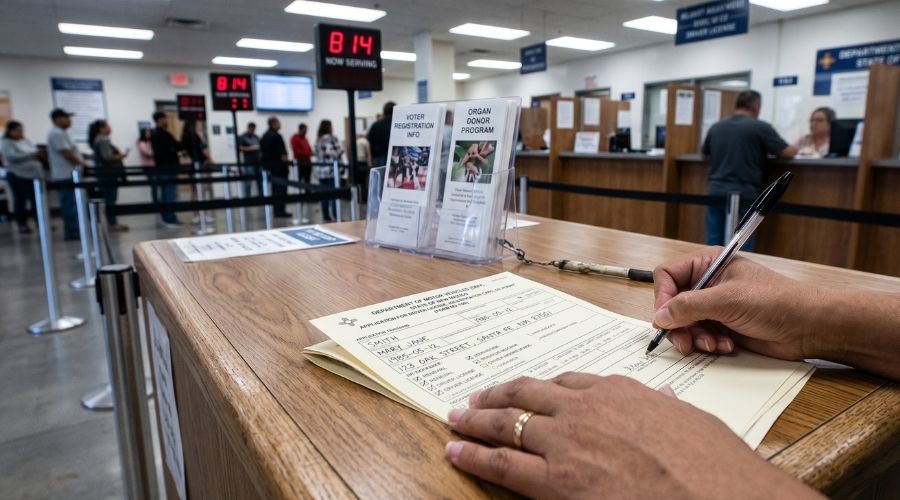
AB 60 Licenses — California’s Framework for Undocumented Residents
California is one of a small number of states that allows residents who cannot prove lawful federal immigration status to obtain a valid state driver’s license. Under Assembly Bill 60, enacted in 2013 and fully operational since 2015, the California DMV issues driver’s licenses to applicants who meet all standard California licensing requirements — passing the written knowledge test, passing the behind-the-wheel driving test, passing a vision exam, and providing proof of identity and California residency — regardless of federal immigration status.
AB 60 licenses are marked “Federal Limits Apply” in the upper right corner, which is the same notation that appears on standard California licenses issued without REAL ID compliance. The DMV has issued more than one million AB 60 licenses since the program launched. Holders of AB 60 licenses are subject to the exact same Vehicle Code requirements and the exact same penalties as any other California driver. California law also explicitly prohibits peace officers from using an AB 60 license as a basis for detaining, citing, or arresting a driver on suspicion of unlawful immigration status alone.
License Classes and the Requirement to Match License to Vehicle
A dimension of California’s licensing framework that frequently goes overlooked is the class requirement. Holding any California driver’s license is not sufficient if you are operating a vehicle that requires a higher class of license than the one you hold. California issues several license classes: Class C for standard passenger vehicles, Class A for combination vehicles over a certain weight threshold, Class B for large single-unit vehicles like buses and large trucks, and Class M for motorcycles and motorized scooters. Operating a vehicle that exceeds your license class is its own licensing violation under California law, separate from simply being unlicensed entirely.
This matters particularly in commercial vehicle accident cases, where the class of the vehicle, the licensing of the driver, and the employer’s responsibility for verifying license compliance all become relevant factors in determining liability. If you were injured by a commercial driver who was operating outside their license class, that licensing violation is meaningful evidence in a personal injury claim. Our car accident attorneys at Oracle Law Firm handle cases involving commercial driver liability across Southern California.
When Unlicensed Driving Intersects With a Personal Injury Claim
The legal consequences of driving without a license do not exist in isolation — they can intersect directly with a personal injury claim if an accident occurs. If you were injured by a driver who was unlicensed, that fact is relevant evidence of negligence and can strengthen your claim. If you were the unlicensed driver and you were injured, the situation is more nuanced but does not automatically eliminate your right to compensation — California’s personal injury framework focuses on who caused the collision, not on whether each driver had proper licensing.
What does matter significantly is insurance. California’s Proposition 213 bars uninsured drivers from recovering non-economic damages in a personal injury case, even if the other driver was entirely at fault. Driving without insurance is a far more damaging legal position than driving without a license when it comes to civil recovery. If you were involved in an accident — whether or not you were licensed at the time — understanding how licensing and insurance interact in your specific situation requires experienced legal guidance.

Preguntas frecuentes
Who is legally required to have a California driver’s license?
What is the difference between Vehicle Code 12500 and Vehicle Code 12951?
Does a driving without a license conviction go on my DMV record?
What is an SR-22 and when is it required after a license violation in California?
Can undocumented California residents legally drive?
Have Questions After an Accident Involving a Licensing Issue?
Licensing violations — your own or the other driver’s — add a layer of legal complexity to any car accident claim. The interaction between California’s Vehicle Code, the DMV administrative system, and civil personal injury law is not always straightforward, and the decisions you make early can affect your outcome significantly. Oracle Law Firm | Accident & Injury Attorneys offers free, confidential consultations with no upfront fees across Southern California. Contact our team today — we will tell you exactly where you stand.