When someone hits your car and drives away, the first feeling is usually shock — followed quickly by the worry that without a driver to hold responsible, there is nothing you can do. That assumption is wrong, and it costs Orange County hit-and-run victims money they are legally entitled to recover. California law creates specific pathways for exactly this situation, and knowing what they are — and how to access them correctly — starts with understanding what happened to your rights the moment that driver fled.
California Treats a Hit-and-Run Like an Uninsured Driver Claim
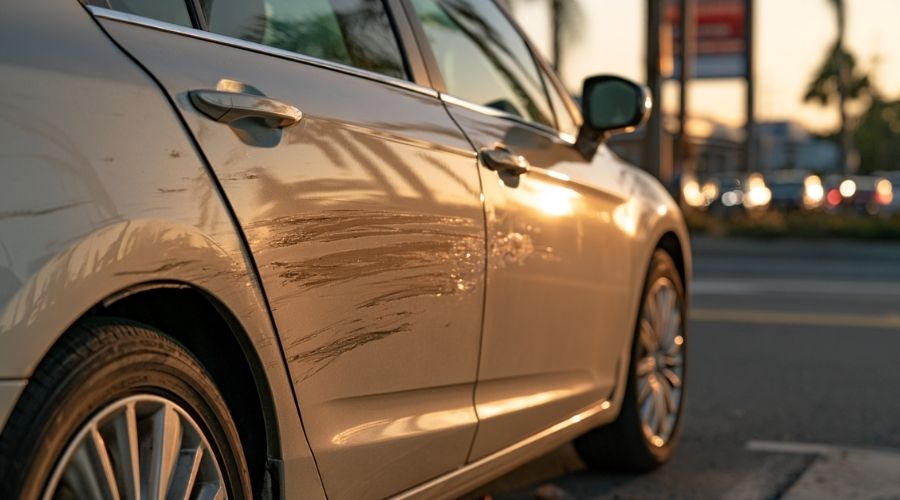
The legal mechanism that protects hit-and-run victims in California is uninsured motorist coverage, governed by Insurance Code Section 11580.2. California treats hit-and-run accidents as uninsured motorist claims — when the driver cannot be identified, the injured person’s own UM coverage becomes the primary path to recovery. Your insurer steps into the role of the missing driver’s nonexistent insurer and pays for medical expenses, lost wages, and pain and suffering — up to your own policy’s UM limits.
UM coverage is included on most California auto policies unless you specifically rejected it in writing under Insurance Code Section 11580.2. If you have not specifically opted out in writing, there is a good chance you have this coverage and do not realize it. Checking your policy declarations page — the summary page at the front of your insurance documents — will show your UM limits. Hit-and-run claims in Orange County typically range from $15,000 to $500,000 or more depending on the severity of injuries, medical expenses, and lost wages. De acuerdo con la Departamento de Seguros de California, roughly one in six California drivers is uninsured — making UM coverage one of the most practically important protections on any California auto policy.
The 24-Hour Reporting Rule — Do Not Skip This Step
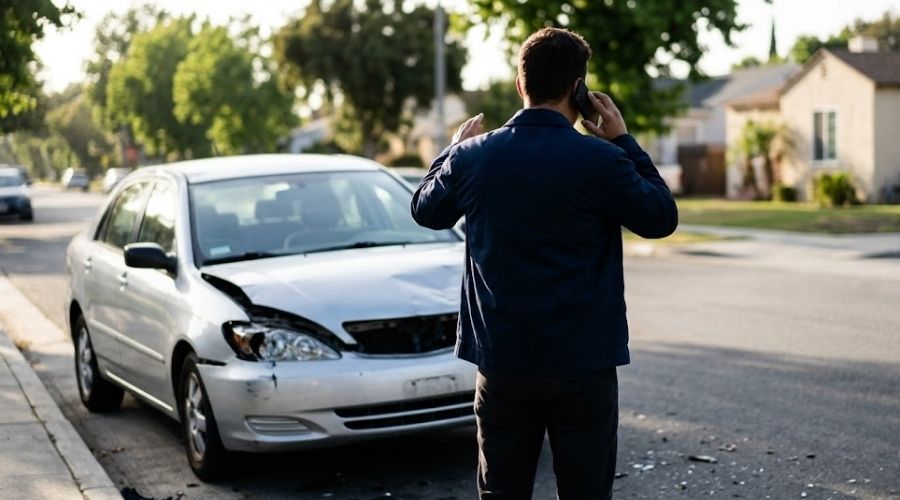
Filing a UM claim after a hit-and-run is not unconditional. The claim requires that the accident be reported to law enforcement within 24 hours, or as soon as reasonably practicable. Filing that report promptly is one of the most consequential early steps. Without it, the insurer may have grounds to deny the UM claim on procedural grounds alone.
This means calling 911 at the scene even when the driver is already gone and even when the police response may take time. The police report establishes the official record of the hit-and-run, documents the scene conditions, and satisfies the reporting requirement that Insurance Code Section 11580.2 imposes as a coverage condition. Do not convince yourself the damage is minor enough to handle without a report — that decision can close off UM coverage entirely, regardless of how serious your injuries turn out to be.
The Physical Contact Requirement — What It Means and When It Matters
Most California auto policies include a physical contact requirement for hit-and-run UM claims. This means the fleeing vehicle must have made actual physical contact with your vehicle or your body for UM coverage to apply. The rule exists to prevent fraudulent claims involving phantom vehicles that never actually existed.
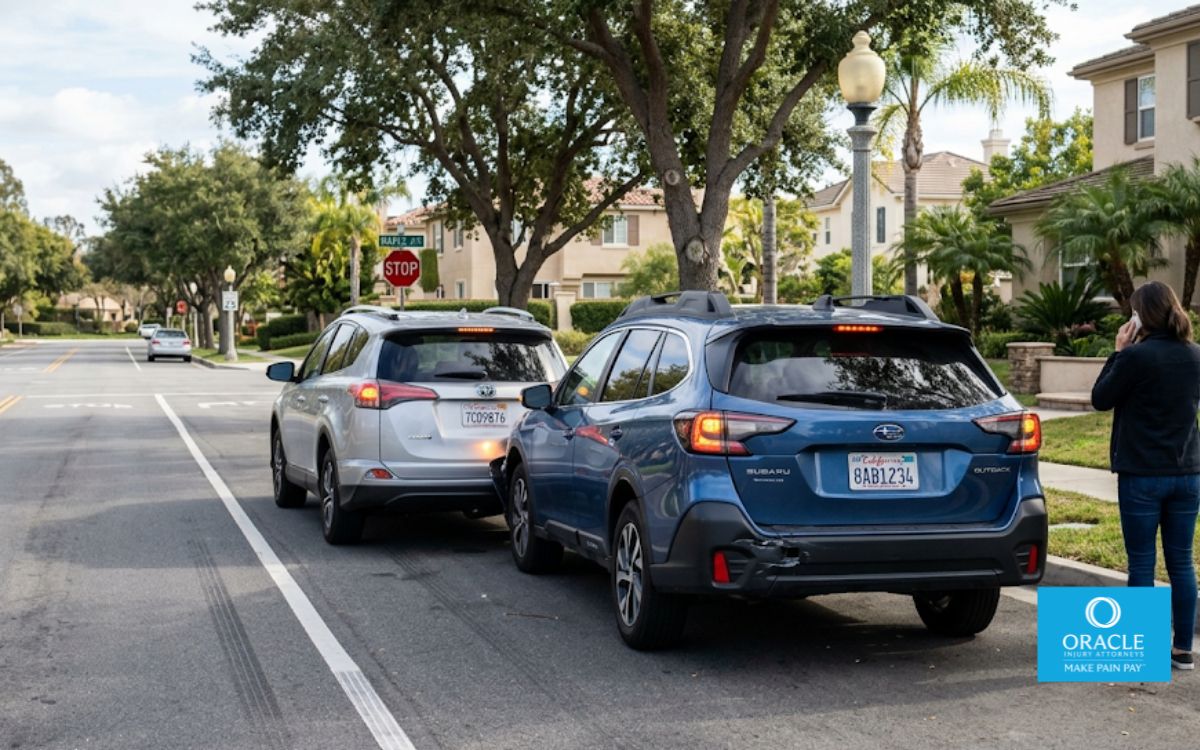
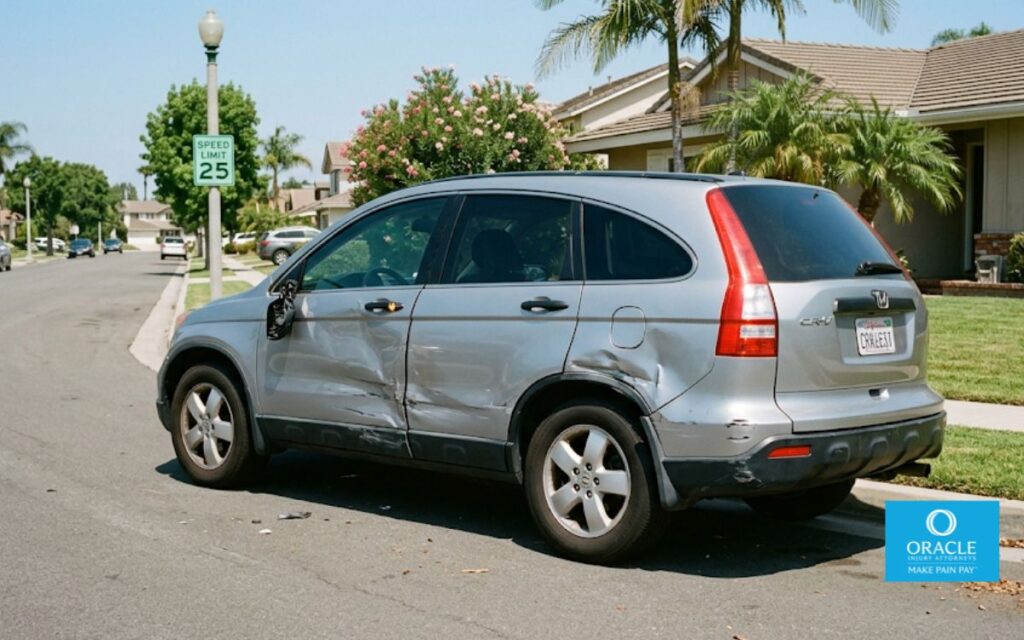
In practical terms, this creates a distinction between two common scenarios. If a driver sideswiped your car and fled — leaving a scrape, a dent, or paint transfer — physical contact is established, and UM coverage applies. If a driver cut you off, causing you to swerve and crash into a barrier without any contact between vehicles, the physical contact requirement is not met in the traditional sense. In the second scenario, UM coverage is harder to access and typically requires independent witness corroboration of the phantom vehicle’s existence. Documenting the damage to your vehicle at the scene — including photographs of every point of contact and any transferred paint — is essential evidence for the first scenario.
Your Rates Cannot Go Up Because You Filed a UM Claim
One of the most common reasons Orange County hit-and-run victims hesitate to file a UM claim is the fear that doing so will raise their insurance rates. California law addresses this directly. California Insurance Code Section 1861.02 prohibits insurance companies from raising your rates solely because you were the victim of a hit-and-run and filed a UM claim. You were not at fault. Your insurer cannot treat a UM claim the same way they treat an at-fault accident claim for rating purposes.
This protection is worth knowing before you speak to your insurer. Some policyholders are made to feel that filing any claim carries a rate consequence — a perception that insurers occasionally benefit from without ever saying it explicitly. In a hit-and-run UM claim, that concern is legally unfounded, and it should not influence your decision to pursue the compensation you are entitled to.
Hit-and-Run Accidents in Orange County: What If You Don’t Have UM Coverage?
Hit-and-run accidents in Orange County involving victims without UM coverage are harder to resolve, but not hopeless. The path forward depends on whether the driver is eventually identified.
If the driver is found, the claim proceeds like a standard personal injury case — with one significant addition. Leaving the scene of an accident that caused injury is a felony under California Vehicle Code Section 20001, carrying penalties of up to four years in state prison and a fine of up to $10,000. The criminal conduct of the driver opens the door to punitive damages in the civil case — compensation beyond your economic losses, designed to punish particularly egregious behavior. A driver who was also under the influence at the time of the hit-and-run faces compounded criminal exposure that strengthens the civil punitive damages argument further.
If the driver is never found and UM coverage is unavailable, the California Victim Compensation Board may provide limited assistance. A deliberate hit-and-run qualifies as a crime, and California’s Victim Compensation Board operates a fund designed to cover crime victims in exactly this situation. The Board covers medical expenses, mental health treatment, and lost wages up to specified limits. It is not a complete substitute for a UM claim or a personal injury judgment, but for victims with no other available path, it represents a meaningful safety net that most people do not know exists.
If You’re a Pedestrian or Cyclist — UM Coverage Still Applies
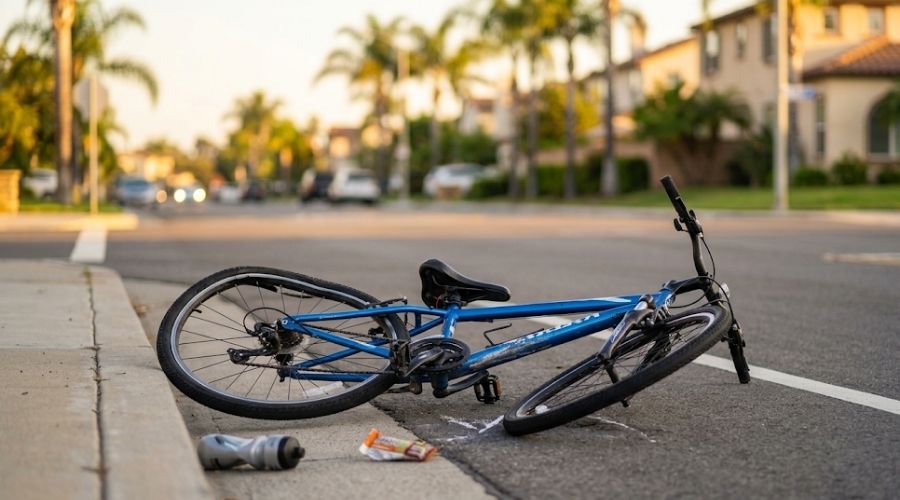
Many pedestrians and cyclists hit by a fleeing driver assume they have no recourse because they were not in a vehicle. That assumption is wrong. California’s uninsured motorist coverage extends to pedestrians, not just people sitting in cars. UM coverage under your own auto policy, or a household member’s policy, generally extends to pedestrians and cyclists hit by an unidentified driver — subject to the same physical contact and reporting requirements a driver would face.
This means that if you were walking or cycling in Orange County and a driver hit you and fled, your own auto insurance policy — or the policy of a family member in your household — may cover your injuries. The coverage follows the person, not just the vehicle. Checking whether any household member carries UM coverage is one of the first steps an attorney takes in a pedestrian or cyclist hit-and-run case.
How Investigators Find Hit-and-Run Drivers
The fact that a driver fled does not always mean they remain unidentified. Hit-and-run investigations in Orange County increasingly benefit from the density of surveillance infrastructure along commercial corridors. Traffic cameras, business security systems, residential doorbell cameras, and dashcam footage from nearby vehicles all represent potential sources of identifying information — a license plate, a vehicle description, or footage of the collision itself. The Orange County Sheriff’s Department and local police agencies treat injury hit-and-run cases seriously, particularly when the vehicle can be partially identified.
Your own actions at the scene matter enormously here. If you can safely note a partial plate number, a vehicle color, make, model, or any distinguishing feature before the car disappears, that information gives investigators a meaningful starting point. Canvassing nearby businesses for surveillance footage in the hours immediately following the crash — before that footage is overwritten — is something an attorney can initiate quickly on your behalf. Our abogados de accidentes automovilísticos del Condado de Orange begin this evidence preservation process from the moment you contact us.
What to Do at the Scene of a Hit-and-Run
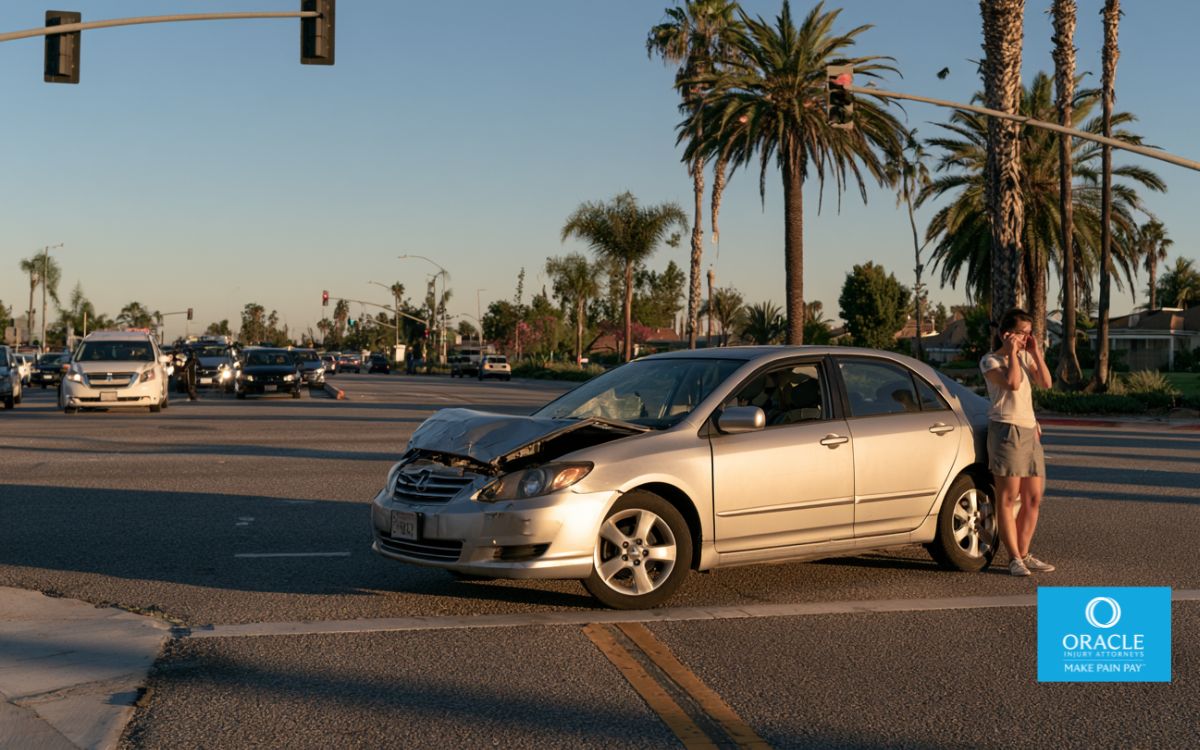
Stay where you are — do not chase the fleeing driver. Call 911 immediately and report the accident to law enforcement, even if injuries seem minor. While waiting for police, try to note as many details about the fleeing vehicle as possible: color, make, model, partial plate number, the direction of travel, and any identifying features. Photograph your vehicle’s damage, the surrounding road, and any debris left behind by the fleeing car. Ask any bystanders if they witnessed the collision and, if so, collect their contact information.
Seek medical attention the same day. Soft tissue injuries and concussions frequently present delayed symptoms, and establishing a medical record close to the time of the crash connects your injuries directly to the accident. Notify your own insurance company of the hit-and-run promptly, but do not give a recorded statement or accept any offer before speaking with a hit-and-run attorney. The insurer is not your ally in this process — they have the same financial interest in minimizing a UM payout as they would in minimizing any other claim. At Oracle Law Firm, our abogados de lesiones personales handle UM negotiations on your behalf from the first contact.
Preguntas frecuentes
Can I recover compensation after a hit-and-run if the driver is never found?
What is the 24-hour reporting rule for hit-and-run accidents in California?
What is the physical contact requirement in a California hit-and-run UM claim?
Can my insurance rates go up after I file a hit-and-run UM claim?
What if I don’t have uninsured motorist coverage after a hit-and-run?
Hit by a Driver Who Fled? Talk to an Attorney — No Cost, No Obligation
The driver left. That does not mean your claim did. Oracle Law Firm | Accident & Injury Attorneys handles hit-and-run claims throughout Orange County — including UM negotiations, evidence preservation, and driver identification investigations — with no upfront fees. You only pay if we recover compensation for you. Contacta hoy mismo con nuestro equipo. before the 24-hour reporting window closes.