The toll roads are supposed to be the faster, smoother way around Orange County. Then something goes wrong. A driver tailgates at high speed, a car swerves to avoid something in the road, or you hit debris you could not see in time.
If you were hurt in a crash on the 73, 241, or 133, you might assume it is handled like any other freeway collision. In many ways it is, but a few differences can change who may be responsible and how fast you need to act. This guide covers what OC drivers should know.
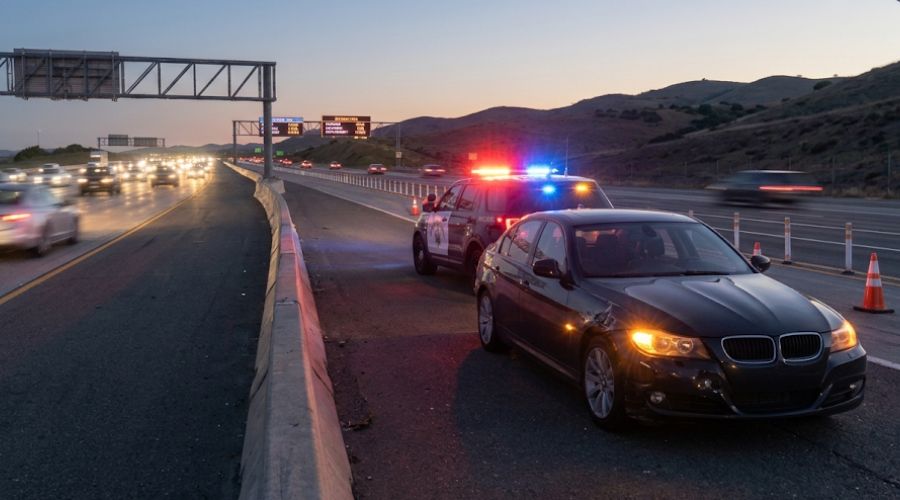
Toll Road Crash on the 73, 241, or 133: Who Runs These Roads?
These toll roads are run by public agencies. The Transportation Corridor Agencies are made up of two joint powers authorities created in 1986 to plan, build, and operate the toll roads in Orange County. One oversees the 73, and the other operates the 133, 241, and 261. Because they are public entities, a crash that involves a road defect can bring in special rules that do not apply to a collision between two private drivers.
Responsibility for maintenance and enforcement can also be shared between several agencies. The California Highway Patrol generally responds to crashes, and other state or local agencies or contractors may handle upkeep, construction zones, or lighting. Working out who controlled the spot where your crash happened is one of the first things a lawyer will look at.
What to Do at the Scene of a Toll Road Crash
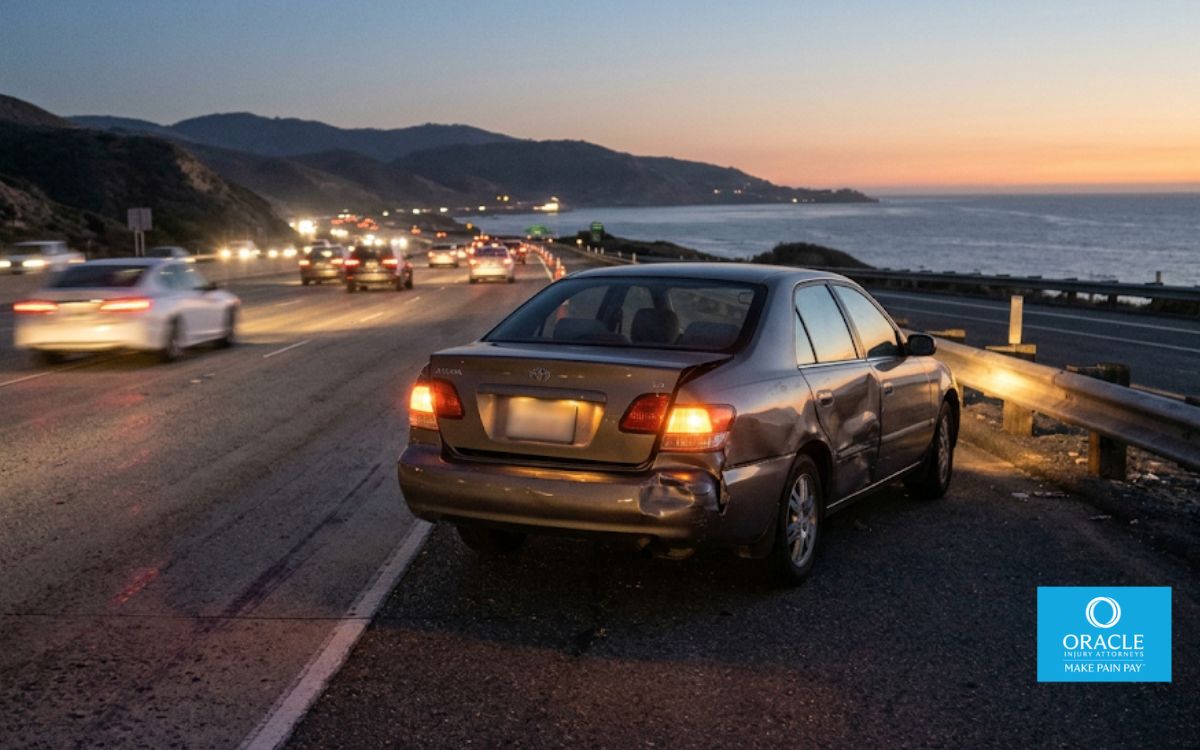
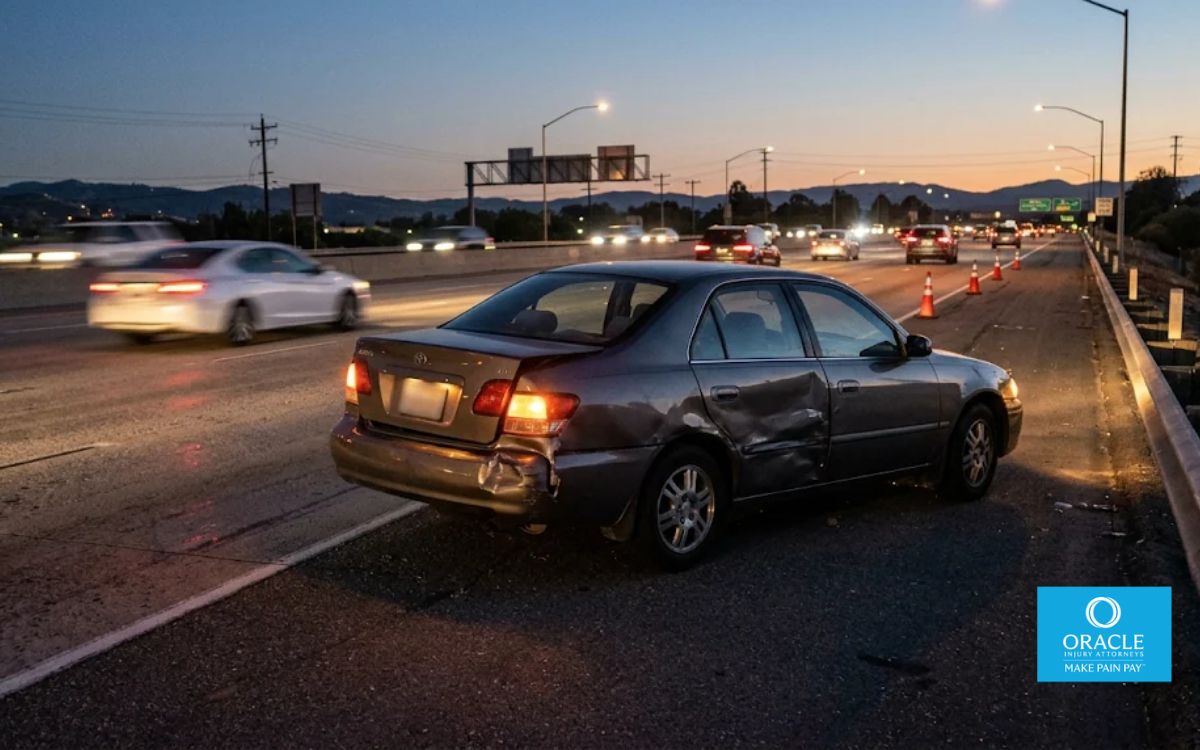
Your first job is safety. Call 911, tell the dispatcher which toll road you are on, the direction you were going, and the nearest exit or landmark you can see. If your car can still move and it is safe, pull to the right shoulder. If not, turn on your hazard lights, keep your seat belt on, and stay in the vehicle unless there is a fire or another immediate danger. Many stretches of these roads run through open, hilly land with few buildings nearby, so being specific about your location helps responders find you.
Accept medical evaluation at the scene even if you feel okay, because adrenaline hides pain. When officers arrive, give short, factual answers, avoid guessing about fault, and ask for a report number.
Reporting Rules Every Driver Should Know
Two reporting rules apply on toll roads just like on any other California road. A crash with injury or death must be reported to law enforcement within 24 hours, and the DMV generally requires an SR-1 form within 10 days if anyone was injured or killed, or if property damage was more than $1,000. A police report does not replace the DMV form, so make sure both are handled.
Evidence That Can Make or Break a Toll Road Claim
If you are able and it is safe, take photos of all the vehicles, license plates, damage, skid marks, debris, road surface, and signage. Get the names and contact information of the other drivers and any witnesses. A dashcam, either yours or another driver’s, can answer a lot of questions quickly.
Toll roads also create a few kinds of records that other roads do not. Toll collection systems and cameras may capture images and timestamps of vehicles passing certain points, and that information can sometimes help show timing and traffic flow.
Whether that material still exists, and who can obtain it, depends on how long it is kept, so it is smart to act early. A lawyer can send written requests asking the responsible agencies to preserve video, toll data, maintenance records, and incident reports before they are overwritten or discarded.
Common Causes and How Fault Works
Most toll road crashes still come down to driver behavior. These roads are built for faster, free-flowing traffic, so speeding, following too closely, unsafe lane changes, distracted driving, and impaired driving can cause serious crashes.
In those cases the claim is usually against the at-fault driver and their insurance company, and California’s comparative fault rule applies. That means your compensation is reduced by your share of responsibility instead of being denied. A jury that finds you 20 percent at fault on a $100,000 claim, for example, would reduce the award to $80,000.
Other crashes involve debris, animals, fog, or road conditions. If something in the road or the road itself played a role, the question becomes who knew about it and should have dealt with it. For a broader view of how multi-car freeway crashes are handled, read our guide for Conductores heridos en el cruce de las autopistas 405 y 55 en Costa Mesa..
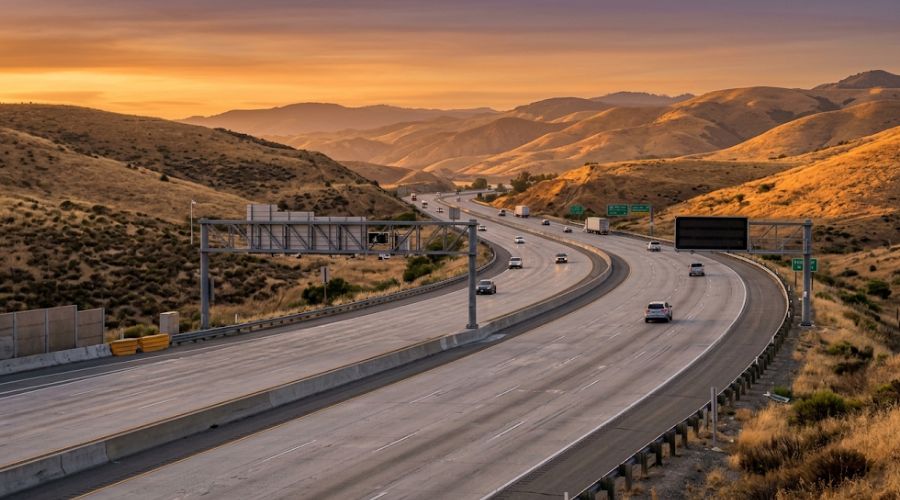
When a Public Agency May Be Responsible
California allows claims against public entities for a dangerous condition of public property, under Government Code Section 835. These claims can be harder than ordinary ones, since you generally have to show that a dangerous condition existed, that it created a risk of the kind of injury you suffered, and that the agency knew about it, or should have known, in time to fix or warn about it. A contractor working on the road may also share responsibility. A defect or a missing warning does not automatically mean the agency is liable, but it is worth investigating early.
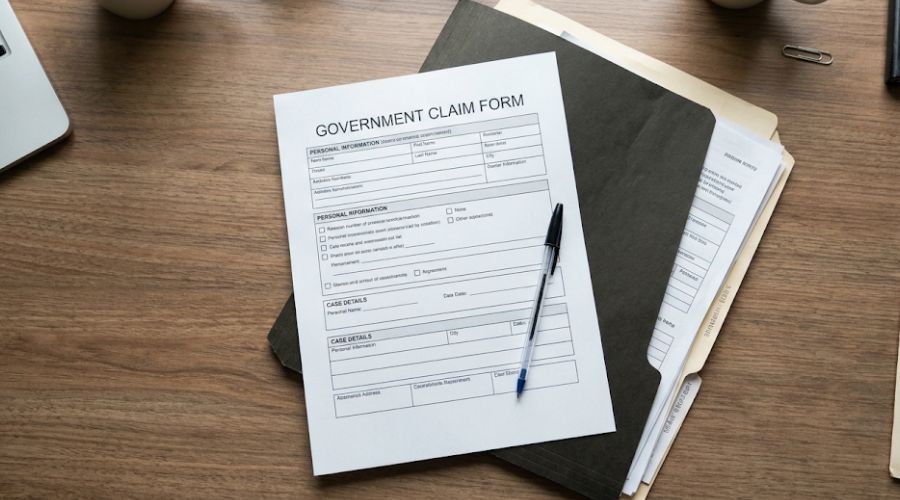
The most important difference is time. A claim for injury against a public entity generally must be presented within six months under Sección 911.2 del Código de Gobierno. Limited exceptions exist, but waiting and hoping for one is risky. If you think the road may have played a part in your crash, speak to a lawyer well before that six-month mark.
Maneje el seguro con cuidado
Tell your own insurer about the crash and stick to the basic facts. The other driver’s insurance company is a different matter. Its adjuster works to limit what it pays, and a friendly call can turn into a recorded statement used against you.
You do not have to give one, and you should not sign a release or accept a quick offer until you understand the full cost of your injuries. Our posts on Cómo hablar con un perito de seguros después de un accidente y 5 tácticas que usan los peritos de seguros para reducir su indemnización. Explica qué debes observar.
Deadlines After a Toll Road Crash in California
La mayoría de las demandas por lesiones personales deben presentarse dentro de los dos años siguientes a la ley. Artículo 335.1 del Código de Procedimiento Civil. As described above, a claim against a public entity usually has a six-month window instead. Children may have additional time. Because it is not always clear at first whether an agency is involved, it is safer to assume the shorter deadline until a lawyer tells you otherwise.
Para conocer todas las fechas límite de California en un solo lugar, consulte ¿Cuánto tiempo tienes para presentar una reclamación en California?. Para comprender cómo se valoran las reclamaciones, lea ¿Cuánto vale su caso de lesiones personales en California?, and if you are weighing whether to hire help, see ¿Necesita un abogado especializado en lesiones personales en el Condado de Orange?.
Preguntas frecuentes
Who operates the 73, 241, and 133 toll roads in Orange County?
Do I report a toll road crash to the CHP?
Can a public agency be responsible for a toll road crash?
How long do I have to file a claim if a government agency may be responsible?
What if another driver caused the crash and the road was fine?
Hurt on an Orange County Toll Road? Don’t Wait
When a public agency could be involved, the clock moves faster and the paperwork gets more technical. Oracle Law Firm | Accident & Injury Attorneys helps injured drivers and passengers throughout Orange County with a free, confidential consultation, no upfront fees, and no obligation. You only pay if we recover compensation.
Contacta hoy mismo con nuestro equipo. antes de hablar con una compañía de seguros.