Irvine has built one of the most cycling-friendly environments in Southern California, with an extensive network of bike lanes and trails connecting neighborhoods, schools, and business centers across the city. That infrastructure has earned Irvine a Silver-level Bicycle Friendly Community rating and made it one of the more comfortable cities in the region to ride a bike. None of that, however, eliminates risk. Crashes still happen, often at the same intersections and in the same patterns, and knowing the laws that protect cyclists — along with the habits that keep you safer — makes a real difference.
Irvine’s Cycling Infrastructure — and Why It Still Isn’t Risk-Free
Irvine offers an extensive network of dedicated bike lanes and off-road bike paths throughout the city, including the Jeffrey Open Space Trail, a notable separated bikeway that lets cyclists travel away from vehicle traffic entirely for long stretches. The city’s wide, well-maintained streets and master-planned layout support both commuter cycling and recreational riding far better than many comparably sized California cities.
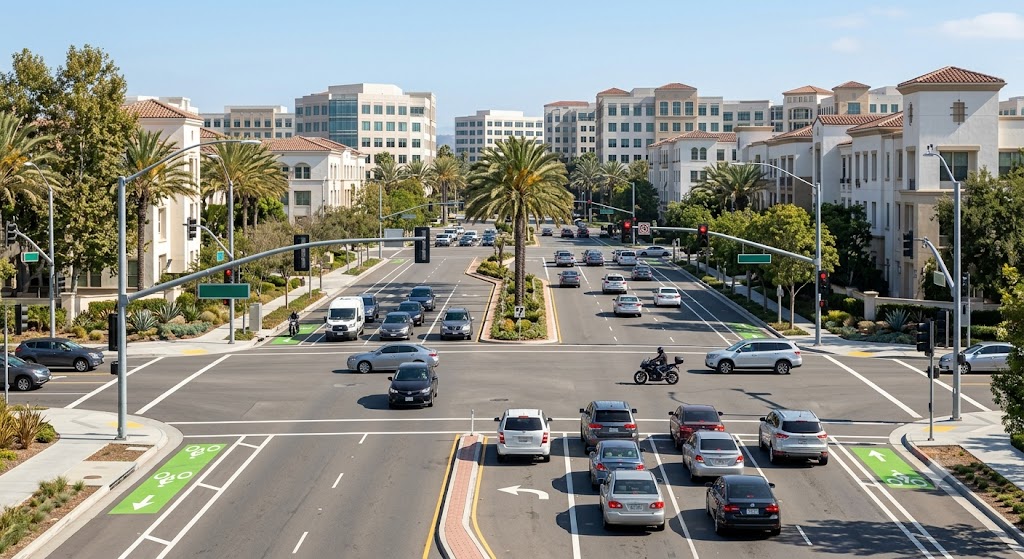
That said, Orange County as a whole recorded thousands of bicycle crashes over recent years, and Irvine is not immune simply because of its infrastructure. The risk concentrates at predictable points: busy arterial intersections, areas where bike lanes intersect with turning traffic, and locations where cyclists cross large multi-lane roads. Understanding the law that governs those interactions, and the crash patterns that recur at them, is the foundation of riding safely here.

Bicycles Are Legally Vehicles in California
One of the most important legal facts every cyclist should understand is also one of the most overlooked. Under California Vehicle Code 21200, bicycles are classified as vehicles, which means cyclists are generally required to follow the same rules of the road as someone driving a car — obeying traffic signals and stop signs, yielding the right of way when required, and riding in the same direction as traffic. This classification cuts both ways: it places real responsibilities on cyclists, but it also means cyclists have the same legal right to the road as any motorist.
Riding against the direction of traffic, a violation of Vehicle Code 21650.1, is illegal and significantly increases the risk of a head-on collision, since drivers turning into or out of driveways and side streets are not looking for a cyclist approaching from that direction. Riding with traffic, not against it, is one of the simplest and most important rules to internalize.
Bike Lane Rules — and When You’re Allowed to Leave Them
When a designated bike lane is available and you are riding slower than the surrounding traffic, California law generally requires you to use it. That said, the law also recognizes several situations where leaving the bike lane is not just allowed but the safer choice. You may move out of the lane to pass another cyclist, to position for a legal left turn, or to avoid a hazard such as a pothole, parked car, construction zone, or debris in your path.
California law also permits cyclists to “take the lane” — riding in the center of a full traffic lane rather than staying to the right — in specific circumstances: when the lane is too narrow to safely share side-by-side with a vehicle, when you are moving at the same speed as surrounding traffic, or when avoiding dangerous roadway conditions. Knowing that this option exists, and that it is legally protected, matters because many cyclists assume they must stay as far right as possible at all times, even when doing so puts them in more danger.
The Three-Foot Passing Law
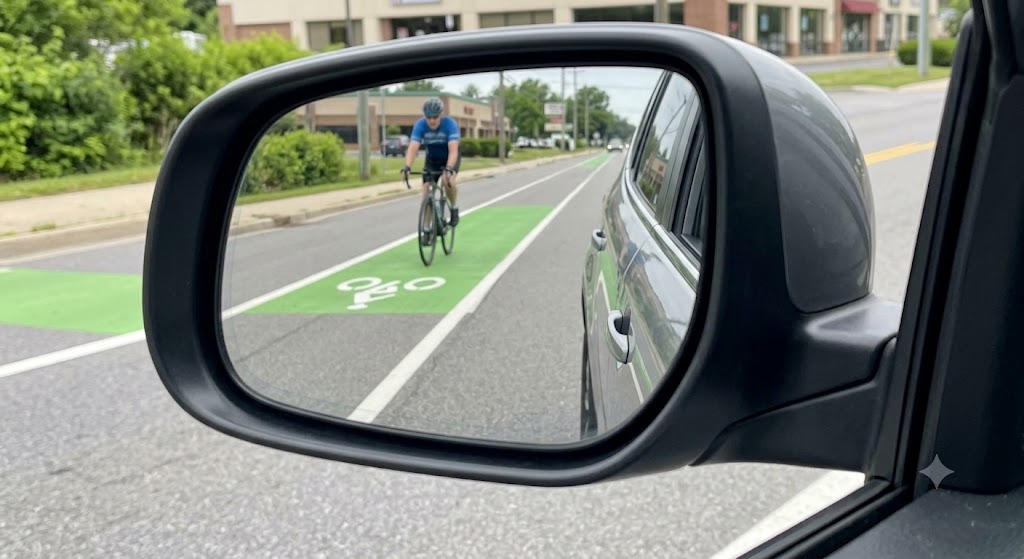
California requires drivers to give cyclists at least three feet of clearance when passing. If three feet of space is not available — on a narrow road or in heavy traffic, for example — the driver must slow to a speed that is reasonable and safe, and may only complete the pass when it can be done without endangering the cyclist. This law exists because side-swipe-style passing incidents, where a vehicle simply does not give enough room, are a meaningful source of serious cyclist injuries even when the driver believes they passed safely.
As a cyclist, you will not always be able to verify that a driver is following this rule in real time, but knowing it exists matters if you are ever struck during a pass — a violation of the three-foot law is meaningful evidence of driver negligence in a resulting injury claim.
Helmets, E-Bikes, and Equipment Requirements
California requires riders under 18 to wear a helmet. Adult riders are not legally required to wear one on a traditional bicycle or on Class 1 and Class 2 e-bikes, though wearing one regardless of the legal requirement is strongly advisable. Class 3 e-bikes — the higher-speed pedal-assist category capable of up to 28 mph — require a helmet for every rider, regardless of age, given their higher operating speed.
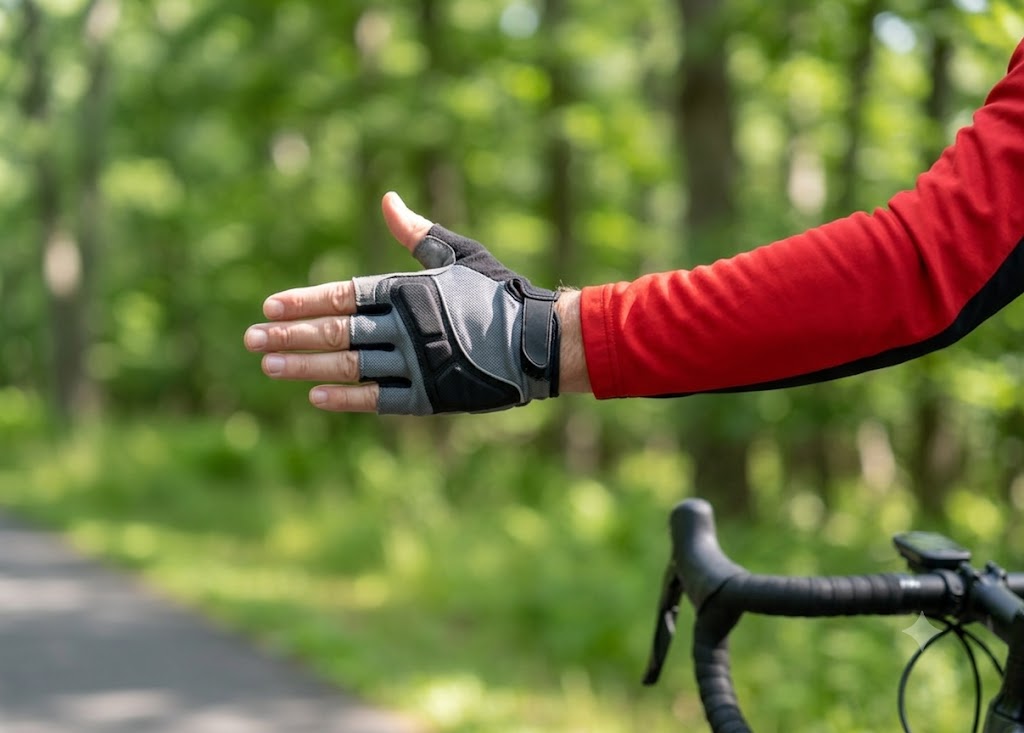
Beyond helmets, California law requires bicycles ridden at night to be equipped with a front white light visible from a distance, along with proper reflectors. Hand signals are required when turning or changing lanes, giving drivers around you a clear, predictable signal of your intentions — particularly important at the kind of busy, multi-lane intersections common throughout Irvine.
The Crash Patterns That Show Up Most at Irvine Intersections
Certain types of collisions recur predictably at busy intersections, and recognizing them in advance gives you a meaningful head start on avoiding them. Right-hook collisions happen when a driver turning right fails to check for a cyclist traveling straight through a bike lane, cutting directly across the cyclist’s path. Left-cross collisions occur when a vehicle turning left across an intersection fails to yield to a cyclist traveling straight in the opposite direction — a particularly dangerous scenario because the closing speed and angle often give a cyclist very little time to react.
Dooring is another recurring hazard, particularly along streets with parked cars adjacent to bike lanes. This happens when someone inside a parked vehicle opens a door directly into a cyclist’s path without checking first. California law requires vehicle occupants to exercise reasonable care before opening a door into traffic, and a driver or passenger who fails to do so can be held liable for a resulting crash. Riding with a buffer of space between yourself and parked cars, when the lane width allows it, is one of the more effective ways to reduce this specific risk.
Practical Safety Habits for Riding in Irvine
A handful of consistent habits meaningfully reduce risk at the intersections and conditions described above. Make eye contact with drivers before proceeding through an intersection whenever possible — never assume a driver has seen you simply because you have the right of way. Use clear, early hand signals before turning or changing position, giving drivers time to react rather than discovering your intention at the last second.
Stay alert and scan continuously rather than fixing your attention narrowly ahead — peripheral awareness of vehicles preparing to turn, doors that might open, and traffic merging from side streets buys you the reaction time that prevents a routine ride from becoming a collision. If you are using headphones or earbuds, California law and basic safety both favor leaving at least one ear uncovered so you remain aware of your surroundings. And when a lane is too narrow to share safely, do not hesitate to take the lane rather than hugging a curb that puts you closer to parked cars, opening doors, and debris.
What to Do If You’re Involved in a Bicycle Accident
If a crash does happen, move to a safe area if you are able, and call the police to file a report regardless of how minor the collision may seem at first. Seek medical attention promptly, even if you feel fine — head injuries and soft tissue damage are not always immediately apparent, and a documented evaluation close to the time of the accident protects both your health and your potential claim.
Photograph the scene, your bicycle, any visible injuries, and the vehicles involved, and collect contact information from any witnesses before they leave. Avoid discussing fault with the other driver at the scene, and be cautious about giving a recorded statement to an insurance adjuster before speaking with an attorney. California’s personal injury laws allow cyclists to pursue compensation from a negligent driver, and in cases involving dangerous road conditions, even against a government entity responsible for maintaining the roadway — though claims against a government entity carry a much shorter filing deadline, typically six months. Our Orange County personal injury attorneys handle bicycle accident claims throughout Irvine and the surrounding area.
Riding Smart in a Bike-Friendly City
Irvine’s infrastructure gives cyclists real advantages that many California cities simply do not offer, but infrastructure alone does not eliminate the legal and practical realities of sharing the road with vehicles. Knowing the laws that protect you, recognizing the intersection patterns that cause most serious crashes, and building consistent visibility habits are what actually translate good infrastructure into a genuinely safer ride.
If you were injured while cycling in Irvine, Oracle Law Firm | Accident & Injury Attorneys offers free, confidential consultations with no upfront fees — you only pay if we recover compensation for you. Contact our team today to discuss your case.