If you were hurt in a bicycle accident in California and you were not wearing a helmet, one of the first worries that creeps in is whether that fact alone will hurt your case. It is a reasonable concern, and insurance companies count on that worry to push down settlement offers. The reality is more favorable to cyclists than most people assume — but understanding exactly how California law treats helmet use is essential before you respond to a single question from an adjuster.
What California’s Helmet Law Actually Requires
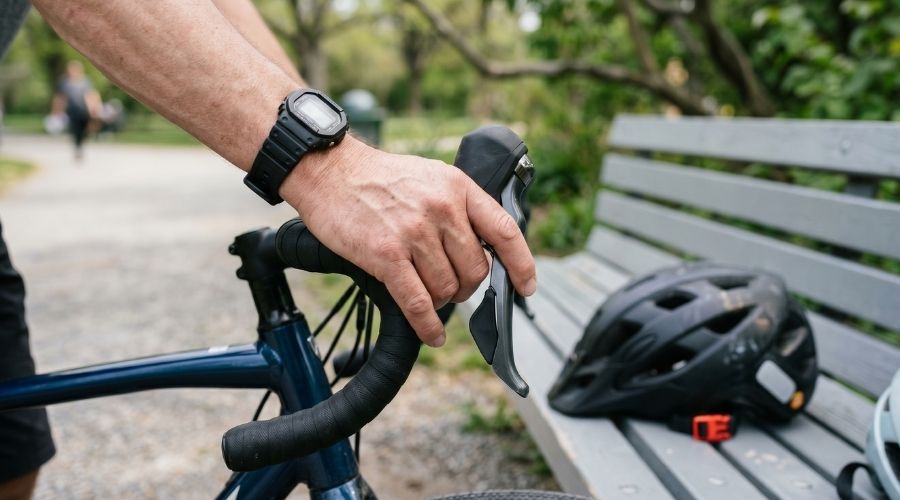
California Vehicle Code Section 21212 sets the statewide rule, and it is narrower than many people realize. The law requires riders under the age of 18 to wear a properly fitted, approved bicycle helmet whenever they are operating or riding as a passenger on a bicycle on a public street, bikeway, or trail. That requirement also extends to children riding in a bicycle-mounted child seat or being towed in a bicycle trailer.
For adults, the picture is different. California has no statewide law requiring riders 18 and older to wear a helmet on a traditional bicycle, or on Class 1 or Class 2 electric bicycles. The one notable exception involves Class 3 e-bikes — the higher-speed, pedal-assist bikes capable of reaching up to 28 mph — which require every rider to wear a helmet regardless of age, a rule reinforced under recent e-bike classification updates. Outside of that specific category, an adult cyclist riding without a helmet is not violating any state law.
Why Adults Are Treated Differently Than Minors Under the Law
This distinction matters enormously for a personal injury claim. When a minor is injured without wearing a required helmet, that violation can be raised as evidence of comparative fault, since the law clearly applied to them and they did not follow it. For an adult cyclist, that argument does not hold the same weight, because there was no legal obligation to wear a helmet in the first place. You cannot be found negligent for failing to do something the law never required of you.
That said, insurance companies frequently try anyway. They know that juries and adjusters often carry an instinctive bias against cyclists who were not wearing protective gear, even when that bias has no legal basis. Recognizing this tactic for what it is — a pressure strategy rather than a sound legal argument — is the first step in protecting your claim.
Liability Versus Causation — Two Different Legal Questions
Understanding your case requires separating two distinct legal concepts that often get blurred together: liability and causation. Liability addresses who caused the accident itself — the driver who ran the red light, failed to yield, or was distracted behind the wheel. Causation addresses something narrower: whether a specific factor, like not wearing a helmet, made your injuries more severe than they otherwise would have been.
Not wearing a helmet does not affect liability for an adult cyclist. The driver who caused the crash is still the one who caused the crash, helmet or no helmet. What it can affect is a narrower causation argument specifically tied to head injury damages. The defense bears the burden of proving that a helmet would have actually prevented or reduced the specific injuries you are claiming — it is not enough for them to simply point out that you were not wearing one.
How California’s Comparative Negligence Rule Applies
California follows a pure comparative negligence rule, a standard established by the California Supreme Court and applied consistently since. Under this rule, your compensation is reduced only by the percentage of fault actually assigned to you — not eliminated entirely, and not assumed automatically. If a jury determines you were 10% responsible for the severity of your head injury because you were not wearing a helmet, your total compensation would be reduced by that 10%, while you would still recover the remaining 90%.
Importantly, that 10% figure is not a default or a presumption. The defense has to build an actual evidentiary case — often using medical experts and accident reconstruction analysis — connecting the absence of a helmet to the specific injuries you sustained. A skilled bicycle accident attorney will challenge that evidence directly rather than letting the insurance company’s assumption go unanswered.
The Negligence Per Se Advantage Cyclists Often Overlook
While the helmet conversation focuses on what cyclists may have done wrong, it is worth flipping the lens toward what drivers frequently do wrong. Every California Vehicle Code provision that protects cyclists — including proper passing distance, right-of-way at intersections, and safe lane positioning — also creates a legal concept known as negligence per se. This means that when a driver violates one of these statutes and that violation causes your injury, the driver is automatically presumed negligent. You do not have to separately prove they were careless in some general sense; the statutory violation itself establishes it.
This matters because the helmet question often gets disproportionate attention relative to its actual legal weight. The far more significant factor in most bicycle accident cases is whether the driver violated a traffic law that directly caused the collision. Building that part of the case strongly tends to outweigh whatever argument the defense raises about a helmet.
What to Do If You Were Injured Without a Helmet
Seek medical attention immediately, even if your injuries seem minor at first. Head injuries in particular can present delayed symptoms, and a documented medical record close in time to the accident strengthens your claim regardless of helmet use. Photograph the accident scene if you are able, including your bicycle, any visible injuries, and the position of the vehicles involved.
Be careful in conversations with insurance adjusters. If asked directly whether you were wearing a helmet, answer honestly, but do not volunteer extended commentary or speculation about how your injuries might have been different. Adjusters are trained to use any extra detail you provide to build a causation argument against you. Speaking with an attorney before giving a recorded statement is one of the most effective ways to prevent that from happening.

Why Legal Representation Matters in Helmet-Related Cases
Helmet-related defenses are exactly the kind of argument that benefits from experienced pushback. An attorney familiar with California bicycle accident law knows how to challenge the causation evidence the defense puts forward, how to keep the focus on the driver’s own violation of the law, and how to prevent an insurance company from leveraging public bias against cyclists into a lower settlement.
At Oracle Law Firm, our personal injury attorneys have handled bicycle accident claims throughout Southern California and understand exactly how to respond when helmet use becomes part of the conversation. We offer free, no-obligation consultations and work on a contingency basis, meaning you owe nothing unless we recover compensation for you.
Frequently Asked Questions
Is it illegal for an adult to ride a bicycle without a helmet in California?
Can I still file a claim if I was not wearing a helmet when I was injured?
Will not wearing a helmet reduce my settlement under California law?
What is the difference between liability and causation in a no-helmet bicycle accident case?
Do helmet rules apply differently for minors injured in a bicycle accident?
Injured While Cycling? Talk to an Attorney — No Cost, No Obligation
Whether or not you were wearing a helmet, if another driver’s negligence caused your bicycle accident, you have the right to pursue full and fair compensation. Oracle Law Firm | Accident & Injury Attorneys offers free, confidential consultations across Southern California with no upfront fees — you only pay if we win your case. Contact our team today to find out exactly where you stand.