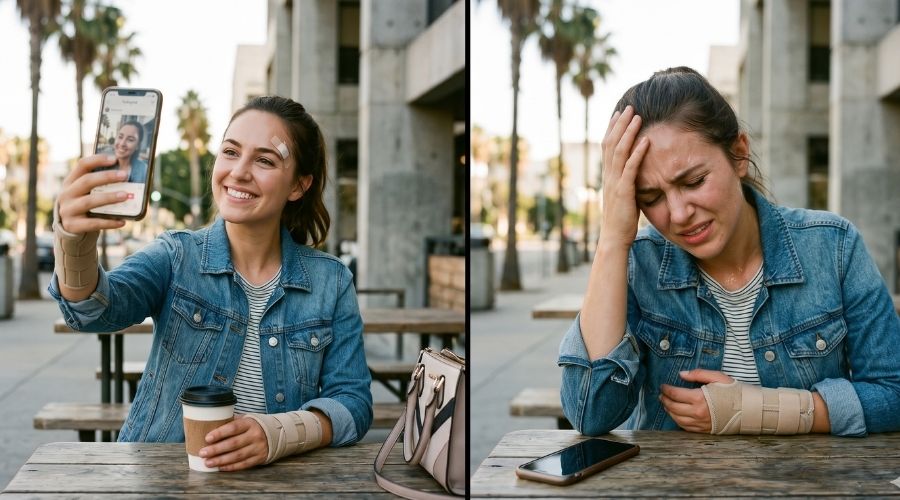
What you post online after an accident could potentially impact the outcome of your California personal injury case.
Social media has become part of daily life for millions of people. Whether posting vacation photos, sharing life updates, commenting on events, or uploading videos, many individuals use platforms like Instagram, TikTok, Facebook, Snapchat, and X without thinking twice. However, after a personal injury accident, social media activity can suddenly take on much greater legal significance.
In California personal injury cases, insurance companies and defense attorneys often look closely at a claimant’s online activity while evaluating claims. Posts, photos, comments, check-ins, videos, and even seemingly harmless updates may be reviewed and potentially used to challenge the severity of injuries or question a person’s credibility.
At Oracle Law Firm | Accident & Injury Attorneys, many accident victims are surprised to learn how quickly social media can become part of an injury investigation.
Why Insurance Companies Monitor Social Media
Insurance companies focus on minimizing payouts whenever possible. After a serious accident, investigators may search for evidence that could reduce the value of a claim or create doubt about the injured person’s condition.
Social media provides insurers with a large amount of publicly accessible information. Even accounts set to “private” are not always fully protected from scrutiny during legal proceedings.
Insurance adjusters and defense attorneys may review:
• Photos and videos
• Location check-ins
• Tagged posts
• Comments and replies
• Activity timestamps
• Fitness or recreational content
• Travel-related updates
The goal is often to identify content that appears inconsistent with the injuries being claimed.
“A single social media post taken out of context can sometimes create complications in a personal injury case.”

Innocent Posts Can Be Misinterpreted
One of the biggest problems with social media evidence is that posts rarely tell the full story. A smiling photo at a family gathering or a short video from an outing does not necessarily reflect someone’s actual physical condition or pain levels.
However, insurance companies may attempt to argue otherwise.
For example, an injured person attending a birthday party for one hour may still be dealing with significant pain afterward. Yet a photo posted online could be presented as evidence suggesting they are “fully recovered” or not seriously injured.
Even casual comments like:
• “Feeling better today”
• “Back at it”
• “Finally getting out again”
It may be selectively interpreted by opposing parties trying to challenge the claim.
Physical Activity Posts Can Become a Major Issue
Photos or videos involving physical activity are especially common targets during injury cases. Insurance companies may closely examine content involving:
• Gym workouts
• Sports participation
• Hiking or outdoor activities
• Dancing or recreational events
• Travel and vacations
• Home improvement projects
Even if the activity occurred briefly or caused additional pain afterward, the content may still be used to question injury severity.
This information is particularly important in cases involving:
• Back injuries
• Neck injuries
• Soft tissue injuries
• Mobility limitations
• Chronic pain claims
• Long-term disability allegations
The reality is that social media rarely provides the full medical context behind a person’s physical condition.
Deleted Posts Can Also Create Problems
Some individuals attempt to delete old posts or deactivate accounts after learning social media may affect their case. However, deleting content during ongoing litigation can sometimes create additional legal complications.
In certain situations, courts may view deleted evidence negatively if it appears relevant to the case.
Instead of attempting to remove content independently, injured individuals should speak with their attorney about how to handle social media activity during an active claim.
Friends’ and Family Posts Can Matter Too
Many people focus only on what they personally upload, but tagged content from friends and family can also become part of an investigation.
For example:
• Group photos
• Event check-ins
• Tagged vacation posts
• Shared videos
• Public comments
Insurance investigators may review all of them.
Even when an injured person does not personally upload the content, their online presence may still be scrutinized through the activity of others connected to them online.
“Insurance companies often search for inconsistencies online, even when posts have little connection to the actual medical reality of the injury.”

Why Legal Guidance Is Important After an Accident
Personal injury cases involve far more than filing paperwork and negotiating with insurance companies. Every action taken after an accident, including online activity, can potentially affect the outcome of a claim.
An experienced California personal injury attorney can help accident victims better understand how to protect their case during the legal process.
Oracle Law Firm | Accident & Injury Attorneys represent injury victims throughout California and understands the strategies insurance companies use when evaluating claims. From car accidents and workplace injuries to catastrophic injury cases, protecting evidence and avoiding unnecessary complications is often critical to building a strong case.
Frequently Asked Questions
Can social media really affect a personal injury claim?
Yes. Insurance companies and defense attorneys may review social media posts to search for information that could challenge the claim.
Should I stop using social media after an accident?
Many attorneys recommend limiting social media activity during an active injury claim to reduce potential complications.
Can private social media accounts still be investigated?
Potentially, yes. Even private content may become relevant during legal proceedings depending on the circumstances.
Can deleted posts hurt my case?
Deleting posts during litigation can sometimes create legal issues if the content is considered relevant evidence.
What types of posts are most concerning in injury cases?
Photos, videos, travel content, fitness activities, or posts suggesting physical activity may draw attention from insurance investigators.
Protecting Your Case Means Being Careful Online
After an accident, even seemingly harmless social media activity can create unexpected challenges during a personal injury claim. Insurance companies often search for opportunities to reduce payouts or question the severity of injuries, making online activity more important than many victims realize.Oracle Law Firm | Accident & Injury Attorneys help California injury victims navigate complex claims while protecting their rights throughout the legal process. Individuals injured in an accident should speak with an experienced attorney before making decisions that could affect their case.