Orange County is one of the most scenic and popular regions in California for motorcycle riding. From the Pacific Coast Highway to the winding canyon roads of Laguna Beach, the appeal is undeniable. But beneath that freedom lies a serious reality: motorcyclists in Orange County face some of the highest accident risks in the state. Understanding those risks is not just smart riding — it can be the difference between making it home and suffering a life-altering injury.
At Oracle Law Firm, we represent injured riders throughout Orange County. We have seen firsthand what these accidents do to people and families. This guide breaks down the most critical motorcycle accident risks in the area so that riders — and their loved ones — know exactly what they are up against.
Why Orange County Roads Are Especially Dangerous for Motorcyclists
California as a whole records hundreds of motorcyclist fatalities every year, and Orange County consistently contributes a significant share of those numbers. The combination of dense urban traffic, high-speed freeways, heavy tourist activity, and a year-round riding season creates a uniquely hazardous environment. Unlike other vehicle operators, motorcyclists have no protective shell around them. A crash that might be a minor fender bender for a car driver can be catastrophic for a rider.
The California Office of Traffic Safety has repeatedly flagged Orange County as a high-priority area for motorcycle safety intervention. That is not a statistic to ignore — it is a call to awareness.
Distracted and Inattentive Drivers Are the Leading Threat
The most common cause of motorcycle accidents in Orange County is not rider error — it is distracted drivers in other vehicles. Motorists using their phones, adjusting navigation systems, eating, or simply not paying attention frequently fail to notice motorcycles until it is too late. Because motorcycles occupy a smaller visual footprint on the road, they are easier to overlook at intersections, during lane changes, and when emerging from blind spots.
The left-turn accident is one of the deadliest scenarios that stems directly from this inattention. A driver making a left turn across traffic will often misjudge or completely miss an oncoming motorcycle, cutting directly into the rider’s path. These collisions happen at speed and give the motorcyclist almost no time to react. Riders should treat every oncoming vehicle at an intersection as a potential threat and be prepared to brake or maneuver defensively.
Lane Changing Without Checking Blind Spots
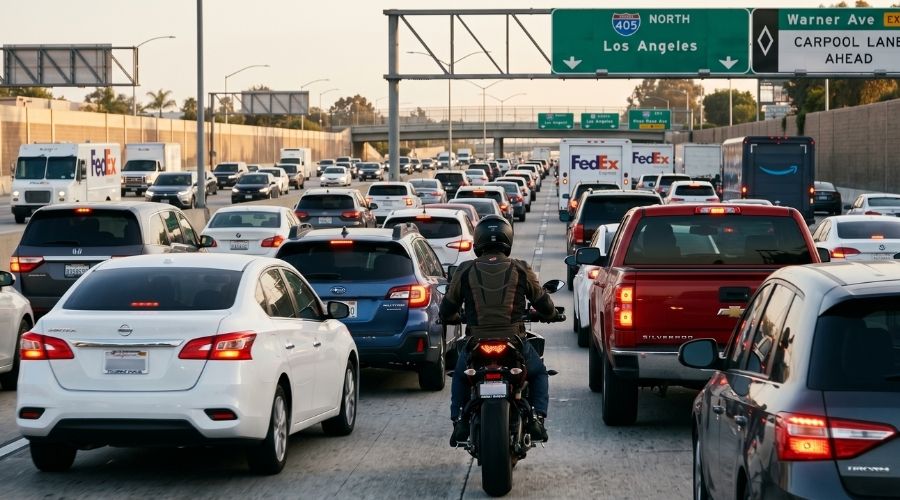
On Orange County’s heavily trafficked freeways — the 405, the 5, the 55, and the 91 — lane changes happen constantly and sometimes without adequate mirror checks. Motorcycles sit directly in the blind spot zones of passenger vehicles and large trucks. A sudden lane shift by an inattentive driver can force a rider off the road, into a guardrail, or under the wheels of another vehicle.
Riders are often advised to avoid lingering in blind spots, but the reality is that freeway traffic in Orange County can make that nearly impossible during peak hours. The responsibility ultimately lies with drivers to check their surroundings thoroughly before changing lanes — and when they fail to do so, they are legally liable for the consequences.
Road Hazards That Are Minor for Cars but Deadly for Motorcycles
Orange County’s road infrastructure, while generally well-maintained, still presents hazards that most car drivers barely notice but can be lethal for motorcyclists. Gravel and sand wash onto roads from canyon areas, particularly along routes like Santiago Canyon Road and Ortega Highway. Oil slicks are common near intersections and gas stations. Poorly repaired asphalt, uneven pavement transitions, and railroad tracks at shallow crossing angles can all cause a motorcycle to lose traction without warning.
Drainage grates, expansion joints on bridges, and faded lane markings during rain are additional concerns that experienced riders learn to anticipate. Seasonal factors matter too — after a dry summer, the first rains of fall bring oil to the surface of roads, creating slick conditions that catch even veteran riders off guard. Being aware of these environmental hazards is not optional; it is a fundamental part of riding safely in this region.
Speeding and Aggressive Driving Near Popular Riding Routes
Some of Orange County’s most popular motorcycle routes — Ortega Highway, Trabuco Canyon Road, and the Pacific Coast Highway through Laguna and Dana Point — also attract aggressive and high-speed driving from other motorists. Sports car enthusiasts, impatient commuters, and unfamiliar tourists all share these roads with motorcyclists, often behaving unpredictably.
Speeding reduces reaction time for everyone on the road and dramatically increases the severity of any collision. For a motorcyclist, being struck by a speeding vehicle — or even being forced to brake suddenly because of one — can result in catastrophic injury. Traumatic brain injuries, spinal cord damage, road rash, and broken bones are among the most common outcomes when speed is a factor in a motorcycle crash.
Lane Splitting: Legal in California, But Still Risky
California is one of the few states where lane splitting is legal, and Orange County riders take advantage of it regularly, especially in stop-and-go freeway traffic. While lane splitting can reduce rear-end collision risks for motorcyclists, it introduces its own set of dangers when not done safely.
The California Highway Patrol has established guidelines suggesting that lane splitting is safest at speed differentials of no more than 10 mph and generally at speeds under 30 mph. Riders who lane split aggressively — weaving between lanes at high speed or during unpredictable traffic patterns — significantly increase their chances of sideswiping a vehicle or being clipped by an opening car door. Even when a rider lane splits responsibly, a driver who abruptly changes lanes without signaling can create a collision scenario with almost no warning.
Alcohol and Impaired Driving Remains a Persistent Problem
Despite decades of public awareness campaigns, drunk and drug-impaired driving continues to be a significant contributor to motorcycle accidents across Orange County. Impaired drivers demonstrate slower reaction times, poor judgment about speed and distance, and unpredictable behavior — all of which are especially dangerous for motorcyclists who depend on other drivers making rational, predictable decisions.
Weekend nights and holiday weekends see a marked spike in impaired driving incidents across the county. Riders who choose to ride during these times should be especially alert near bar corridors in areas like Huntington Beach, Newport Beach, and Anaheim. Staying visible, maintaining safe following distances, and having an exit strategy in traffic are all habits that experienced riders cultivate to reduce the impact of sharing roads with impaired drivers.
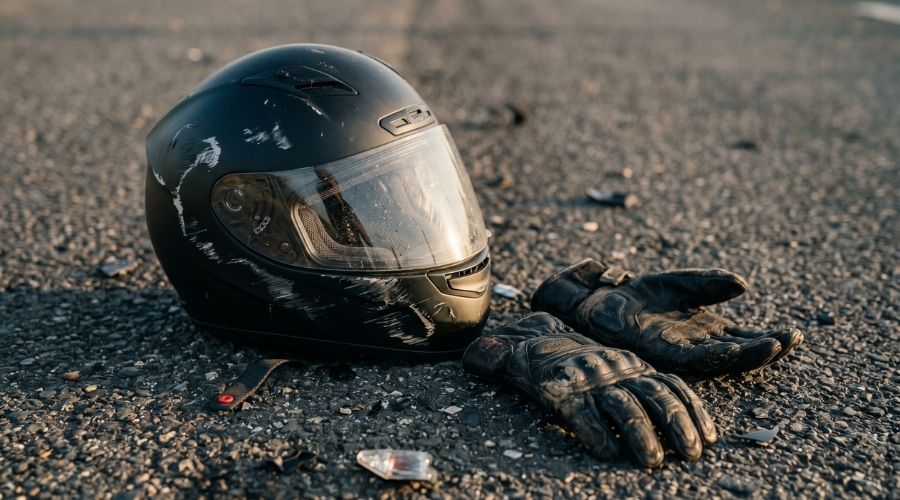
Inadequate Protective Gear Compounds Every Risk
Not every risk comes from outside the rider. Gear choices have a direct impact on survivability and injury severity when accidents occur. California law requires helmet use for all motorcycle riders, but helmet quality varies enormously. A DOT-certified, full-face helmet provides significantly better protection than a novelty helmet or an older model that no longer meets current safety standards.
Beyond helmets, motorcycle jackets with CE-rated armor, riding gloves, reinforced pants, and boots that cover the ankle are all pieces of equipment that can reduce the severity of injuries in a crash. Riders who are found to have been wearing inadequate protective gear at the time of an accident may also face complications in personal injury claims, as insurance companies sometimes attempt to use this detail to argue comparative fault. Wearing proper gear is not just about safety — it is also about protecting your legal rights.
Intersections: Where Most Orange County Motorcycle Accidents Happen
Statistically, a disproportionate number of motorcycle accidents in urban Orange County occur at or near intersections. Red-light violations, failure to yield, and vehicles making unexpected turns create collision scenarios that happen faster than most riders can respond. High-traffic intersections in Santa Ana, Anaheim, Costa Mesa, and Irvine are among the most frequently cited locations in Orange County accident reports.
Riders should approach all intersections with heightened caution, cover the brake, maintain a speed that allows for quick stops, and make eye contact with drivers when possible to confirm they have been seen. Assuming the right of way does not guarantee safety — it only establishes legal responsibility after the fact.
What to Do After a Motorcycle Accident in Orange County
If you are involved in a motorcycle accident in Orange County, the steps you take immediately after the crash can have a lasting impact on your health and your legal case. The first priority is always safety and medical attention. Even if injuries appear minor in the moment, internal trauma, concussions, and soft tissue damage may not be immediately apparent and can worsen significantly if left untreated.
Once you are safe, documenting the scene is critical. Photographs of the vehicles, the road conditions, your gear, and any visible injuries create a record that can be invaluable later. Getting witness contact information, filing a police report, and avoiding any statements that could be interpreted as admitting fault are all important steps in protecting your rights at the scene.
What you should not do is give a recorded statement to an insurance company — yours or the other party’s — before speaking with an attorney. Insurance adjusters are trained to gather information that minimizes the company’s payout. Anything you say can and will be used to reduce or deny your claim.
Motorcycle accidents happen fast, but the consequences can last a lifetime. Understanding the risks on Orange County roads is one of the best ways riders can protect themselves — both physically and legally. When another driver’s negligence causes a crash, having the right legal representation can make all the difference in your recovery.
Oracle Law Firm Fights for Orange County Motorcycle Accident Victims
Motorcycle accident claims are often more complicated than standard car accident cases. Insurance companies frequently try to blame riders, dispute lane splitting, or minimize serious injuries. At Oracle Law Firm, we know how to fight back and build strong cases for injured motorcyclists.
We handle every case on a contingency fee basis, meaning you pay nothing unless we win. Our team works quickly to gather evidence, investigate the crash, and pursue the maximum compensation available.
If you were injured in a motorcycle accident in Orange County, contact Oracle Law Firm today for a free consultation and protect your right to compensation.
Frequently Asked Questions
How long do I have to file a motorcycle accident claim in California?
In California, the statute of limitations for personal injury claims — including motorcycle accidents — is two years from the date of the accident. If a government entity is involved, that window shrinks to six months. Missing this deadline means losing your right to compensation entirely, so acting quickly is critical.
Can I still recover compensation if I was lane splitting at the time of the accident?
Yes. Lane splitting is legal in California, so it does not automatically disqualify you from recovering damages. However, how and where you were lane splitting may be used to argue partial fault. California follows a comparative fault rule, meaning your compensation is reduced by your percentage of responsibility — but not eliminated.
What if the driver who hit me does not have insurance?
You may still have options. If you carry uninsured or underinsured motorist (UM/UIM) coverage on your own policy, that coverage can apply. An attorney can also investigate whether other parties — such as a vehicle manufacturer or a government agency responsible for road conditions — share liability in your case.
Do I need a lawyer if the insurance company already offered me a settlement?
Almost always, yes. Initial settlement offers from insurance companies are typically far below what an injured rider is actually owed. Once you accept a settlement, you forfeit the right to pursue additional compensation — even if your injuries turn out to be worse than initially expected. A lawyer can evaluate the offer and negotiate for a fair amount.
What compensation can I recover after a motorcycle accident in Orange County?
Depending on the circumstances, you may be entitled to medical expenses (current and future), lost wages, loss of earning capacity, pain and suffering, emotional distress, and property damage. In cases involving gross negligence — such as drunk driving — punitive damages may also be available.