A Laguna Niguel personal injury lawyer handling claims after a crash on the 73 Toll Road is dealing with a legal framework that most general personal injury guides do not cover. The 73 is not a standard California freeway maintained by Caltrans — it is operated by the San Joaquin Hills Transportation Corridor Agency, a joint powers authority with its own government entity status, its own liability structure, and its own set of deadlines that apply when the road itself contributes to a crash. Combined with the 73’s winding, high-speed hillside alignment and the surface street patterns around Laguna Niguel, accidents here produce injury claims with specific complexities worth understanding before you speak to anyone at an insurance company.

What the 73 Toll Road Actually Is — and Why It Matters Legally
State Route 73 is an approximately 17.76-mile state highway in Orange County. The southernmost 12 miles is a toll road operated by the San Joaquin Hills Transportation Corridor Agency, which opened in November 1996. SR 73’s southern terminus is at Interstate 5 near the San Juan Capistrano–Mission Viejo–Laguna Niguel tripoint, and its northern terminus is at Interstate 405 in Costa Mesa. The toll road section runs through the San Joaquin Hills on a winding, scenic alignment that passes through or near Laguna Niguel, connecting south Orange County residents to the broader freeway network without using the heavily congested I-5/I-405 interchange known as the El Toro Y.
The legal distinction that matters for injury claims is the operator. The Transportation Corridor Agencies are two joint powers authorities formed by the California State Legislature in 1986 to plan, finance, construct, and operate Orange County’s toll roads. The San Joaquin Hills Transportation Corridor Agency manages the 73 Toll Road. As a government-formed joint powers authority, the TCA qualifies as a government entity for liability purposes under California law — which means claims arising from road defects, inadequate signage, guardrail failures, or other infrastructure conditions on the 73 are subject to the Government Tort Claims Act and its six-month filing deadline, not the standard two-year personal injury statute of limitations. According to the Transportation Corridor Agencies, the 73’s member agencies include the city of Laguna Niguel, making local government involvement in this corridor particularly direct.
Why Crashes on the 73 Tend to Be Serious
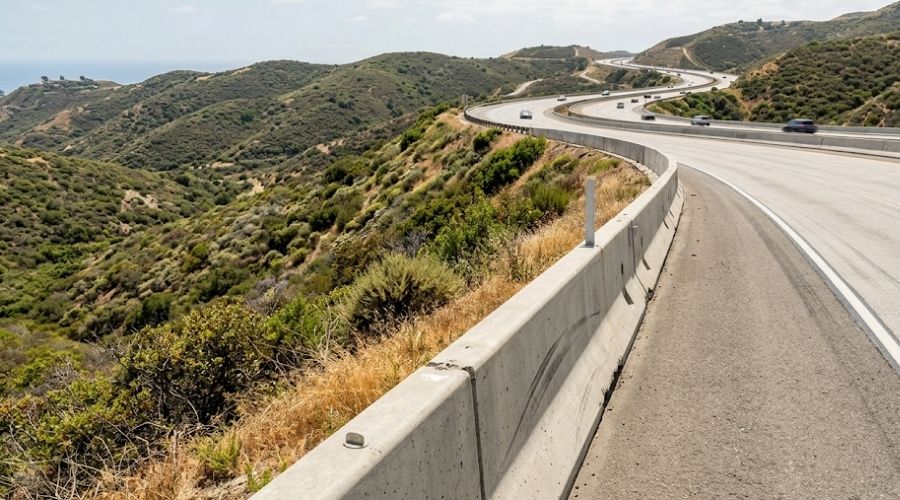
The toll road connects Laguna Niguel to Newport Beach and inland Orange County. Its winding route through the hills and relatively high speed limits make it a location for serious single-vehicle and multi-car crashes. The 73’s hillside alignment creates several conditions that contribute to the severity of crashes here. Curved sections reduce forward sightlines, compressing the time drivers have to respond to slowing traffic ahead or road hazards. Elevation changes affect braking performance, particularly for heavier vehicles. Limited shoulder space in hilly sections means that a vehicle that loses control has fewer options to recover without making contact with a guardrail or barrier.
The toll collection infrastructure creates its own crash dynamic. Speed differentials between vehicles decelerating for or accelerating away from toll plaza areas and through traffic create merge conflict points that are a documented source of rear-end and side-impact collisions on toll roads generally. Recent CHP dispatch data for the 73 corridor shows recurring incidents including racing-related crashes, barrier contacts, and multi-vehicle collisions — reflecting the ongoing real-world crash pattern on this road. The combination of high speeds, winding terrain, and toll-related speed changes produces injury crashes that are typically more severe than equivalent crashes on flat urban freeways at similar speeds.
The TCA as a Government Entity — The Six-Month Deadline You Cannot Miss
This is the most legally consequential distinction in a 73 Toll Road crash claim. When the road itself — its design, maintenance, signage, guardrail condition, or any other infrastructure element — contributed to your accident, the entity responsible for that infrastructure is the San Joaquin Hills Transportation Corridor Agency. As a government-formed joint powers authority, the TCA qualifies as a public entity for liability purposes under the California Government Claims Act.
That classification triggers the six-month filing deadline. Before any lawsuit against the TCA can proceed, a formal Government Tort Claim must be filed with the agency within six months of the accident date. This is entirely separate from, and much shorter than, the standard two-year statute of limitations that applies to private-party personal injury claims. Missing this six-month deadline almost always bars the infrastructure-related portion of a claim permanently — regardless of how strong the evidence of a road defect or maintenance failure is. A Laguna Niguel personal injury lawyer who understands the 73’s operator structure will identify this deadline on day one and ensure it is met before anything else in the claims process moves forward.
Laguna Niguel Personal Injury Lawyer: Who Else May Be Liable
A Laguna Niguel personal injury lawyer evaluating a 73 Toll Road crash does not stop at the other driver. The full liability picture depends on the specific facts of how the crash occurred, and multiple parties may carry responsibility independently of the at-fault driver.
The TCA may bear liability if a road condition — inadequate lighting, a guardrail in disrepair, a poorly designed merge lane, or insufficient warning signage on a curve — contributed to the crash and the agency had notice of the condition and failed to address it. Commercial truck drivers and their employers carry FMCSA federal liability in addition to California state liability, and the 73 sees commercial vehicle traffic connecting south Orange County to the I-5 corridor. If a vehicle defect — brake failure, tire blowout, steering malfunction — caused or contributed to the crash, the vehicle or component manufacturer may face a product liability claim. And if the crash involved a rideshare vehicle, the rideshare company’s commercial insurance policy applies in addition to the driver’s personal coverage, depending on whether a trip was active at the time of the crash.

Dangerous Surface Streets Around Laguna Niguel
Not all Laguna Niguel accident claims arise on the 73 itself. The surface street network connecting the city’s residential areas to the toll road and to the I-5 has its own well-documented crash patterns. Niguel Road and La Paz Road are north-south residential connectors that see a mix of local traffic, school zone activity, and commercial vehicles. Pedestrian and bicycle conflicts at crosswalks increase accident risks during school hours. Both roads funnel traffic between Laguna Niguel’s hillside residential areas and the commercial zones and freeway access points below, creating high-volume conditions that do not always reflect the suburban character of the streets themselves.
Pacific Park Drive and Alicia Parkway are the primary commercial arterials running through the city’s business and retail centers, where intersection crashes, rear-end collisions in commercial parking lot driveways, and pedestrian-vehicle conflicts occur with regularity. Crown Valley Parkway, which connects Laguna Niguel to neighboring Mission Viejo and provides access to the I-5, carries high commuter and commercial volumes that generate consistent crash activity at its major intersections. Any of these surface street crashes can involve the city of Laguna Niguel as a potential defendant if a road design defect, malfunctioning signal, or inadequate crosswalk contributed to the collision — again triggering the six-month government entity deadline.
Evidence That Matters Most After a 73 Toll Road Crash
The evidence available after a 73 Toll Road crash includes several categories that are specific to the toll road environment. The TCA’s own traffic monitoring infrastructure — cameras and sensors maintained along the corridor — may have captured the crash or the road conditions immediately preceding it. This footage is controlled by the TCA and must be requested through a formal preservation demand directed at the agency, separate from any demand sent to other parties. Because government agencies have their own document retention protocols, sending this demand as soon as an attorney is involved is critical.
CHP traffic incident reports for 73 Toll Road crashes are filed by the CHP Laguna Hills Area office and should be obtained as soon as they are available. If the crash involved any road condition issue — a section of damaged guardrail, a section of road with poor visibility on a curve, inadequate lighting — documenting that condition with photographs immediately after the crash, before any repairs are made, is essential. The TCA’s maintenance records for the specific section of road where the crash occurred are obtainable through the claims process and can establish whether a known condition had been reported and not corrected. Your own dashcam footage and any footage from other vehicles or nearby businesses completes the evidentiary picture that an experienced Laguna Niguel personal injury attorney will begin assembling from day one.
What to Do Immediately After an Accident on the 73
Move to the shoulder immediately if you are able — the 73’s limited shoulder space in hilly sections makes remaining in an active travel lane after a crash extremely dangerous. Turn on hazard lights and call 911. Remain at the scene until CHP arrives and prepares an official incident report. Photograph all vehicles, the road surface, any guardrail damage, road markings, and your visible injuries. Note any road conditions that may have contributed — wet pavement, a damaged road surface, inadequate signage on a curve — and document them with photographs before any repair work begins.
Seek medical attention the same day. High-speed crashes on the 73 frequently involve significant forces even when vehicle damage appears moderate, and soft tissue injuries, concussions, and internal injuries commonly present delayed symptoms. Do not give a recorded statement to any insurance company — including the TCA’s insurer if the agency is involved — before speaking with an attorney. Contact a Laguna Niguel personal injury lawyer as soon as possible so that preservation demands can be sent to the TCA and all other relevant parties before critical evidence is overwritten and before the six-month government entity deadline begins to close. At Oracle Law Firm, our Orange County personal injury attorneys handle 73 Toll Road and Laguna Niguel accident claims with no upfront fees.
Frequently Asked Questions
Who is responsible for maintaining the 73 Toll Road in California?
What makes crashes on the 73 Toll Road particularly serious?
Can I sue the TCA if a road defect on the 73 contributed to my accident?
What surface streets near Laguna Niguel see the most accidents?
How long do I have to file a personal injury claim after an accident in Laguna Niguel?
Injured on the 73 or in Laguna Niguel? Talk to an Attorney — No Cost, No Obligation
The six-month government entity deadline on 73 Toll Road infrastructure claims starts running the day of your accident. Oracle Law Firm | Accident & Injury Attorneys handles personal injury claims throughout Laguna Niguel and the 73 corridor with no upfront fees — you only pay if we recover compensation for you. Contact our team today before any deadlines close.