A big game or concert in Anaheim is supposed to be a good night out. Tens of thousands of people pour into the Platinum Triangle, fill the stands, line up for food and drinks, and head back to the parking lots late at night. Most nights end without a problem.
When they do not, the injury might be a fall on a crowded staircase, a spill nobody cleaned up, a fight in the stands, a crowd rush, or a ball or puck to the head. If you were hurt at an Anaheim stadium or arena event, you are probably wondering who is responsible. This guide explains how that question gets answered.
Injured at an Anaheim Stadium or Arena Event: Who Is Responsible?
There is rarely one automatic answer. Large venues have owners, operators, security teams, maintenance crews, concession vendors, and event contractors, and any of them may play a part. Who is responsible depends on who controlled the area where you were hurt and what they did or failed to do. Ownership and operating arrangements can also be layered.
Public reporting has noted that the city of Anaheim owns both Angel Stadium and Honda Center, while private companies run day-to-day operations at those sites, and arrangements like that can change. A lawyer will confirm who owned, leased, and managed the exact spot of your injury.
Common Ways People Get Hurt at Big Events
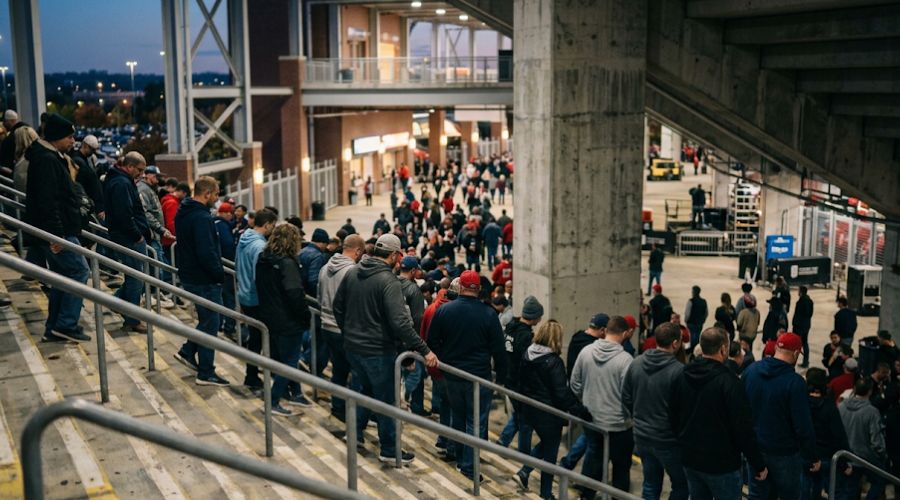
Most injuries come from ordinary hazards made worse by crowds. Fans fall on steep stairs, ramps, and wet concourses, slip on spilled drinks or food, trip over cables or uneven flooring, and get hurt when handrails are loose or lighting is poor. Others are injured in crowd surges, fights, or when objects fall from above. Some are struck by balls, pucks, or thrown items. Outside the venue, parking lots and busy streets bring their own risks, including pedestrians hit by drivers leaving after the event. Our guide on a pedestrian hit near Disneyland in Anaheim explains how those crashes work.
The Venue’s Duty to Keep Fans Reasonably Safe
Under Civil Code Section 1714, people and businesses must use reasonable care to avoid harming others. For a venue that invites the public in, that means inspecting and maintaining stairs, railings, walkways, lighting, and seating, cleaning up spills in a reasonable time, controlling crowds, and warning about known hazards. The same basic ideas apply as in any premises case. In general, you need to show that a dangerous condition existed, that the venue knew about it or should have known, and that it failed to fix or warn about it in time. Our post on a slip and fall at a store in Orange County walks through how notice works.
Big events add a twist, because a venue knows in advance that crowds, alcohol, and long nights are part of the picture. That can make certain risks more foreseeable, and a reasonable venue is expected to plan for them with enough staff, clear signs, and working safety systems.
Foul Balls, Pucks, and the Risks Fans Accept
Claims for balls and pucks are treated differently. California courts have long recognized a limited duty rule for these hazards. In general, a venue is expected to offer protected seating, such as screened or netted areas, for the fans who reasonably want it, but it is not required to protect every seat. Fans who choose unprotected seats are seen as accepting the ordinary risk of a ball or puck flying into the stands.
That does not mean every injury during a game is off the table. Claims may still be possible when the problem goes beyond the normal risks of the sport, for example a broken seat, a missing or damaged barrier, a poorly placed vendor stand, a staff member who directed you into a dangerous spot, or a hazard the venue knew about and ignored. These cases are fact specific, so details matter.
Fights, Crowd Violence, and Alcohol
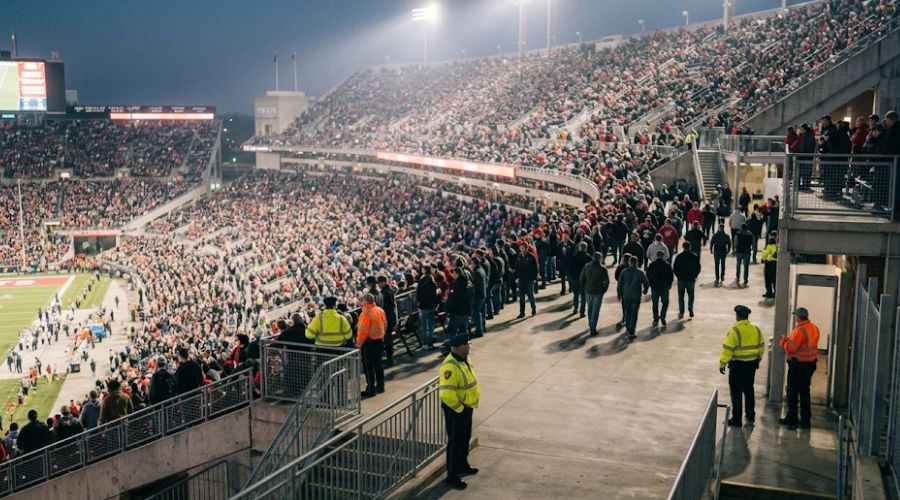
If you were hurt by another fan, the person who attacked you can be held responsible. A venue may also share responsibility if it failed to provide reasonable security for a risk it should have seen coming. Examples include too few guards for a known rivalry game, ignoring earlier fights, failing to respond when a situation was clearly getting out of control, or poor crowd management at entrances and exits.
Alcohol is a common part of these stories, but California law is strict about claims against the places that serve it. In general, claims against sellers or servers for injuries caused by an intoxicated adult are limited. That is why cases often focus on the person who caused the harm and on the venue’s own security and safety decisions, rather than on the drinks alone. An attorney can tell you what applies in your situation.
When a City-Owned Venue Is Involved
Because public entities may own some Anaheim venues, a claim can raise special rules. California allows claims against public entities for a dangerous condition of public property under Government Code Section 835. In general, that means showing that a dangerous condition existed, that it created a risk of the kind of injury you suffered, and that the entity knew about it, or should have known, in time to fix or warn about it. The private company that runs the venue may be a separate defendant with different rules.
The big difference is time. A claim for injury against a public entity generally must be presented within six months under Government Code Section 911.2. Limited exceptions exist, but waiting and hoping for one is risky. If your injury happened at a venue that may be city owned, speak with a lawyer well before that mark.
Other Parties Who May Share Responsibility
Beyond the venue itself, other companies and people may be involved. A security contractor that failed to do its job, a maintenance or cleaning company, a vendor whose equipment caused an injury, a stage or event contractor whose setup was unsafe, or a driver outside the venue can all be responsible. More than one party can share blame at the same time, and each has its own insurance. Figuring out who controlled what is one of the first jobs of an attorney in these cases.
What to Do at the Event After You Are Hurt
Get medical help first. Venues have first aid stations and EMTs, and you can also call 911. Even if you feel okay, accept an evaluation, because adrenaline hides pain. Then tell venue staff or security what happened, ask for an incident report, and ask for a copy or at least a report number. Keep your account short and factual, and avoid saying that you are fine or that it was your fault.
If you can, take photos of the spot, the hazard, any missing warnings, the lighting, and your injuries. Note your section, row, and seat or the exact location, and keep your ticket stub, receipts, and any app records, since they show where and when you were there. Get names and phone numbers of witnesses, and ask whether anyone near you saw what happened. See a doctor soon after, even if you were treated on site, and follow your treatment plan.
Evidence the Venue Controls
Large venues usually have cameras all over, along with security logs, incident reports, maintenance records, cleaning schedules, staffing plans, and records of earlier complaints or injuries. That material can be critical, and it can also be erased or overwritten if nobody asks for it to be kept. A lawyer can send a written preservation request quickly and look for patterns, such as repeated problems in the same stairway or section.
Ticket Terms, Waivers, and Venue Paperwork
Tickets and entry terms often include language saying you accept the risks of attending. Venues may use that to argue that you cannot sue. In general, those terms may help a venue argue that you accepted the ordinary risks of the event, but they do not automatically excuse a venue from failing to keep the premises reasonably safe.
Be careful with any forms or offers from venue staff or an insurance representative afterward. Do not sign a release or accept a voucher or payment before you know the full cost of your injuries, and have a lawyer read what you are asked to sign.
Insurance and Venue Adjusters
Venues carry liability insurance, and you may be contacted quickly by an adjuster who is friendly and ready to help. Their job is to limit what the company pays. You do not have to give a recorded statement, and early offers usually arrive before the long-term picture is clear. Our posts on how to talk to an insurance adjuster after an accident and 5 tactics insurance adjusters use to lower your settlement explain what to watch for. For a look at how claims are valued, read what your personal injury case is worth in California.
Deadlines for Event Injury Claims in California
Most personal injury lawsuits must be filed within two years under Code of Civil Procedure Section 335.1. As described above, a claim against a public entity usually has a six-month window instead. Children may have additional time, which an attorney can confirm.
Because it is not always clear at first who owns or controls the area where you were hurt, it is safer to assume the shorter deadline until a lawyer tells you otherwise. For every California deadline in one place, see how long you have to file a claim in California, and if you are weighing whether to hire help, see do you need a personal injury lawyer in Orange County.
Frequently Asked Questions
Who can be responsible if I am hurt at a stadium or arena event?
Can I sue if I was hit by a foul ball or a puck?
What if I was hurt in a fight or crowd rush at an event?
Does the waiver on my ticket stop me from suing?
How long do I have to file a claim after an injury at an Anaheim event?
Hurt at an Anaheim Event? Find Out Who Is Responsible
Event injury cases can involve venue owners, operators, contractors, and public agencies, and key evidence is controlled by the venue. Oracle Law Firm | Accident & Injury Attorneys helps injured fans, pedestrians, drivers, and passengers throughout Orange County, including Anaheim, with a free, confidential consultation, no upfront fees, and no obligation. You only pay if we recover compensation. Contact our team today before you speak with an insurance company or sign anything from the venue.