Why grocery store slip and fall accidents happen more often than people realize and when a property owner may be legally responsible.
A quick trip to the grocery store is something most people do without a second thought. Whether grabbing a few items after work or shopping for the week, customers expect store aisles, entrances, and walkways to be reasonably safe. Unfortunately, grocery stores are among the most common places where slip and fall accidents happen.
From wet floors and leaking refrigeration units to cluttered aisles and poorly maintained entryways, hazardous conditions can quickly turn an ordinary shopping trip into a painful and expensive medical situation.
Many slip and fall injuries may seem minor at first, but the reality is that these accidents often result in serious consequences, especially for older adults. Broken bones, head injuries, back trauma, knee injuries, and long-term mobility problems are all common after a hard fall.
The biggest challenge for injured victims is that grocery stores and insurance companies frequently attempt to deny responsibility. Proving negligence often becomes the key issue.
At Oracle Injury Attorneys, injured victims frequently need help understanding whether unsafe store conditions may have contributed to their injuries and what legal rights may be available afterward.
“A slip and fall accident is not always ‘just an accident.’ Sometimes unsafe conditions could have been prevented.”
Why Grocery Stores Are High-Risk for Slip and Fall Accidents
Grocery stores present unique risks compared to many other businesses.
Unlike offices or retail clothing stores, grocery stores regularly deal with:
- Spilled liquids
- Produce debris
- Refrigeration leaks
- Heavy foot traffic
- Constant restocking
- Wet entryways
- Floor cleaning during business hours
Because customers are often pushing carts, carrying items, or focused on shopping, hazards may go unnoticed until an accident occurs.
California property owners generally have a legal duty to maintain reasonably safe conditions for customers.
When businesses fail to correct hazards or warn visitors appropriately, injuries may happen.
Wet Floors and Liquid Spills
One of the most common causes of grocery store falls involves wet surfaces.
Liquids may appear from:
- Dropped drinks
- Broken bottles
- Leaking products
- Freezer or refrigeration systems
- Misting systems in produce sections
- Freshly mopped floors
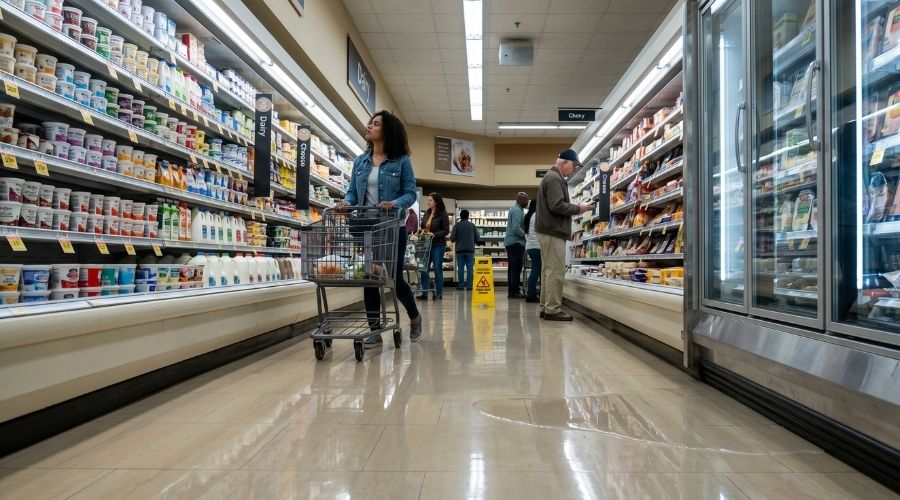
The danger often increases when spills go unaddressed for long periods or warning signs are missing.
For example:
A puddle in an aisle may seem obvious in hindsight, but customers naturally focus on shelves, shopping lists, and navigating carts.
Store employees are typically expected to monitor for hazards and respond within a reasonable timeframe.
Produce and Food Debris on the Floor
Produce sections in grocery stores are particularly common areas for falls.
Items such as:
- Grapes
- Lettuce leaves
- Fruit peels
- Loose vegetables
can easily fall to the floor and create dangerous slipping hazards.
Because produce sections often involve water sprays to keep food fresh, moisture may further increase the risk.
Even a small object on smooth tile flooring may cause a sudden and serious fall.
Leaking Refrigeration Units
Many grocery stores rely on refrigerated displays for frozen and cold products.
When refrigeration systems leak, puddles may form in front of coolers or freezers.
Unfortunately, these hazards are not always easy to notice.
Water on polished floors may blend into the surface, especially under bright store lighting.
If leaks are recurring or poorly maintained, negligence concerns may arise.
“Stores are not expected to prevent every accident, but they are expected to take reasonable steps to identify and address known hazards.”
Poorly Maintained Entryways
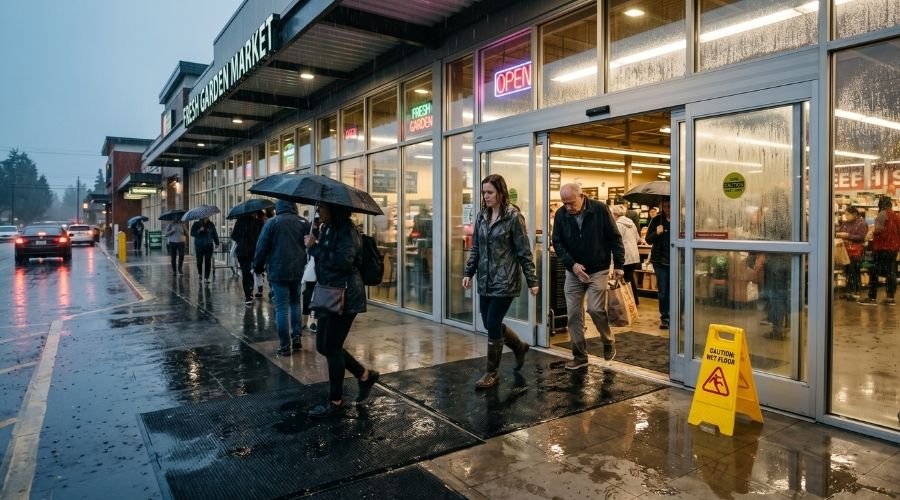
Slip and fall accidents frequently happen before shoppers even enter the store.
Entrances may become dangerous due to:
Rainwater
Wet shoes and tracked-in water may create slick surfaces.
Damaged Mats
Loose or curled floor mats sometimes create tripping hazards.
Uneven Flooring
Cracked pavement or damaged walkways near entrances may lead to serious injuries.
Even in Southern California, occasional rain can significantly increase the risk of falls in grocery stores.
Businesses are often expected to monitor entrances more closely during poor weather conditions.
Cluttered Aisles and Unsafe Displays
Slip and fall accidents do not always involve slippery surfaces.
Sometimes injuries happen because stores leave obstacles in customer walkways.
Hazards may include:
- Stocking carts
- Boxes left in aisles
- Fallen merchandise
- Poorly arranged displays
- Electrical cords
Crowded or cluttered shopping areas may create tripping hazards, especially in busy stores.
Employees generally should maintain reasonably clear paths for customers.
Poor Lighting
Lighting plays a major role in visibility and safety.
Dim lighting may make hazards harder to see, especially in:
- Parking lots
- Entryways
- Storage sections
- Refrigerated areas
Poor visibility often becomes an important factor in premises liability investigations.
Common Injuries From Grocery Store Falls
Many people underestimate how serious slip and fall injuries can become.
Common injuries include:
Broken Bones
Wrists, hips, ankles, and arms are especially vulnerable during falls.
Head Injuries
Concussions and traumatic brain injuries sometimes occur when victims strike the floor.
Back and Neck Injuries
Falls may trigger herniated discs, spinal injuries, or chronic pain.
Knee and Shoulder Injuries
Twisting motions during falls frequently affect joints.
Older adults often face especially serious consequences due to slower recovery times and fracture risks.
What To Do After a Grocery Store Slip and Fall
The steps taken immediately after a fall may significantly affect a claim.
Report the Incident
Notify store management immediately and request an incident report.
Take Photos
Document:
- Hazardous conditions
- Spills or debris
- Lack of warning signs
- Injuries
Gather Witness Information
Witnesses may help confirm how long hazards existed or what caused the fall.
Seek Medical Attention
Even delayed pain deserves evaluation.
Medical records help connect injuries to the incident.
Avoid Giving Detailed Statements Too Quickly
Insurance companies may contact victims shortly after an accident.
Be careful discussing fault before fully understanding injuries.
Frequently Asked Questions
Can I sue if I slipped in a grocery store?
Possibly, if negligence contributed to unsafe conditions.
What if there was a warning sign?
A sign may affect liability, but it does not automatically prevent a claim.
How do I prove the store was negligent?
Evidence such as photos, witness statements, surveillance footage, and maintenance records may help.
What if my injuries showed up later?
Delayed symptoms are common, especially involving back, neck, or head injuries.
A grocery shopping trip should not end with emergency room visits, medical bills, or painful injuries caused by preventable hazards. When unsafe conditions contribute to a fall, understanding your legal rights becomes important.If you suffered injuries after a slip and fall accident in a grocery store, the legal team at Oracle Injury Attorneys can help investigate what happened and explain your legal options. Contact Oracle Injury Attorneys today for a free consultation and learn whether you may be entitled to compensation after a serious fall.