A Santa Ana warehouse injury is covered by workers’ compensation regardless of fault, immigration status, or whether you work through a staffing agency. Report it promptly and get the DWC-1 claim form. If a forklift, a machine, another company, or an unsafe quota played a role, you may have rights beyond the comp claim.
Santa Ana runs on work that wears bodies down. Distribution buildings along the industrial corridors near the 5 and the 55, machine shops, food processing plants, and the logistics operations that keep Orange County stocked all depend on people lifting, loading, cutting, and moving at speed.
When one of those workers gets hurt, the response is often the same. A supervisor says they will “take care of it.” Someone suggests seeing your doctor. The paperwork does not appear. Weeks pass, the pain does not, and now nobody wants to talk about it.
A warehouse injury claim in Santa Ana is not a favor your employer grants you. It is a benefit you are entitled to under state law, and the process has rules your employer has to follow.
Here is what those rules are, where warehouse and plant claims get sabotaged, and when someone besides your employer may owe you. Our abogados de compensación laboral handle these claims across Orange County.
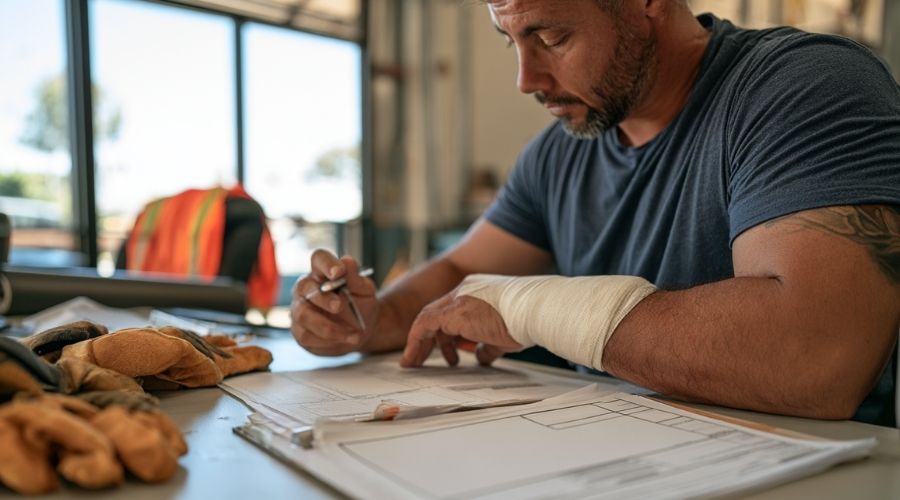
What a Santa Ana Warehouse Injury Claim Involves
A workers’ compensation claim covers medical treatment for your work injury, partial wage replacement while you cannot work, permanent disability if impairment remains, and job displacement help in some cases. You do not have to prove anyone was at fault. You do have to report the injury and file the claim form.
That no-fault design is the system’s best feature. It means a mistake you made does not disqualify you, and it means you do not have to accuse anyone of anything to get treatment.
It also has hard edges. Comp does not pay for pain and suffering, and it does not replace all of your lost income. For serious injuries, that gap is why the third-party question below matters so much.
The Injuries That Fill Orange County Warehouses and Plants
Warehouse and manufacturing work produces a recognizable set of injuries, and knowing the pattern helps you describe yours accurately.
Powered equipment causes the worst ones. Forklift and pallet jack strikes, tip-overs, and pinning injuries tend to be catastrophic when they happen. Injuries from conveyor systems, presses, and any machine with a guard removed to keep production moving also cause serious harm.
Falls come next. Falls occur off loading docks, off ladders and mezzanines, off the back of trailers, and on floors slick with hydraulic fluid, shrink wrap, or spilled product.
Then there is the slow category, which is the one most often denied. Back and shoulder injuries from repeated lifting. Wrist and hand conditions from repetitive motion. Knee damage from years on concrete. Heat illness in buildings that do not cool down in an Orange County August.
Cumulative trauma injuries are compensable in California, even if they did not happen in a single moment. They are also the injuries carriers most aggressively attribute to age, weight, or life outside work.
Your First Three Days Matter More Than the Next Three Months
Report the injury to your employer as soon as possible and request the DWC-1 claim form in writing. Under state rules, your employer must give you that form within one working day of learning about a work injury, and the claims administrator must authorize appropriate medical treatment while your claim is being reviewed.
The state also warns that waiting more than thirty days to report can jeopardize your benefits, because it interferes with the employer’s ability to investigate what happened.
There is a rule that works strongly in your favor here. If your completed claim form is not accepted or denied within ninety days, your injury is presumed to have been caused by work. That presumption is one of the most useful protections in the system, and it exists only if you turned in the form and can prove when you did.
So keep proof. Photograph the completed form, email a copy to yourself, and note the date and the person you handed it to. Claims that vanish are much harder to lose when you have a timestamp.
A claim you cannot prove you filed is a claim your employer can say never existed.
Warehouse Quotas Are a Safety Issue, and California Says So
If you work at a large distribution center, the law regulates the pace you must keep. California’s warehouse quota law requires covered employers to give workers a written description of the quotas they are subject to and the consequences of missing them.
The protections go further than disclosure. Employers cannot enforce a quota that prevents you from taking legally required meal and rest breaks or using the bathroom, and time you spend doing a task in a safety-compliant way has to count as productive time even when the compliant method is slower.
You also have the right to request a written description of your quota and your own recent work speed data if your employer keeps those records. Retaliation for making that request is prohibited.
Why this information matters to an injury claim: a quota that pushed you to skip a lift assist, take a shortcut around a guard, or work through pain is context, and that context is what turns a vague back injury into a documented industrial one. Write down what the pace demanded of you while you still remember the specifics.
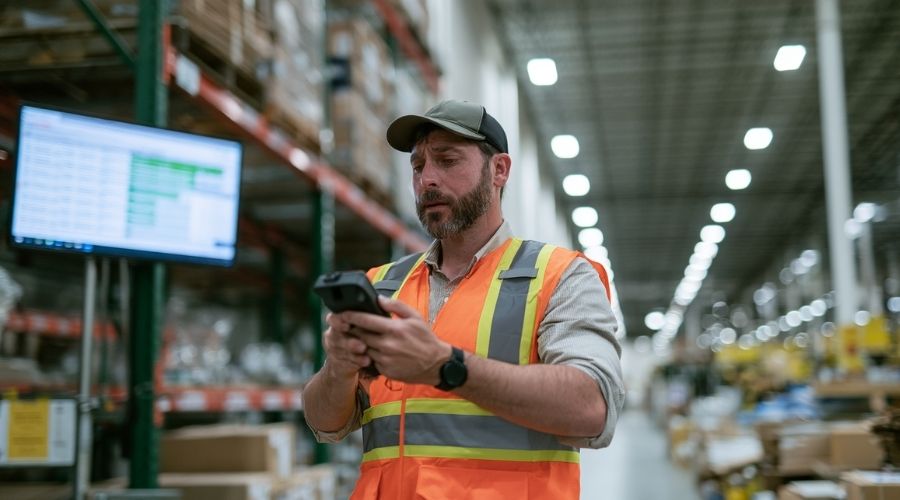
When Your Warehouse Injury Is Also Someone Else’s Fault
Workers’ comp is generally your only claim against your employer. It is not your only claim against everyone else.
Warehouses are shared spaces. The building often belongs to a landlord. The forklift may be leased. The racking was installed by a contractor. The trailer at your dock belongs to a trucking company. The machine that caught your hand was built by a manufacturer that chose its guarding.
Staffing agency arrangements add another layer. If you are employed by an agency and placed at a host business, the relationship between those two companies determines who is your employer for comp purposes and whether the host can be pursued separately. That analysis is fact-specific and worth doing rather than assuming.
A separate civil claim can reach damages workers’ comp cannot, but it runs on its deadline, generally two years from the date of injury in California. Filing your comp claim does not preserve it.
Preserve what you can immediately. Photograph the equipment and its serial or asset tag, note whose name is on the truck or trailer, and write down which companies had people in the area.
Every Worker in California Is Covered, Including You
California workers’ compensation covers employees regardless of immigration status. Labor Code section 3351 defines who counts as an employee broadly, and undocumented workers are entitled to benefits when injured on the job.
That includes part-time workers, seasonal workers, temporary workers placed through agencies, and workers paid in cash. What determines coverage is the employment relationship, not what your paperwork looks like or how you get paid.
Retaliation for filing a claim is separately illegal in California. Threats about your status, shifts, or job after a work injury are not enforcement of any rule. They are unlawful pressure.
Help is available in Spanish. The state’s Santa Ana district office at 2 MacArthur Place runs free injured worker workshops over Zoom in both English and Spanish, and its Information and Assistance officers answer questions for injured workers at no cost.
Your right to medical care after a work injury does not depend on your paperwork.
What Claims Administrators Do to Warehouse Claims
Understanding the playbook makes it easier to deal with. None of this is personal, and none of it means your injury is not real.
The most common move on warehouse claims is to attribute the injury to something other than work. Your back problem becomes degenerative disc disease you were always going to have. Your shoulder becomes a weekend sports injury. Your carpal tunnel becomes your phone.
Delay is the second move. Requests for records you already provided. Objections to your treating doctor’s report. A new evaluation that pushes the case out another few months while your bills accumulate.
Surveillance is real on higher-value claims, though not as common as rumor suggests. The defense is simple: live within your restrictions, do not exaggerate to anyone, and keep what you tell your doctor consistent with what you actually do.
The counter to all of it is a complete record. Report every body part at the start, keep every appointment, and describe your limitations consistently.

Conclusión
Two takeaways. Your Santa Ana warehouse injury claim is protected by rules your employer has to follow, including giving you the claim form promptly and authorizing treatment while the claim is reviewed, and the ninety-day presumption exists to protect workers whose claims get quietly parked. And if a machine, a landlord, a trucking company, or a staffing arrangement contributed to your injury, the comp claim may not be your only avenue.
You should not have to fight your employer to get treatment for an injury you got on their floor. Oracle Law Firm represents warehouse, logistics, and manufacturing workers in Santa Ana y a lo largo condado de Orange, incluido lesiones personales claims that run alongside a comp case.
¿Ha sufrido un accidente o se ha lesionado en el trabajo? No tiene por qué lidiar solo con las compañías de seguros. El bufete de abogados Oracle lucha para que usted obtenga la indemnización, el control y la claridad que merece.
Obtén una consulta gratuita o llame al 888.597.4099.
Este artículo es solo para información general y no constituye asesoramiento legal. Cada caso se resuelve de manera particular, y los resultados dependen de las circunstancias específicas. Consulte con un abogado sobre su situación.
Preguntas frecuentes
Can I file a workers’ comp claim if I work through a staffing agency?
Yes. Temporary and agency workers are covered, but which company is responsible for the claim depends on the arrangement between the staffing agency and the business where you were placed. In some situations the host business may also face a separate claim. The situation is worth having reviewed rather than assuming the agency’s answer is complete.
In California, workers’ comp covers repetitive strain and back injuries.
Yes. California recognizes cumulative trauma injuries that develop over time from repeated work activity, not just injuries from a single incident. These claims are frequently disputed on the theory that the condition is age-related or caused by activity outside work, so consistent medical documentation and an accurate work history matter a great deal.
Does workers’ comp cover undocumented workers in California?
Yes. California law defines covered employees broadly and undocumented workers are entitled to workers’ compensation benefits for on-the-job injuries. Retaliating against a worker for filing a claim is separately unlawful. State resources, including injured worker workshops at the Santa Ana district office, are available in Spanish.
What if my employer will not give me a claim form?
Employers are required to provide the DWC-1 claim form promptly after learning of a work injury. If yours refuses, you can contact the state’s Information and Assistance unit, which helps injured workers at no cost, and you can document your request in writing. Refusing to provide the form does not eliminate your right to file.
Can I be fired for reporting a warehouse injury?
Retaliating against an employee for filing or intending to file a workers’ compensation claim is illegal in California, and remedies can include reinstatement and lost wages. That protection does not make your job permanently guaranteed, but a termination that closely follows an injury report deserves scrutiny. There are strict deadlines for bringing a retaliation claim.