Red-light camera footage can help establish who caused an intersection crash, but accessing that evidence in California may be time-sensitive. Under California’s SB 720, photographic and video evidence from the new automated traffic enforcement program must be destroyed within five business days after the decision not to issue a notice of violation. The law also restricts how program records can be used and disclosed.
If you were injured in a red light camera accident in California, identifying and preserving relevant evidence should be a priority. Depending on the circumstances, that evidence may include traffic camera images, nearby business security footage, dashcam recordings, traffic signal timing records, and witness statements.
In an intersection crash, a camera can sometimes provide information that eyewitnesses cannot. It may help establish which vehicle entered the intersection, what the traffic signal showed, and how the collision occurred. However, not every camera records continuously, and not every recording captures enough detail to establish fault on its own.
Insurance companies may dispute how a collision happened, particularly when both drivers claim they had the green light. Preserving reliable evidence early can help clarify the facts and support an injury claim.
This article explains how California’s red-light camera laws work, how SB 720 affects certain camera records, how footage may be obtained for a car accident claim, and what other evidence can help establish fault.
Why Red-Light Crashes Turn Into “He Said, She Said”
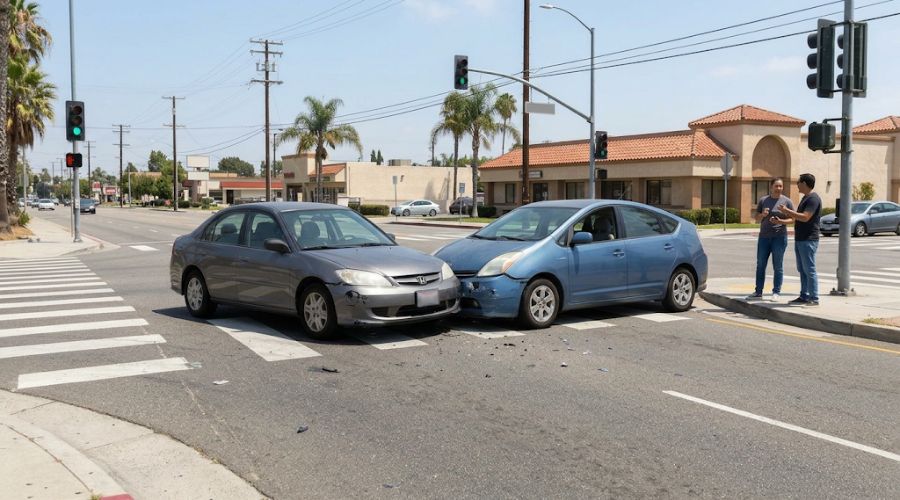
Intersection crashes can be difficult to investigate because both drivers may claim they had the green light. Without video, reliable witnesses, or other supporting evidence, the available accounts may conflict. Insurance companies then evaluate the evidence to determine how responsibility should be allocated.
Imagine a collision at a busy intersection in Santa Ana or Riverside. One driver says the light was green. The other insists that the signal had changed and claims they had the right of way. Witnesses may have left before anyone could obtain their contact information, and the police report may document conflicting statements without conclusively establishing who caused the crash.
California follows a pure comparative negligence system. A person’s compensation in a personal injury case can be reduced by their share of responsibility for the collision. For example, if the damages are valued at $100,000 and the injured person is found 20% responsible, their recoverable damages would generally be reduced to $80,000, subject to the facts and applicable law.
That is why evidence matters. A video recording, traffic signal data, vehicle information, or an independent witness may help establish what happened and challenge an unsupported allocation of fault.
Red-light camera footage is one possible source of proof. Its usefulness depends on what the system recorded, whether the relevant records still exist, and whether the evidence can be authenticated and admitted in the case.
How California’s Red-Light Camera System Works Now
California has an established red-light camera enforcement system and a newer civil enforcement program created by Senate Bill 720 (SB 720). These programs have different legal requirements, so identifying the type of camera system operating at the intersection is important.
The new SB 720 Safer Streets Program
SB 720, which took effect on January 1, 2026, authorizes participating local governments to establish an alternative automated traffic enforcement program under California Vehicle Code section 21455.9. The program is commonly called the Safer Streets Program.
Senator Ashby’s office describes the program as an opt-in system intended to support traffic safety improvements for pedestrians, cyclists, and motorists.
Under the new program, violations are subject to civil penalties rather than the traditional criminal or infraction-based enforcement process. The legislation establishes a $100 base penalty for violations, with additional rules governing penalties and eligible reductions. Violations under this program do not result in driver license points or suspension or revocation of driving privileges.
The program also establishes privacy protections and requirements for handling photographic and video evidence. Facial recognition technology is prohibited in connection with the system.
El SB 720 bill text explains the program’s enforcement and record-handling requirements.
Older red-light camera programs
California’s existing red-light camera enforcement system under Vehicle Code section 21455.5 can operate alongside the new SB 720 program.
The rules governing camera operation, notices, records, and retention may differ between programs. It is therefore important not to assume that every red-light camera in California follows the same procedures.
Cities in Orange County and the Inland Empire may use different traffic enforcement systems, and the presence of a camera housing does not necessarily mean that a particular system is recording or that footage is available.
After an intersection collision, identify the exact location and ask the responsible agency what type of system operates there, if any. Your attorney may also help determine which records to request and which legal procedures apply.
The Five-Day Problem: Why Camera Footage Disappears
One of the most important provisions of SB 720 concerns the destruction of photographic and video evidence.
Under the new program, photographic and video evidence that does not result in a notice of violation must be destroyed within five business days after the decision not to issue the notice has been made. This is not a blanket rule requiring every recording to be destroyed five business days after a crash.
When a notice of violation is issued, different retention provisions apply. The law generally allows certain confidential records and evidence to be retained for up to 60 days after the notice’s final disposition, subject to exceptions and potentially shorter local retention periods. Certain administrative records may be retained for up to 120 days, and information showing that a vehicle was cited and fined may be retained for up to three years.
SB 720 also restricts the disclosure and use of information collected through the program, subject to exceptions such as disclosure required by law, a court order, or a subpoena in an individual case or proceeding.
These requirements are designed in part to protect privacy. However, they can complicate efforts to obtain traffic camera footage after a collision.
Consider what an injured person may be dealing with after a crash: emergency medical treatment, vehicle repairs, transportation arrangements, and calls from insurance adjusters. By the time the person thinks to ask about a traffic camera, potentially useful records may no longer exist.
That is why it is important to act promptly. If a camera may have captured the crash, ask the responsible agency about its records and retention procedures as soon as possible.
An attorney can help identify the appropriate agency, send a preservation request, and determine whether a subpoena, court order, or another lawful process is available. A preservation request does not guarantee that records can be retained or released, but early action may help protect evidence that still exists.
The camera may have captured useful evidence. The key is to determine what was recorded, whether it remains available, and how it can lawfully be obtained.
Can Red-Light Camera Footage Be Used in a California Accident Claim?
Yes. Red-light camera footage may be used as evidence in a California car accident claim when it is relevant, authentic, and otherwise admissible. Whether the footage can be obtained and used depends on the camera system, the available records, and the circumstances of the case.
Step 1: Identify the camera and request preservation
Start by identifying the intersection, the approximate time of the crash, and the agency responsible for any automated enforcement system. If you have photographs of the location, a police report, or information from witnesses, those details may help identify potential sources of footage.
An attorney may send a written preservation request to the relevant city, county, or other responsible entity. The request should identify the collision as precisely as possible, including the date, time range, location, and types of records sought.
A preservation letter is not the same as a subpoena or court order, and it does not automatically override statutory retention requirements. Nevertheless, it may help alert the agency to the potential evidentiary value of existing records and clarify the appropriate process for requesting them.
Step 2: Determine how to obtain the records
Because records collected under the SB 720 program are subject to confidentiality restrictions, access may require a subpoena, court order, or another legally authorized disclosure.
The appropriate procedure depends on the program and the records involved. An attorney can evaluate the available options, including whether formal discovery is available in a pending civil case.
Do not assume that a public records request will provide access to confidential enforcement images. Ask the responsible agency about its process and consult a California attorney if the footage may be important to an injury claim.
Step 3: Evaluate the Footage Alongside Other Evidence
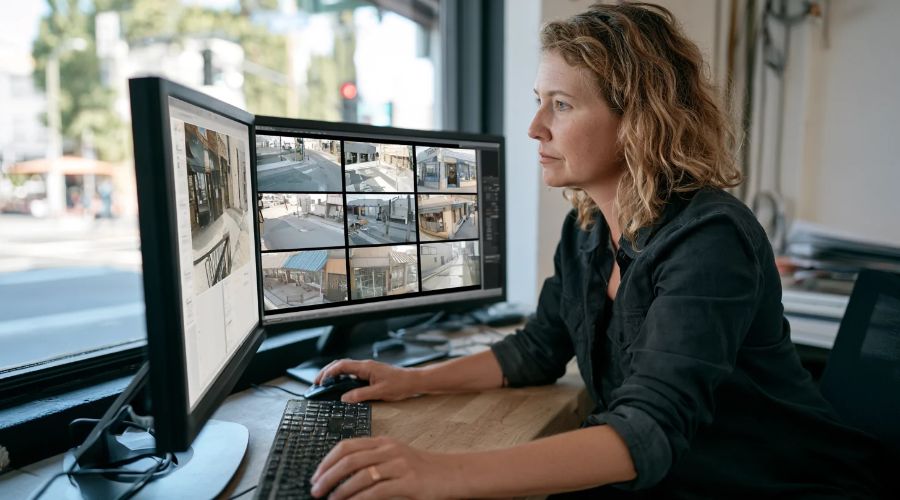
A camera image may show a vehicle crossing a stop line, entering an intersection, or displaying a particular license plate. A video may reveal additional details about signal timing, vehicle movements, and the sequence of events.
However, some systems capture only selected images rather than continuous video. The recording may not show the other vehicle, the signal facing the injured driver, or the complete sequence leading to the collision.
The evidence should therefore be evaluated in context. Relevant information may include timestamps, the camera’s field of view, the signal sequence, vehicle positions, witness accounts, and other available recordings.
A traffic citation may also be relevant, but its evidentiary significance depends on the applicable law and circumstances. A citation alone does not necessarily resolve every issue in a civil injury claim.
Step 4: Consider Whether a Traffic Violation Supports Negligence Per Se
If the evidence establishes that another driver violated an applicable safety law, the violation may support a negligence per se argument under California Evidence Code section 669.
In general, this doctrine can create a presumption of failure to exercise due care when its legal requirements are satisfied. Among other things, the law must have been intended to protect against the type of harm suffered, and the injured person must belong to the class of people the law was designed to protect.
The doctrine does not automatically establish liability in every red-light collision. The particular statute, evidence, causation, and any applicable defenses still matter.
When the Camera Missed It: Other Evidence That Proves Who Ran the Light
Not every intersection has a red-light camera, and some automated enforcement systems do not capture continuous video. Fortunately, other evidence may help reconstruct the collision and establish responsibility.
In Anaheim, Corona, Santa Ana, Riverside, and other communities, nearby businesses and homes may have cameras facing an intersection. Vehicle records, traffic signal data, and witness statements may also help establish the sequence of events.
Potential evidence sources include:
- Business security cameras: Gas stations, banks, restaurants, and shopping centers may have exterior cameras facing the intersection. Ask about relevant recordings quickly because routine overwriting may occur.
- Doorbell and home cameras: Residential cameras may capture approaching vehicles, the traffic signal, or the moments before and after the collision.
- Dashcams: Recordings from your vehicle, the other driver’s vehicle, or a nearby motorist may document the crash from a useful angle.
- Traffic signal timing records: The responsible transportation agency may have records relating to signal phases and timing. These records may help evaluate whether a driver’s account is consistent with the signal sequence.
- Vehicle event data recorders: Some vehicles store information about speed, braking, and other operating conditions around a crash. Access and interpretation may require specialized procedures.
- Witness statements: Independent witnesses may describe the traffic signal, vehicle movements, or events immediately before impact.
- Rideshare and delivery records: If a commercial driver was involved, relevant trip records, onboard camera footage, or other business records may exist, subject to applicable privacy and access requirements.
Traffic signal timing records deserve particular attention. They may not show the collision itself, but they can help test whether a driver’s account is consistent with the signal sequence. Combined with video, vehicle data, and witness statements, this information may help reconstruct the event.
The most useful evidence depends on the specific intersection and collision. Preserving multiple independent sources can provide a more complete picture than relying on one recording alone.
What Changes When Someone Moves Fast on Your Behalf
Early legal involvement can help organize an evidence-preservation strategy while potentially useful records still exist.
Depending on the circumstances, an attorney may:
- Identify the agency responsible for an automated traffic enforcement system.
- Send targeted preservation requests for available records.
- Contact nearby businesses or property owners about relevant security footage.
- Request appropriate traffic signal records.
- Evaluate whether vehicle event data may be available and how it can be preserved.
- Identify and interview witnesses while their recollections are fresh.
- Assess which records may be obtained through formal discovery or another lawful process.
Not every item will be available in every case. A camera may not have recorded the collision, a recording may already have been deleted, or access may be restricted. The goal is to identify the available evidence and pursue appropriate steps before additional opportunities are lost.
Acting promptly also allows you to discuss the legal deadlines that apply to your claim. Most California personal injury lawsuits based on bodily injury must be filed within two years under Artículo 335.1 del Código de Procedimiento Civil, although exceptions and different deadlines may apply in some cases, including certain claims involving public entities.
The lawsuit deadline and the evidence-retention window are different issues. A claim may have months or years before its filing deadline while relevant video is overwritten or destroyed much sooner.
Preserving evidence early cannot guarantee a particular result. It can, however, help ensure that the available facts are identified and evaluated before important sources disappear.

En resumen
Red-light camera footage can help establish fault after an intersection collision, but its value depends on what the system recorded, whether the records remain available, and whether they can be obtained and used as evidence.
California’s SB 720 adds specific retention and confidentiality rules for its new automated traffic enforcement program. In particular, photographic and video evidence that does not result in a notice of violation must be destroyed within five business days after the decision not to issue that notice. The rule should not be confused with a universal five-day deadline for every traffic camera recording.
If you were injured in a California intersection crash, identify potential cameras, preserve available recordings, and document other evidence as soon as reasonably possible.
Whether your collision happened in Anaheim, Santa Ana, Orilla, o Corona, an experienced attorney may help you evaluate your options and determine what evidence could support your claim.
Oracle Law Firm represents injured people in car accident and personal injury matters. If you have questions about preserving evidence or dealing with an insurance company after a crash, the firm can discuss your circumstances and potential next steps.
Obtén una consulta gratuita o llame al 888.597.4099.
Disclaimer: This article is for general informational purposes only and is not legal advice. Reading it does not create an attorney-client relationship. Laws and procedures may change, and every case depends on its specific facts. Past results do not guarantee future outcomes. Consult a licensed California attorney for advice about your situation.
Preguntas frecuentes
Can red-light camera footage be used to prove fault in a car accident?
Yes. Red-light camera images or video may help establish how a collision occurred, including whether a vehicle entered an intersection against a red signal. The evidence must be relevant and satisfy applicable admissibility requirements. Its value depends on what the camera captured and the surrounding circumstances.
How long does California keep red-light camera footage?
Under SB 720, photographic and video evidence from the new program that does not result in a notice of violation must be destroyed within five business days after the decision not to issue the notice. Other records are subject to different retention provisions. Older camera programs may have different requirements, so the responsible agency and applicable system should be identified promptly.
How do I get red-light camera footage after a crash?
Identify the intersection, the approximate time of the collision, and the agency operating the camera. Ask about preservation and the proper procedure for requesting records. Depending on the program and records involved, access may require a subpoena, court order, or another legally authorized disclosure. A California attorney can help determine which process applies.
What if there was no red-light camera at the intersection?
Other evidence may help establish fault, including nearby business security footage, doorbell cameras, dashcam recordings, traffic signal timing records, vehicle event data, and independent witness statements. Because some recordings are overwritten quickly, identifying and requesting relevant evidence early is important.
What happens if both drivers say they had a green light?
When the drivers’ accounts conflict, investigators and insurers evaluate the available evidence to determine responsibility. Video recordings, signal timing data, vehicle information, and witness statements may help clarify the sequence of events. Under California’s pure comparative negligence system, an injured person’s compensation can be reduced by their share of responsibility for the crash.