If you were injured in an e-bike accident in Orange County, get medical care, document the scene, and understand your rights before discussing the crash with an insurance company. Liability depends on the facts, not simply on who was riding the e-bike. Riders hit by cars and pedestrians struck by e-bikes may both have personal injury claims. Whether the vehicle was a legal electric bicycle or an electric motorcycle can also affect liability and insurance coverage. Most California personal injury lawsuits are subject to a two-year filing deadline, although exceptions apply.
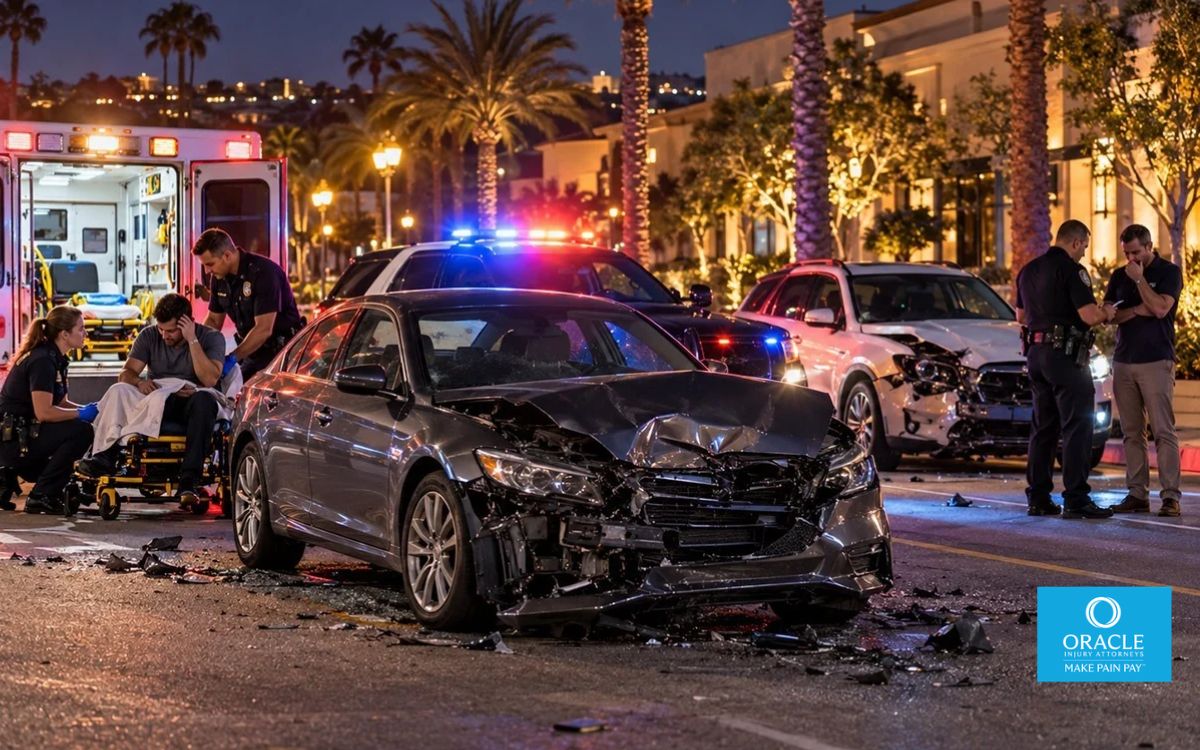
You are sitting on the curb on Pacific Coast Highway. Your wrist is throbbing, your back wheel is bent, and the driver who turned in front of you is already telling the officer you “came out of nowhere.” Or maybe you were walking near a school in Irvine when a teenager on an e-bike slammed into you. Either way, you are hurting, and you are wondering what happens next.
If you are searching for an e-bike accident lawyer in Orange County, you are not alone. E-bike collisions raise complicated questions about traffic laws, vehicle classification, insurance coverage, and who is responsible for an injured person’s losses. Local rules can also vary, making it important to understand which requirements applied where the crash happened.
Take a breath. You have rights, whether you were the rider or the person who got hit. This guide explains what to do after an e-bike accident, who may be responsible, how insurance companies evaluate claims, and which California deadlines you should know.
What to Do Right After an E-Bike Accident in Orange County
Breve análisis: Get to safety, call 911 when appropriate, and seek medical care, even if you initially feel okay. Then document the scene and preserve evidence before it disappears. What you do immediately after an e-bike accident can affect both your health and your potential injury claim.
The moments after a crash are chaotic. Adrenaline can temporarily mask symptoms of injuries such as concussions and fractures. Some serious injuries may not be immediately obvious, so prompt medical evaluation is important. Medical records can also help document the relationship between the collision and your injuries.
- Call 911: Report the collision and request emergency assistance when needed. Ask how to obtain a police report and follow applicable reporting requirements.
- Photograph everything: If it is safe, photograph the e-bike, any involved car, visible damage, road conditions, traffic signals, bicycle lanes, and your injuries.
- Get witness information: Collect names and contact details from witnesses before they leave.
- Preserve the bike: Avoid repairing, modifying, or disposing of the e-bike until its condition has been documented. Preserve relevant receipts and repair records.
- Save your helmet: Keep the helmet, even if it appears undamaged. It may help document what happened.
- Be careful with insurance statements: Provide necessary information, but consider speaking with a qualified attorney before giving a recorded statement to another party’s insurer.
If you were hit by a car while riding an e-bike, preserve any available dashcam footage, photographs, and information about the driver’s insurance. If a pedestrian or another cyclist was involved, document the other rider’s details as well.
E-Bike or E-Moto? Why the Label Changes Your Claim
Breve análisis: California law defines three classes of electric bicycles. A vehicle that falls outside the legal e-bike definition may be classified differently, potentially affecting licensing, registration, insurance, and liability.
California Vehicle Code section 312.5 defines an electric bicycle and establishes its classification requirements. In general, the statutory definition includes fully operable pedals and an electric motor of no more than 750 watts. The three classes are distinguished by their operating characteristics:
- Class 1: A motor provides assistance while the rider pedals and stops providing assistance at 20 mph.
- Class 2: A qualifying electric bicycle has a motor that can propel the bicycle without pedaling, subject to the statutory speed limit of 20 mph.
- Class 3: A qualifying electric bicycle provides pedal assistance up to 28 mph and is subject to additional requirements, including a minimum rider age of 16 and applicable helmet rules.
Review the current requirements in California Vehicle Code section 312.5.
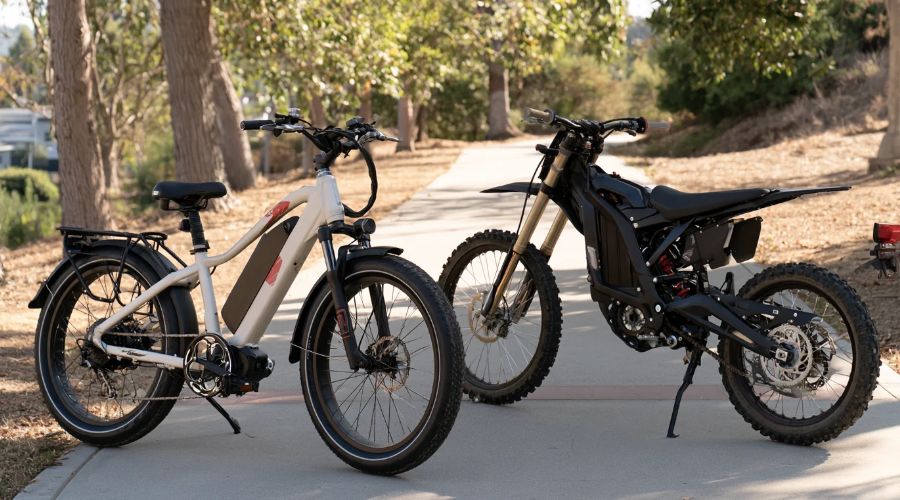
Some electric two-wheelers marketed as e-bikes have motorcycle-style frames, lack fully operable pedals, or exceed the statutory limits. Depending on the vehicle’s actual design and operation, it may fall outside the legal e-bike definition and be subject to motor vehicle requirements.
That distinction can matter after an e-bike accident. A vehicle’s classification may affect where it can legally be operated, what safety requirements apply, and which insurance policies could cover an injured person. However, the exact classification and insurance consequences depend on the vehicle and the circumstances.
If an electric motorcycle-style vehicle hits you, do not assume that its owner’s description of it determines its legal status. Preserve photographs, manufacturer specifications, motor information, and other evidence that may help establish what the vehicle actually was.
What the vehicle legally is matters more than what the seller called it.
Who Is at Fault in an E-Bike Crash?
Breve análisis: Liability depends on whether a person or entity acted negligently or otherwise bears legal responsibility for the collision. A driver, e-bike rider, property owner, or public entity may be involved, depending on the facts. California’s comparative fault rules can allow an injured person to recover damages even when they share some responsibility.
Drivers can contribute to e-bike accidents when they fail to notice riders, misjudge their speed, or make unsafe turns. Common examples include:
- Left turns: A driver turns across the path of an approaching e-bike.
- Right hooks: A driver turns right across a bicycle lane or a rider’s path.
- Dooring: Someone opens a parked vehicle’s door into an approaching cyclist.
- Unsafe passing: A driver passes a rider without sufficient clearance.
- Failure to yield: A driver or rider fails to yield when required by traffic law.
An e-bike rider can also be responsible for a collision, such as when the rider operates carelessly or disregards an applicable traffic rule. A dangerous road condition may raise additional questions about responsibility, although a claim against a public entity involves specific legal requirements.
California follows a pure comparative negligence system. In general, an injured person can recover damages even if they were partly responsible, but the recovery is reduced by their percentage of fault. For example, a person found 20% responsible for a collision may have their recoverable damages reduced by 20%.
Insurance companies may investigate your speed, actions, equipment, and compliance with applicable laws. Photographs, witness statements, vehicle data, and other evidence can help establish what actually happened.
When Parents Can be Responsible
When a minor causes an e-bike accident, a parent is not automatically liable simply because of the child’s age or relationship to them. California Civil Code section 1714.1 addresses parental liability for a minor’s willful misconduct under specified conditions and statutory limits.
A separate claim may be possible if a parent was independently negligent. For example, the facts might raise questions about the parent’s own conduct in providing or modifying an unsafe vehicle. Whether such a claim is viable depends on the evidence and applicable law.
Leer Sección 1714.1 del Código Civil de California for the statutory framework. A California attorney can evaluate how it applies to a particular e-bike accident claim.
Hit by an E-Bike Rider? You May Still Have a Claim
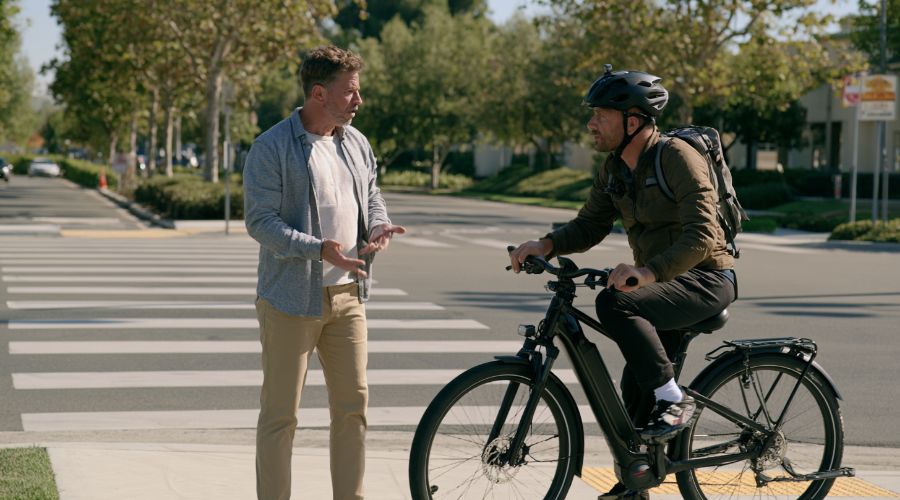
Breve análisis: If an e-bike rider hits you while you are walking or cycling, you may have a personal injury claim against the rider. Depending on the circumstances, another responsible party or an applicable insurance policy may also be involved.
E-bike collisions can injure pedestrians on sidewalks, shared paths, boardwalks, and near schools. A pedestrian who is struck by an electric bicycle may suffer fractures, head injuries, or other harm even when the rider is traveling at a relatively low speed.
If an e-bike rider hit you, the key questions include how the collision happened, whether the rider acted negligently, the extent of your injuries, and whether an insurance policy covers the incident.
Potential sources of compensation may include:
- The rider’s homeowner’s or renter’s insurance: Coverage depends on the policy’s terms, exclusions, and the type of vehicle involved.
- A parent’s insurance policy: A policy may provide coverage in some circumstances, depending on the insureds, the facts, and applicable exclusions.
- The rider personally: A claim may be pursued against the responsible individual, subject to the person’s assets and other legal considerations.
- Auto-related coverage: If the vehicle was legally classified as a motor vehicle, an applicable auto insurance policy may be relevant.
Legal e-bikes generally do not require the same auto liability insurance as motor vehicles. That does not mean every e-bike-related injury is uninsured, however. Homeowner’s and renter’s policies may exclude certain motorized vehicles, and coverage varies considerably.
Older adults and other vulnerable pedestrians can experience serious consequences from an e-bike collision, including head trauma and fractures. If you or a loved one suffered a head injury, our abogados de lesiones cerebrales can help you understand the potential long-term effects and the legal issues involved in an injury claim.
New 2026 E-Bike Rules and Orange County Crackdowns
Breve análisis: California’s statewide requirements and local e-bike restrictions can affect how riders use roads, sidewalks, and other public spaces. A violation may be relevant to an accident investigation, but its legal effect depends on the specific rule and facts.
California’s e-bike rules have received increased attention as communities respond to safety concerns involving electric bicycles and motorcycle-style electric vehicles. Before relying on a particular restriction, check whether it is a statewide law, a municipal ordinance, or a school-district policy.
De acuerdo a Voice of OC’s reporting on Orange County e-bike crashes and enforcement, local officials and medical providers have been responding to concerns about e-bike injuries. Any numerical claim about injury trends should be interpreted in light of the underlying reporting and the metric being measured.
The original article also identifies the following developments, which should be checked against current official sources before publication:
- Statewide lighting requirements: Revisar the CHP’s 2026 new laws summary to verify the precise requirements for rear reflectors and lights, including when they apply.
- District Attorney enforcement: NBC Los Angeles reported on an Orange County unit targeting illegal e-bike and electric motorcycle use. Confirm the unit’s current scope and status before describing it as an active program.
- Huntington Beach: Verify current local rules concerning unsafe riding, prohibited locations, enforcement, and impoundment.
- Irvine, Garden Grove, and Fullerton: Check each city’s current ordinances rather than assuming the cities share identical restrictions or parental responsibility rules.
- Newport-Mesa Unified School District: Confirm the scope, effective date, and current status of any school-district e-bike policy before describing a student ban as in force.
An Orange County Grand Jury review in 2024 also examined differences in e-bike rules among local cities. Check the original report before repeating specific figures or characterizing the current status of local ordinances.
The rules that apply to your crash depend on where it happened and what the rider was operating. Local legal guidance may be relevant if you were hurt in Playa de Huntington, Irvine, o arboleda del jardín.
A safety-rule violation can be relevant evidence in a liability investigation. It does not automatically establish negligence or determine the outcome of a personal injury case.
How Insurance Companies Fight E-Bike Accident Claims
Breve análisis: Insurance companies may investigate your conduct, the vehicle’s classification, and the circumstances of the collision when evaluating an e-bike accident claim. Understanding the issues they may raise can help you protect your interests.
After an e-bike accident, an insurance adjuster may ask questions about how fast you were traveling, what protective equipment you used, whether your bike was modified, and how the collision occurred. Those questions may be part of the insurer’s investigation, but you should be careful not to speculate or agree to facts you do not know.
Common issues include:
- “You weren’t wearing a helmet.” Helmet use may be relevant under the applicable law and facts, but it does not automatically eliminate another party’s responsibility for a collision.
- “You were going too fast.” The insurer may examine your speed, the vehicle’s capabilities, and whether your conduct contributed to the crash.
- “Your bike was modified.” The vehicle’s design and modifications may be relevant to its legal classification and the applicable rules.
- A quick, low offer. An early settlement may not account for the full extent of your injuries, future medical needs, or other recoverable losses.
- A recorded statement. Your account may be compared with other evidence and used in evaluating liability. Avoid guessing, and understand your obligations under any policy before responding.
You are not generally required to provide a recorded statement to the other driver’s insurer simply because the adjuster requests one. However, obligations can differ if your own insurer is involved or your policy requires cooperation.
You can ask for time to understand the request and consider obtaining legal advice before providing a recorded statement or accepting a settlement. Keep copies of correspondence, medical bills, repair estimates, and other records related to your e-bike accident insurance claim.
How Long You Have to File an E-Bike Accident Claim in Orange County
Breve análisis: California generally gives an injured person two years to file a personal injury lawsuit, but exceptions can change the deadline. Claims involving a government entity may require an administrative claim much sooner, often within six months.
Missing a legal deadline can affect your ability to pursue compensation. The applicable period depends on the type of claim, the parties involved, and the circumstances.
- Two years for many personal injury lawsuits: California Code of Civil Procedure section 335.1 generally provides a two-year limitation period for actions seeking damages for injury caused by another person’s wrongful act or neglect. See Artículo 335.1 del Código de Procedimiento Civil.
- Government claims: A claim for money or damages against a public entity may be subject to the Government Claims Act. Many claims involving personal injury must be presented within six months, subject to statutory exceptions and procedures. See Sección 911.2 del Código de Gobierno.
- Claims involving minors: Special rules can affect the limitation period for a minor’s lawsuit. Government-claim requirements may still impose short deadlines, so do not assume a child automatically has extra time for every step.
A dangerous road, defective traffic signal, or poorly maintained public facility may raise questions about a government entity’s responsibility, but not every road defect creates a valid claim. Special notice requirements and exceptions must be evaluated.
The sooner you seek appropriate advice, the easier it may be to preserve surveillance footage, locate witnesses, inspect the accident scene, and gather evidence before it disappears. Do not wait until a deadline approaches to investigate your legal options.
En resumen
An e-bike accident in Orange County can leave you dealing with painful injuries, disputed fault, and complicated insurance questions. Whether you were hit while riding or struck by an e-bike as a pedestrian, your potential claim depends on the facts, the vehicle’s legal classification, the available insurance, and where the accident occurred.
Experimentado abogado de lesiones personales can help investigate the collision, assess potential liability, identify relevant insurance coverage, and explain the legal deadlines that may apply to your case.
If you have been injured in an accident or hurt on the job, you do not have to navigate insurance questions alone. Oracle Law Firm can discuss your situation and help you understand your potential next steps.
Obtén una consulta gratuita or call 888.597.4099.
Disclaimer: This article is for general informational purposes only and is not legal advice. Reading it does not create an attorney-client relationship. Laws, insurance coverage, and filing deadlines depend on the circumstances of each case. Consult a licensed California attorney about your situation. Past results do not guarantee future outcomes.

Preguntas frecuentes
What should I do after an e-bike accident in Orange County?
Get to safety, seek medical care, and call 911 when appropriate. Document the scene with photographs and witness information, preserve the e-bike and helmet, and keep records of medical treatment and expenses. Be cautious when discussing fault with an insurance adjuster. An attorney can help you understand your options and any applicable deadlines.
Who pays if a car hits me while I’m on an e-bike?
If a driver caused the collision, the driver’s auto liability insurance may be the primary source of compensation, subject to coverage and liability. Your own uninsured or underinsured motorist coverage may also be relevant if the driver lacks sufficient insurance, depending on your policy and the circumstances. California’s comparative fault rules may permit recovery even if you share some responsibility.
Can I file a claim if an e-bike rider hit me as a pedestrian?
Yes. If an e-bike rider injured you through negligent or otherwise legally actionable conduct, you may have a personal injury claim. Depending on the facts, a parent’s own conduct or statutory parental liability may also be relevant. A homeowner’s or renter’s insurance policy might cover the incident, but exclusions and vehicle classification can affect coverage.
¿Cuál es la diferencia entre una bicicleta eléctrica y una motocicleta eléctrica en California?
A qualifying electric bicycle must meet California’s statutory definition, including requirements concerning operable pedals, motor power, and operating characteristics. Vehicles that fall outside that definition may be treated as motor vehicles and may be subject to different licensing, registration, and insurance requirements. The exact classification depends on the vehicle’s specifications and applicable law.
How long do I have to file an e-bike accident claim in California?
Many California personal injury lawsuits are subject to a two-year limitation period. Claims against a public entity may require an administrative claim within six months, depending on the claim and applicable exceptions. Other circumstances can affect the deadline, so obtain legal advice promptly rather than assuming a particular filing period applies to every case.