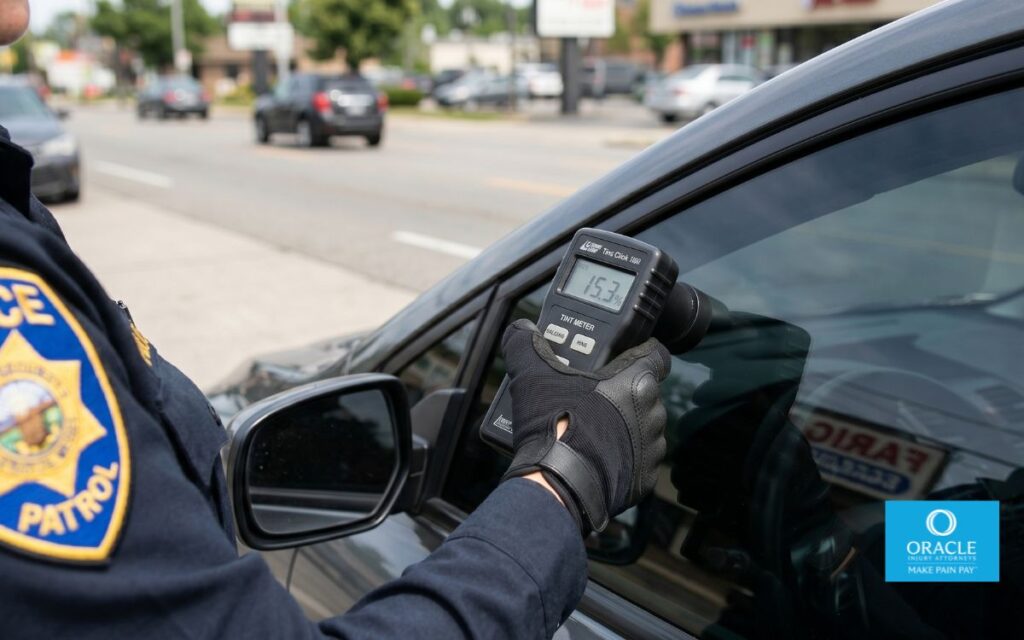
California’s tint law is enforced more closely than most drivers expect, and the violations officers cite are not all the same. Some come down to simple darkness measured by a handheld meter. Others involve color, reflectivity, or where exactly the tint sits on the windshield. Knowing the specific violation you might be facing helps you understand both how serious it is and what it will actually cost you.
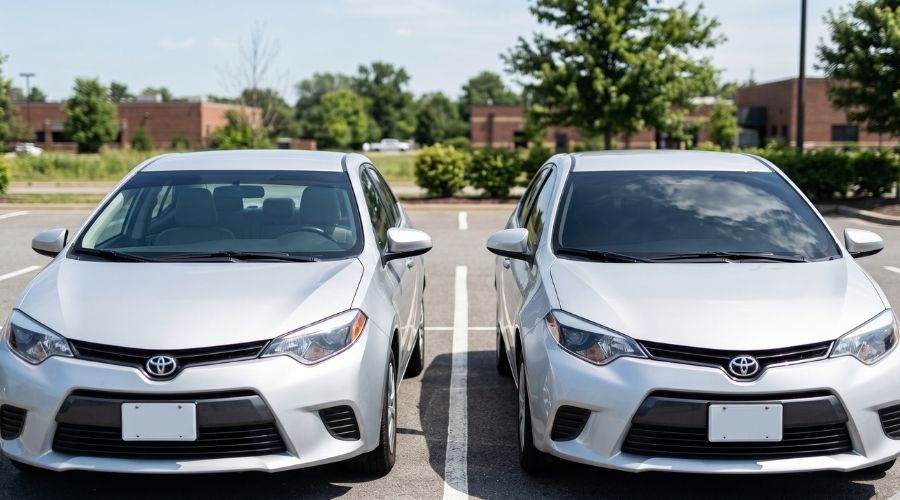
Front Side Window Darkness — The Most Common Violation
By far the most frequent citation involves front side windows that are tinted too dark. California requires the driver and front passenger windows to allow at least 70% visible light transmission, known as VLT. Anything below that threshold is a violation, full stop, with no allowance for personal preference or aesthetic choice.
What trips up a surprising number of drivers is that the 70% requirement applies to the combined effect of the factory glass and the tint film together, not the film in isolation. Factory glass typically already transmits somewhere between 70% and 80% of light on its own. If you add even a moderately dark aftermarket film on top of that baseline, the combined VLT can drop well below the legal limit, even if the film itself was advertised or sold as a compliant product. This is the single most common reason drivers end up cited despite believing they purchased a legal tint.
Windshield Tint Beyond the AS-1 Line
The second most common violation involves windshield tint extending beyond its legally permitted area. California only allows a non-reflective tint strip on the top four inches of the windshield, measured from the manufacturer’s AS-1 line. Anything darker, anything reflective, or any tint extending lower than that strip is a violation.
This violation is visually obvious to officers, which makes it one of the easier citations to issue without even needing a meter. A common variation involves clear, colorless UV-protective film applied across the rest of the windshield. That type of film is permitted as long as it does not reduce visibility or alter the color of the glass — but if it is tinted in any visible way, it becomes a violation regardless of how it is marketed.
Reflective or Mirrored Tint Film
Reflectivity is regulated separately from darkness, and it catches drivers off guard because a tint can technically meet the VLT requirement while still being illegal for being too reflective. California law prohibits any window film that is more reflective than the vehicle’s standard glass, which rules out metallic, chrome, or mirror-finish tints entirely, on any window, front or rear.
The safety rationale here is distinct from the darkness rule. A highly reflective window can bounce sunlight or oncoming headlights directly into the eyes of other drivers, creating a hazard that has nothing to do with how dark the tint is and everything to do with how it reflects light. Officers can identify this violation visually, without needing a tint meter at all.
Colored Tint — Red, Amber, and Blue Are Banned
California’s Vehicle Code specifically prohibits tint colors that could be confused with traffic signals or emergency vehicle lighting. Red, amber, and blue tint films are banned outright on any window, regardless of the VLT percentage or where the film is applied. Standard charcoal, gray, and black shades are the only colors that comply.
This rule exists for a straightforward reason: a vehicle with red or blue-tinted windows at a distance, especially at night, can create confusion about whether it is an emergency vehicle, which creates its own safety risk on the road. This violation is typically obvious on sight and does not require measurement to cite.
Missing Dual Side Mirrors With Dark Rear Tint
Rear side windows and the rear windshield can legally be tinted to any darkness level in California, with one important condition attached. If the rear windshield is tinted dark enough to obstruct the driver’s rearward visibility through the glass, the vehicle must be equipped with functioning exterior side mirrors on both sides. This requirement is already standard equipment on virtually every modern vehicle, which is why this particular violation shows up most often on older cars that may be missing or have damaged side mirrors.
This is a less common citation than the front window or windshield violations, but it illustrates an important pattern in California’s tint law: the regulations are not just about how dark a window is, but about whether the driver retains a functional way to see around the vehicle through some means.
Missing or Invalid Manufacturer Certification
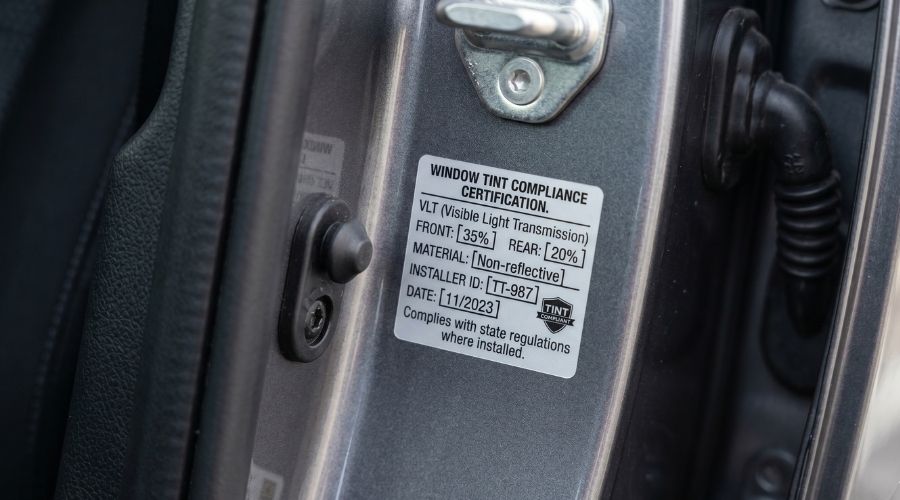
California requires tint film sold and installed in the state to be manufacturer-certified, and installers are required to provide a compliance certificate along with a small identifying sticker placed between the film and the glass. While most officers do not check for this sticker during a routine stop, its absence becomes significant if you ever contest a citation in court. Having a valid installer certificate showing the film’s VLT rating and manufacturer information can be the difference between a citation being dismissed and a fine being upheld.
This violation typically surfaces with out-of-state tint jobs, since California does not honor tint compliance standards from other states. If you relocate to California with tint applied elsewhere, it is worth having it measured and re-certified locally before it becomes an issue.
What Each Violation Actually Costs
Most first-time tint violations, regardless of which specific rule was broken, are issued as correctable fix-it tickets. The base fine is typically around $25, though court processing fees usually bring the real total closer to $197 once everything is added. The driver is then given a window, generally around 30 days, to correct the tint and have the correction verified, often at a police station or CHP office, before mailing proof back to the court.
If a second violation occurs within roughly 12 months, the citation typically no longer qualifies as a correctable fix-it ticket. At that point, fines increase, sometimes exceeding $250 once assessments are included, and repeated violations can escalate toward misdemeanor treatment in more serious cases. It is worth noting that a standard tint citation does not add points to your DMV driving record, so the fine itself, while inconvenient, generally does not directly raise your insurance premiums the way a moving violation would.
When a Tint Citation Becomes a Bigger Legal Issue
Most tint violations stay exactly what they appear to be: a minor equipment citation resolved with a quick correction. But the calculation changes if illegal tint is connected to a car accident. When reduced visibility from non-compliant tint contributes to causing a collision, the violation can become evidence of negligence in a personal injury claim, which carries financial consequences far beyond a $197 fine. If you believe tint played a role in an accident you were involved in, our related guide on how illegal window tint can affect a car accident claim covers that situation in detail.
For drivers who simply want to stay compliant, the safest approach is straightforward: verify your tint’s combined VLT after installation rather than trusting the film’s advertised rating alone, keep your installer’s compliance certificate in the vehicle, and avoid reflective or colored films entirely regardless of how light they appear.
Preguntas frecuentes
Can a police officer pull me over just for window tint in California?
How much is a window tint ticket in California?
Why is my legally purchased tint film still failing inspection?
Is reflective or mirrored window tint ever legal in California?
Do commercial vehicles and fleet cars follow the same tint rules?
Was a Tint Violation Connected to Your Accident?
A tint citation on its own is usually a minor inconvenience. But when it intersects with a car accident, the legal stakes change significantly. Oracle Law Firm | Accident & Injury Attorneys offers free, confidential consultations across Southern California with no upfront fees. Contacta hoy mismo con nuestro equipo. if you believe a visibility issue like illegal tint played a role in your accident.