A construction injury usually produces a workers’ comp claim against your employer and occasionally a second claim against another company on the site. California law presumes the general contractor and property owner handed safety to your employer, but that presumption has exceptions. Equipment makers, rental companies, and other subcontractors can also be liable.
If you got hurt on a construction site and someone told you workers’ comp is your only option, understand where that idea comes from. It is not a lie. It is a legal presumption, and presumptions can be overcome.
California courts start from the assumption that when a property owner or general contractor hires a subcontractor, they also hand over responsibility for keeping that subcontractor’s employees safe. That rule is the single biggest obstacle in construction accident third-party liability cases, and it is the reason so many injured workers get waved off before anyone examines what actually happened.
But construction sites are crowded. Equipment gets rented. Another trade works overhead. A general contractor makes a call about sequencing that puts your crew somewhere it should not have been. The presumption bends when the facts warrant it.
Here is how that works, in plain English. Our construction accident attorneys evaluate both tracks on every jobsite injury.
Why Construction Sites Produce Two Claims, Not One
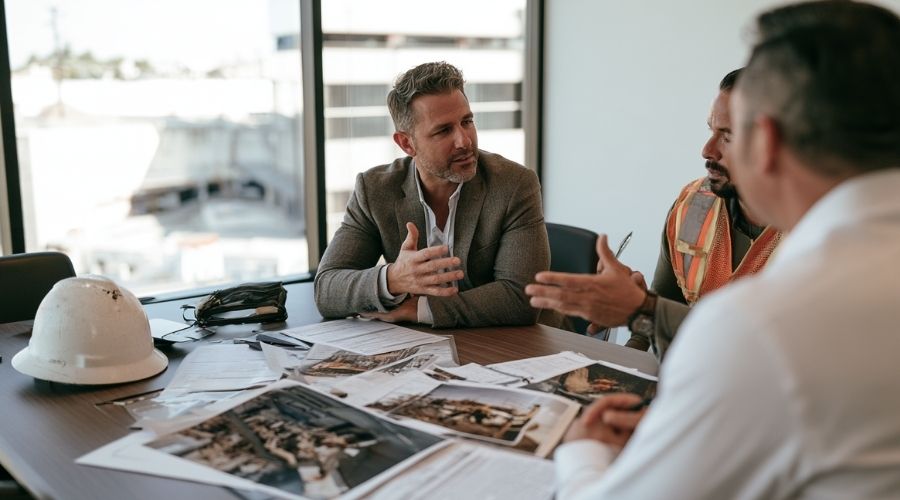
A construction injury generally gives rise to a workers’ compensation claim against your employer, which pays medical treatment and partial wages without any fault fight. It can also give rise to a separate civil claim against a different company whose negligence contributed, and that second claim reaches damages workers’ comp cannot pay.
The difference is not academic. Workers’ comp is deliberately limited. It was never designed to account for a career ending at thirty-eight or for what chronic pain does to a family.
The second claim, when it exists, is where that reckoning happens. That’s exactly why companies with the most exposure on a jobsite have spent decades building legal protections against it.
The Rule That Protects the People Who Hired You
The doctrine at issue comes from a California Supreme Court case called Privette, and the logic is straightforward: when you hire an independent contractor, you delegate to that contractor the duty to protect its workers. To invoke the protection, a defendant essentially has to show that you worked for a contractor and that the contractor hired you.
You can see why it exists. A property owner who hires a licensed roofing company is not in a position to supervise roofing safety, and the roofing company already carries workers’ comp insurance for exactly this reason.
You can also see the problem. On a large jobsite, the general contractor is often the entity actually controlling schedule, access, sequencing, and shared safety systems, while every worker on the property is employed by someone else. Applied without limits, the rule would leave the party with the most control holding none of the responsibility.
Courts recognized this issue, which is why the doctrine includes exceptions. The fight in most construction cases is about whether one of them applies.
The Exceptions That Put a General Contractor Back on the Hook
There are two main paths, and both are narrower than people expect.
The first is retained control. A hirer who keeps control over how some part of the work is performed and then actually exercises that control in a way that affirmatively contributes to the injury can be liable. The key word is affirmatively. Failing to stop your employer from doing something unsafe is generally not enough. Directing the work, controlling the method, or making a decision that itself creates the hazard is a different matter.
The second is the concealed hazard exception, which applies to landowners. A property owner may owe a duty regarding a hidden condition on the premises that the contractor would not reasonably discover. If the hazard was open, obvious, or something your employer could have detected, that path usually closes.
Recent decisions have tightened both. In Sandoval v. Qualcomm, the court found that safety steps taken outside the scope of the contracted work did not retain control over that work. In Gonzalez v. Mathis, a homeowner who knew about a slippery roof was not liable to a window washer who could see the same condition.
None of that means these cases cannot be won. It means they are won on specific facts: who gave the instruction, what was written in the contract, who controlled the area, and what the daily logs say. Those facts exist on paper somewhere, and they get harder to reach with every month that passes.
The Third Parties Nobody Thinks to Look At
The general contractor is the obvious target, which is why it is often the wrong place to start. Some of the strongest construction accident third-party liability claims involve companies most injured workers never consider.
Equipment is the first place to look. A lift that failed, a saw with a defective guard, a harness that came apart, a ladder that collapsed under a rated load: those are product claims against manufacturers and distributors, and they do not run into the same doctrine at all. Rental companies have their own duties around inspection and maintenance of the equipment they put into service.
Other trades are the second. A subcontractor from another company that dropped material, left an unguarded opening, cut power to a circuit, or backed a vehicle into a work zone is simply a negligent party, not your employer and not protected by the exclusive remedy rule.
Then there is everyone who passes through a site without belonging to it. Delivery drivers, material suppliers, crane and pump services, utility crews, and inspection companies all create risk on jobsites and all carry their own insurance.
The company that hired you is protected. The company that supplied the broken equipment is not protected.
How the Evidence Disappears While You Are in the Hospital
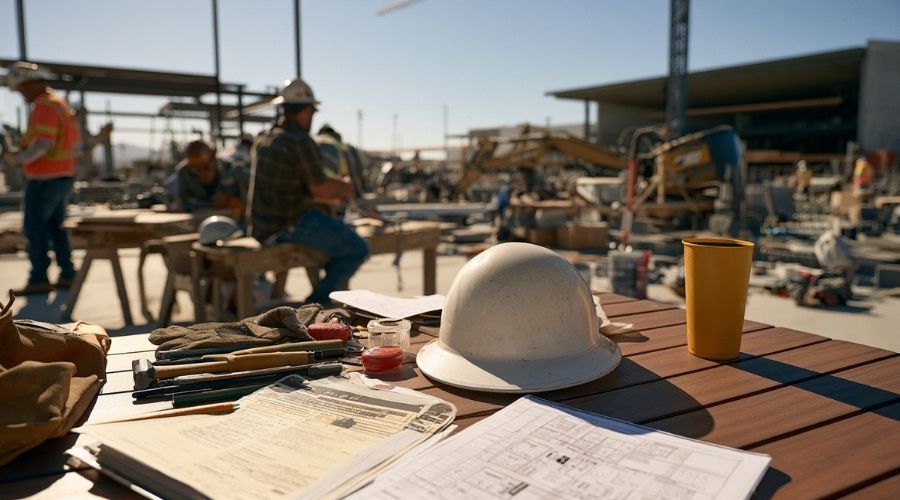
Here is what happens on a jobsite in the days after a serious injury, and it is worth understanding without assuming malicious intent. Work continues. The scene gets cleared because the schedule demands it. Damaged equipment gets repaired or sent back to the rental yard. The crew that saw it happen rotates to another project in another county.
Some of it is less innocent. Daily logs get tidied. Safety meeting sign-in sheets become increasingly difficult to locate. The subcontractor whose worker created the hazard suddenly has counsel and is unavailable for a friendly conversation.
By the time an injured worker finishes the first round of surgeries and starts wondering whether someone else was responsible, the physical evidence is gone and the paper trail has been curated. That is why the timing of a consultation matters more in construction cases than in almost any other kind of injury claim. A letter demanding preservation of equipment, logs, photographs, and video, sent early, changes what can be proven later.
Cal/OSHA involvement helps here. When the division investigates a serious jobsite injury, it generates records, and California’s fall protection and jobsite safety standards provide a clear benchmark to measure conduct against. A violation is not automatic liability, but it is a concrete standard rather than an argument.
What Happens to Your Comp Benefits If You Recover From a Third Party
The two cases are connected financially, and running them separately is how injured workers end up surprised at the end.
Under California Labor Code section 3852, an employer or its insurer that has paid workers’ comp benefits generally has a right to be reimbursed out of a third-party recovery, along with a credit against benefits it would otherwise owe going forward. Nobody explains this at the start, and it can meaningfully change what an injured worker actually keeps.
There is more room here than the carrier will suggest. When an insurer files a passive lien and lets someone else do the work of building the case, courts have recognized that it should bear a share of the cost of that recovery. Where the employer’s own negligence contributed to the injury, the lien and credit rights are reduced in proportion to that fault, which on a jobsite is frequently in play.
The practical lesson is that the comp claim and the civil claim have to be handled as one strategy. Decisions made in the workers’ comp case, including how and when it settles, affect what happens in the civil case and vice versa.

Conclusion
Two key points to remember. The rule that shields general contractors and property owners is a presumption, not a wall, and it turns on specific facts about who controlled the work. And on a crowded jobsite, the party with real exposure is often the equipment company or the other trade, not the name on the sign at the gate.
If you were hurt on a site with multiple companies, don’t accept a quick answer about who is responsible. Oracle Law Firm handles workers’ compensation and personal injury claims together for construction workers throughout Orange County.
Been in an accident or hurt on the job? You don’t have to navigate insurance companies alone. Oracle Law Firm fights to get you the compensation, control, and clarity you deserve.
Get a Free Consultation or call 888.597.4099.
This article is for general information only and is not legal advice. Every case turns on its own facts, and outcomes depend on the specific circumstances involved. Speak with an attorney about your situation.
Frequently Asked Questions
Can I sue the general contractor if I was hurt on a construction site?
Occasionally. California law presumes a general contractor delegated safety for a subcontractor’s employees to that subcontractor, so the claim usually depends on proving an exception. The most common exception is that the general contractor retained control over how the work was done and exercised that control in a way that contributed to the injury. Whether that applies depends heavily on contracts, instructions, and site records.
What is the Privette doctrine in simple terms?
It is a California rule that presumes when someone hires an independent contractor, they hand over responsibility for the safety of that contractor’s workers. The practical effect is that an injured worker generally cannot sue the property owner or general contractor just because the injury happened on their site. Recognized exceptions exist, including retained control and certain concealed hazards on the property.
Who else can be responsible for a construction accident besides my employer?
Equipment manufacturers and distributors, equipment rental companies, other subcontractors and their employees, delivery and material suppliers, crane and lift services, and in some situations the property owner. None of these are your employer, so the exclusive remedy rule does not bar a claim against them. Identifying them early matters because evidence on a jobsite changes fast.
Will a third-party recovery reduce my workers’ comp benefits?
Your employer’s insurer generally has a right to reimbursement out of a third-party recovery and a credit against future benefits. How much it recovers is not fixed. Its share can be reduced when it participates passively and further reduced if the employer’s own negligence contributed to the injury, which is why the two cases should be coordinated.
How long do I have to file a construction injury lawsuit in California?
For a civil claim against a third party, California generally allows two years from the date of injury. Claims involving a public entity, such as a public works project, typically require a written claim to be presented within six months, which is far shorter. Your workers’ comp claim runs on separate deadlines and filing it does not preserve the civil one.