Most California drivers have heard of the three-second rule at some point, usually as a piece of driver’s-ed advice that gets filed away and rarely thought about again. What is less well known is that this simple habit is tied directly to a real California statute, and that following it — or failing to — plays a measurable role in how fault gets assigned after a rear-end collision. Understanding where the rule comes from and how it actually functions in a legal context can change how you think about the space between your car and the one in front of you.
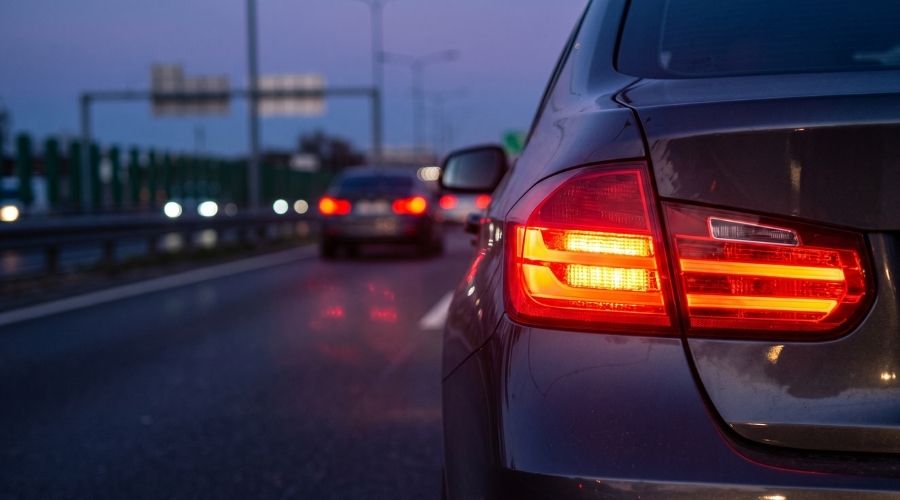
What the Three-Second Rule Actually Is
The rule itself is simple enough to apply without any equipment. Pick a fixed point ahead on the road — a sign, an overpass, a lamp post — and start counting “one-thousand-one, one-thousand-two, one-thousand-three” the moment the vehicle in front of you passes that point. If your own vehicle reaches the same point before you finish counting to three, you are following too closely and need to create more space.
It is worth noting that the three-second figure has not always been the standard. Driving instructors originally taught a two-second following gap, a recommendation that dates back decades. Over time, safety researchers determined that two seconds was no longer sufficient given modern vehicle speeds, varying vehicle sizes, and — increasingly — the additional reaction time lost to distractions like phones, infotainment systems, and other in-cabin technology. Both the National Safety Council and the California DMV have since settled on three seconds as the baseline recommendation.
The Actual Law Behind the Habit — California Vehicle Code 21703
The three-second count itself is not, strictly speaking, written into California law. What the law actually requires is broader and is set out in California Vehicle Code Section 21703, which states that a driver shall not follow another vehicle more closely than is reasonable and prudent, with due regard for the speed of the vehicles involved and the traffic and conditions of the roadway at the time.
That language is intentionally flexible rather than fixed to an exact number, because what counts as a safe following distance changes with speed, weather, road surface, and traffic density. The three-second rule exists as the practical, easy-to-apply tool that translates this flexible legal standard into something a driver can actually measure in real time behind the wheel. When courts, insurance adjusters, or police reports reference “following too closely,” they are pointing to a violation of VC 21703 — the three-second count is simply the everyday method most people use to stay on the right side of that statute.
The Science Behind Why Three Seconds Was Chosen
The three-second figure is not an arbitrary round number — it is built directly from research on how drivers actually perceive and respond to hazards. The total time a driver needs to safely react to a sudden stop ahead breaks down into distinct phases: roughly 1.75 seconds for the brain to perceive that a hazard exists, approximately 0.75 seconds to physically react by moving a foot to the brake, and an additional half-second built in as a margin of safety. Together, that totals the three-second window the rule is built around.
This breakdown matters because it explains why the rule works at moderate speeds but starts to fall short as speed increases. The three-second gap is generally considered adequate up to around 40 mph under normal driving conditions. Beyond that speed, actual physical stopping distance — the distance a vehicle travels once the brakes are applied — increases substantially, and three seconds of following time no longer translates to enough physical space to stop safely. This is why many safety guides recommend adding roughly one additional second of following distance for every 10 mph of speed above that 40 mph threshold, and extending the gap to four to six seconds in rain, fog, or nighttime driving when both visibility and tire traction are reduced.
Why the Rear Driver Is Almost Always Presumed at Fault
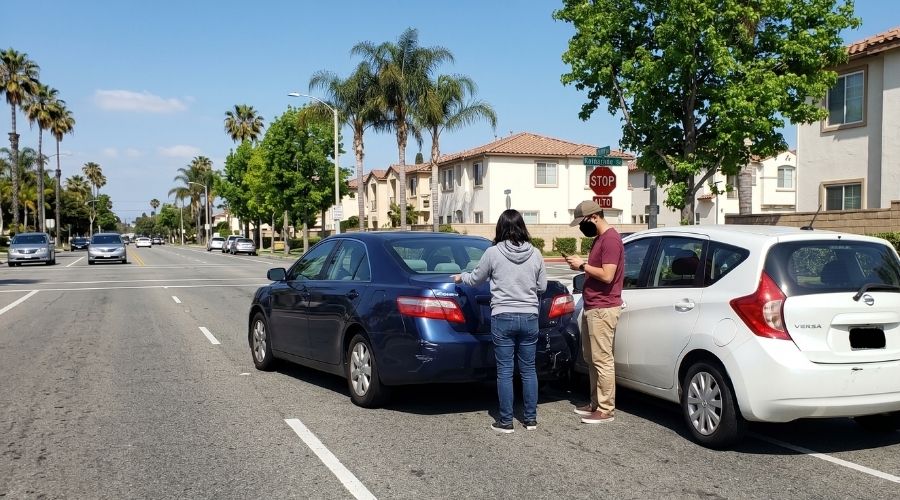
This is where the three-second rule moves from a safety habit into something with direct legal weight. Under California law, the driver who strikes another vehicle from behind in a rear-end collision is presumed to be at fault. The reasoning follows directly from Vehicle Code 21703: if the rear driver had been maintaining a reasonable and prudent following distance, they would have had adequate time and space to slow down or stop, regardless of what the lead vehicle did.
Because of this presumption, insurance companies and courts typically start their analysis of a rear-end collision from the assumption that the trailing driver bears responsibility. If a vehicle stops suddenly at a red light or in traffic and the car behind strikes it, fault is generally assigned to the rear driver from the outset — the burden falls on that driver to show otherwise, not the other way around.
When the Presumption Can Be Challenged — and Fault Shifts Forward
The presumption against the rear driver is strong, but it is not absolute. California’s comparative negligence framework allows fault to be shared or shifted when the lead driver’s own conduct contributed to the collision. Several recurring scenarios can rebut the standard presumption.
Sudden, unnecessary braking is one of the most common. If a lead driver slams on the brakes without any legitimate reason — no obstacle, no traffic change, no emergency — and does so specifically to startle, intimidate, or punish a following driver, they can bear significant fault for the resulting collision. Non-functioning brake lights present a related issue: if the lead vehicle’s brake lights fail to illuminate when the driver slows down, the rear driver loses the warning signal they were entitled to rely on, which can shift liability toward the front vehicle. Reversing unexpectedly, particularly in parking lots or stopped traffic, can also make the front driver responsible. Unsafe lane changes — cutting into a lane without enough space or without signaling — can likewise shift fault when the maneuver itself directly causes the trailing vehicle to make contact.
Multi-vehicle pileups complicate the analysis further. In a chain-reaction collision involving several cars, the driver who caused the initial impact often bears the greatest share of responsibility, but later drivers in the chain can still share liability if they, too, were following too closely to react in time.
How Following Distance Gets Established as Evidence
Following distance at the moment of impact is almost never measured with precision after the fact — there is no device recording the exact gap a driver maintained in the seconds before a crash. Instead, it gets reconstructed through a combination of evidence. Police reports typically document road conditions, weather, and any contributing factors observed at the scene. Eyewitness accounts can speak directly to whether a driver appeared to be tailgating or followed appropriately. Dashcam footage, when available, is often the single most persuasive piece of evidence, since it can show the actual gap in real time. The location, angle, and severity of vehicle damage also help reconstruct speed and impact dynamics, which in turn inform how closely the vehicles were likely traveling before the collision.
Because this evidence has to be gathered and interpreted carefully, having an experienced car accident attorney involved early can make a meaningful difference — both for a rear driver trying to show the lead driver’s conduct contributed to the crash, and for a lead driver trying to demonstrate the rear driver simply failed to maintain a safe distance.
What This Means for Your Claim After a Rear-End Collision
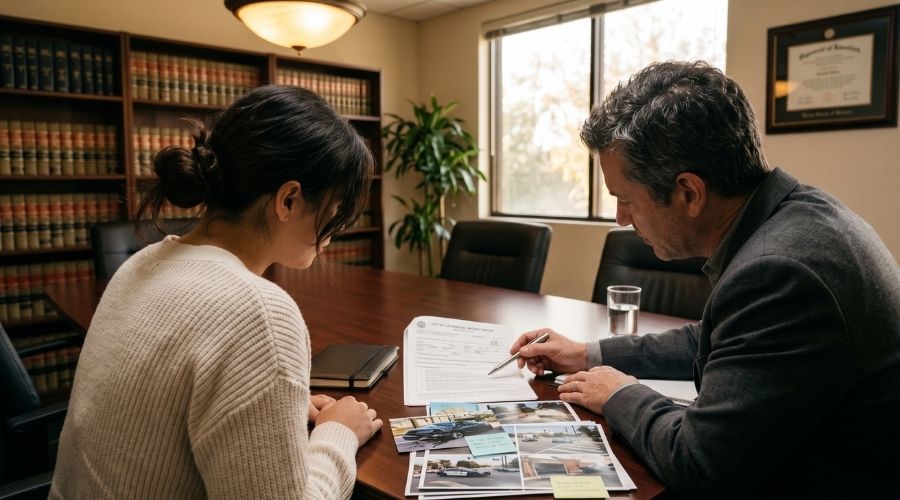
If you were rear-ended, the presumption of fault generally works in your favor from the outset, but that does not mean your case is automatically straightforward. The other driver’s insurance company may still look for any of the exceptions described above to argue that you share some responsibility, particularly around sudden braking or lane changes. If you were the rear driver in a collision, understanding these exceptions matters just as much, since they represent the most realistic paths to reducing your own share of fault under California’s comparative negligence system.
Either way, the three-second rule is more than driving advice — it is the practical standard against which your conduct, and the other driver’s, will likely be measured. At Oracle Law Firm, our personal injury attorneys handle rear-end collision claims throughout Southern California and know how to build the evidence that supports your version of events.
Frequently Asked Questions
Is the three-second rule an actual California law?
Why three seconds specifically, instead of two or four?
Am I automatically at fault if I rear-end someone who stopped suddenly?
Does the three-second rule change at higher speeds or in bad weather?
How does following distance get proven after an accident?
Were You in a Rear-End Collision? Talk to an Attorney — No Cost, No Obligation
Whether you were rear-ended or you are the one being blamed for following too closely, the facts of how the collision unfolded matter enormously to your outcome. Oracle Law Firm | Accident & Injury Attorneys offers free, confidential consultations across Southern California with no upfront fees — you only pay if we win your case. Contact our team today to find out exactly where you stand.