Getting hurt at work turns your routine upside down quickly. There are doctor’s appointments to manage, bills starting to arrive, and the looming question of how you are going to replace your income while you recover. California’s workers’ compensation system exists specifically to handle this — it is designed to get injured employees medical care and partial wage replacement without requiring them to prove their employer did anything wrong. But the system has its own language, deadlines, and traps that catch people off guard. This guide cuts through the complexity and explains what injured workers in Rancho Santa Margarita are actually entitled to and how to make sure they get it.

How California Workers’ Compensation Actually Works
California’s workers’ compensation system is built on a straightforward premise: if you are injured or become ill because of your job, you are entitled to benefits — regardless of whether your employer was negligent. Workers’ compensation is a no-fault insurance system designed to help injured workers get financial compensation for lost wages and medical expenses if they are injured at work. You do not need to sue anyone to access these benefits, and you do not need to prove fault. What you do need is to report the injury, file the right paperwork, and meet the applicable deadlines.
The trade-off built into the system is that by accepting workers’ comp benefits, you generally give up the right to sue your employer directly for pain and suffering. That is a significant limitation, but the benefit is speed — a properly filed claim gets medical treatment and wage replacement moving without litigation. California had 680,152 workers’ compensation claims in 2023, based on first reports of injuries, which translates to 3.6 worker injuries per every 100 employees. According to the California Department of Industrial Relations, virtually all California employers are required to carry workers’ compensation insurance from the first day an employee begins work — covering full-time, part-time, and seasonal workers regardless of immigration status.
What Counts as a Work Injury in California
Work injuries are broader than most people realize. The obvious cases — falling off a ladder, being struck by a forklift, cutting a hand on equipment — clearly qualify. But the system also covers injuries that develop gradually over time. Repetitive stress injuries from years of keyboard use, hearing loss from prolonged exposure to loud equipment, back problems from years of heavy lifting, and respiratory conditions from chemical exposure in a workplace all qualify as compensable work injuries under California law.
Stress-related mental health conditions caused by work also qualify in California, as do injuries that aggravate a pre-existing condition. California workers’ comp applies a “take you as they find you” standard — if work aggravates, accelerates, or contributes to a pre-existing condition, the employer is liable for that aggravation. This is important for employees in Rancho Santa Margarita’s professional services sector who may have prior conditions that a demanding work environment worsens over time. The injury does not have to be sudden or dramatic to qualify — it just has to arise out of your employment.
The First Steps — Reporting and the DWC-1 Form
The clock starts ticking the moment you are injured. Report your injury to your supervisor or employer as soon as possible — California law requires you to report a work injury within 30 days of its occurrence, and waiting too long can put your entire claim at risk. You do not need to have a complete diagnosis to report; reporting that something happened and that you are experiencing symptoms is enough to start the process.
Once you report, your employer must provide the DWC-1 workers’ compensation claim form within one working day of learning about your injury. You complete the employee section and return it to your employer to officially start your claim. If your employer does not provide it, you can download it directly from the California Department of Industrial Relations website. Ask for a copy of the completed form for your records before you hand it back. From the date the claim form is filed, the insurance carrier has 90 days to accept or deny the claim — and during that review period, you are entitled to receive up to $10,000 in medical treatment while the decision is pending.

Rancho Santa Margarita Workers’ Compensation Benefits — What You’re Entitled To
A properly filed California workers’ compensation claim can provide several distinct categories of benefits, and understanding each one is the first step toward making sure nothing is left unclaimed.
Medical benefits cover 100% of all reasonable and necessary medical treatment related to your work injury — doctor visits, specialist consultations, surgeries, physical therapy, prescription medications, and medical equipment. There is no co-pay and no deductible on the medical side of a workers’ comp claim. Full medical treatment coverage includes doctor visits, medications, surgeries, and therapy. The catch is that your employer’s insurance carrier typically selects your treating physician from a Medical Provider Network for the first 30 days, unless you pre-designated your personal doctor in writing before the injury. After that initial period, you generally have the right to change physicians within the network.
Temporary disability benefits replace a portion of your income while you are unable to work due to your injury. For injuries occurring on or after January 1, 2026, the maximum weekly temporary total disability benefit is $1,764.11, up from $1,680.29 in 2025, with the minimum rising to $264.61. The benefit is calculated at two-thirds of your average weekly wage, paid every two weeks. Benefits continue until you return to work, reach maximum medical improvement, or hit the statutory cap on the number of weeks you can receive them.
Permanent disability benefits apply when your injury results in a lasting impairment — meaning your condition does not fully resolve even after you reach maximum medical improvement. California uses the 2005 Permanent Disability Rating Schedule combined with the AMA Guides to the Evaluation of Permanent Impairment to calculate your rating. That rating determines a weekly permanent disability payment that compensates you for the long-term impact of your injury on your earning capacity. Supplemental job displacement benefits — vouchers for retraining and education — may also apply if you cannot return to your prior job due to the permanent nature of your injury.
Choosing Your Doctor — and What Happens When You Disagree With the Insurer’s Doctor
One of the most frustrating aspects of the California workers’ compensation system for many injured employees is the limited control over their medical care — particularly in the early stages of a claim. For the first 30 days after an injury, your employer’s insurance carrier generally directs your treatment through a Medical Provider Network. The doctors within this network are approved by the insurer, and their reports carry significant weight in how your claim is valued.
When you disagree with the MPN doctor’s assessment — whether about the severity of your injury, your readiness to return to work, or the treatment being authorized — you have options. You can request an Independent Medical Review for treatment disputes. For disputes about your disability rating or the nature of your injury, you can request a Qualified Medical Evaluator, a neutral physician appointed by the state to provide an objective opinion. QME reports frequently produce different results from insurer-selected physician reports, and many permanent disability ratings are successfully challenged through this process. An experienced workers’ compensation attorney can guide you through these procedures and ensure the QME process is handled correctly.
Your Rights if Your Employer Retaliates
Filing a workers’ compensation claim should never cost you your job, your hours, or your standing at work — and California law is explicit on this point. California Labor Code Section 132a makes it a crime to retaliate against employees for filing workers’ comp claims. You can recover reinstatement, lost wages, and up to $10,000 in damages.
The protection goes further than most employees realize. Under Senate Bill 497, if adverse action follows protected workers’ comp activity within 90 days, the law presumes retaliation occurred, and the employer has to prove otherwise. This means if you are fired, demoted, given fewer hours, or subjected to a hostile work environment within 90 days of filing a workers’ comp claim, the burden shifts to your employer to explain why — without that explanation amounting to retaliation. If you believe you have been retaliated against for filing a claim, documenting the timeline of events — when you filed, when the adverse action occurred, and any communications in between — is the most important immediate step.
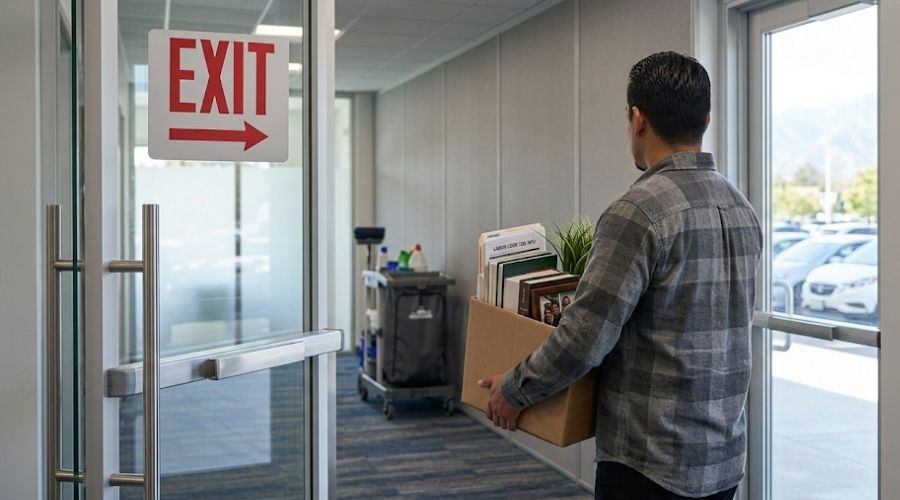
When a Claim Is Denied — What Comes Next
Receiving a denial letter from a workers’ compensation insurer can feel like the end of the road. It is not. Many denials are reversed at the panel Qualified Medical Evaluator stage, in mandatory settlement conferences, or at trial. The denial is a starting point in many specialist firms’ caseloads — not an ending.
If a claim is denied, employees have the right to appeal that decision through California’s Workers’ Compensation Appeals Board (WCAB). Filing an Application for Adjudication of Claim within one year of the injury preserves that right. The WCAB process involves a series of procedural steps — mandatory settlement conferences, discovery, and, if necessary, a trial before a workers’ compensation judge — that are best navigated with an attorney who handles these cases regularly. The deadline to file an appeal is firm, which makes contacting a workers’ compensation attorney as soon as you receive a denial letter the single most important step you can take to preserve your options.
When Workers’ Compensation Isn’t Your Only Option
Workers’ compensation is the primary — but not always the exclusive — source of compensation after a work injury. In certain circumstances, a separate personal injury claim against a third party may also be available, and pursuing it does not jeopardize your workers’ comp benefits.
If your work injury was caused by someone other than your employer — a delivery driver who rear-ended your company vehicle, a contractor who created a hazardous condition at your worksite, a defective piece of equipment manufactured by a third party — you may have both a workers’ compensation claim against your employer’s insurer and a personal injury claim against the responsible third party. The third-party claim is not subject to workers’ comp’s limitations on pain and suffering recovery, which means it can produce significantly larger compensation in serious injury cases. Identifying whether a third-party claim exists alongside a workers’ comp claim is one of the most consequential early steps an attorney takes when evaluating a workplace injury. Our personal injury attorneys at Oracle Law Firm handle both workers’ compensation support and third-party injury claims for injured workers throughout Rancho Santa Margarita and South Orange County.
Frequently Asked Questions
Do I have to prove my employer was at fault to get workers’ compensation?
How much will I receive in temporary disability benefits in California in 2026?
What happens if my employer retaliates against me for filing a workers’ comp claim?
Can I see my own doctor after a work injury in California?
What should I do if my workers’ compensation claim is denied?
Hurt at Work in Rancho Santa Margarita? Let’s Talk — No Cost, No Obligation
You should not have to fight an insurance system while you are trying to recover from an injury. Oracle Law Firm | Accident & Injury Attorneys helps injured workers in Rancho Santa Margarita and throughout South Orange County navigate the workers’ compensation process and identify whether a third-party personal injury claim may also apply. Consultations are free, confidential, and carry no obligation — you pay nothing unless we recover compensation for you. Contact our team today.