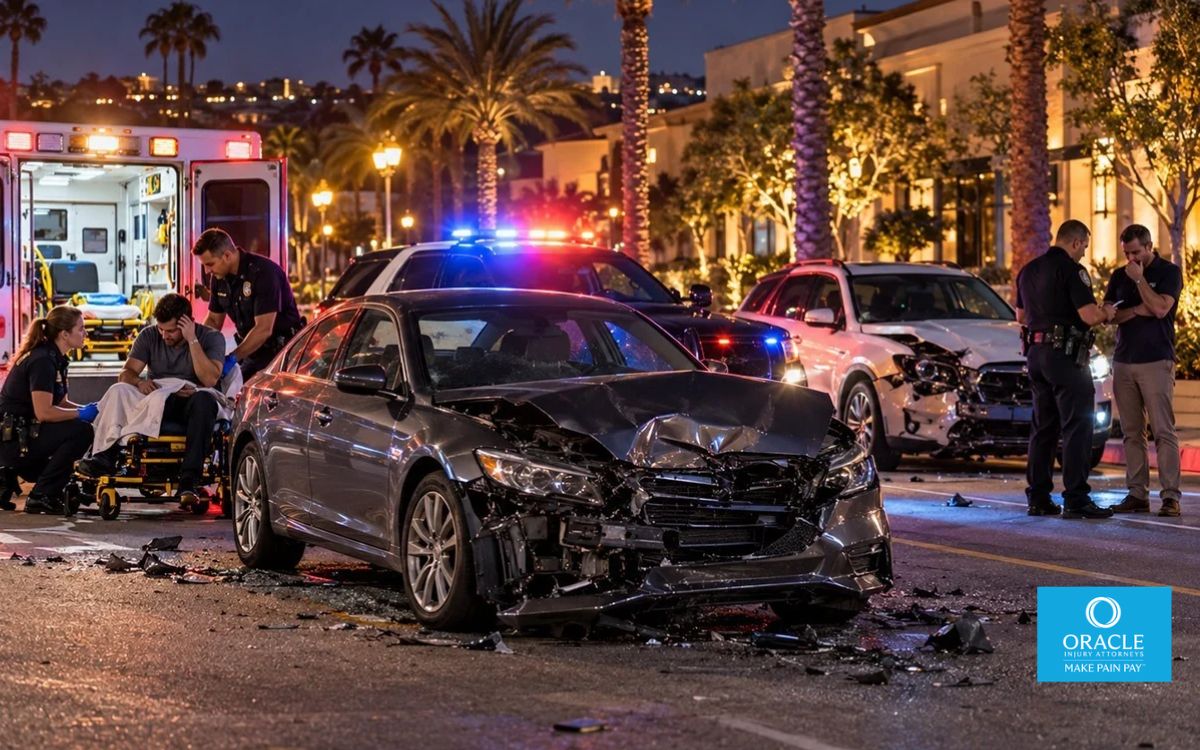
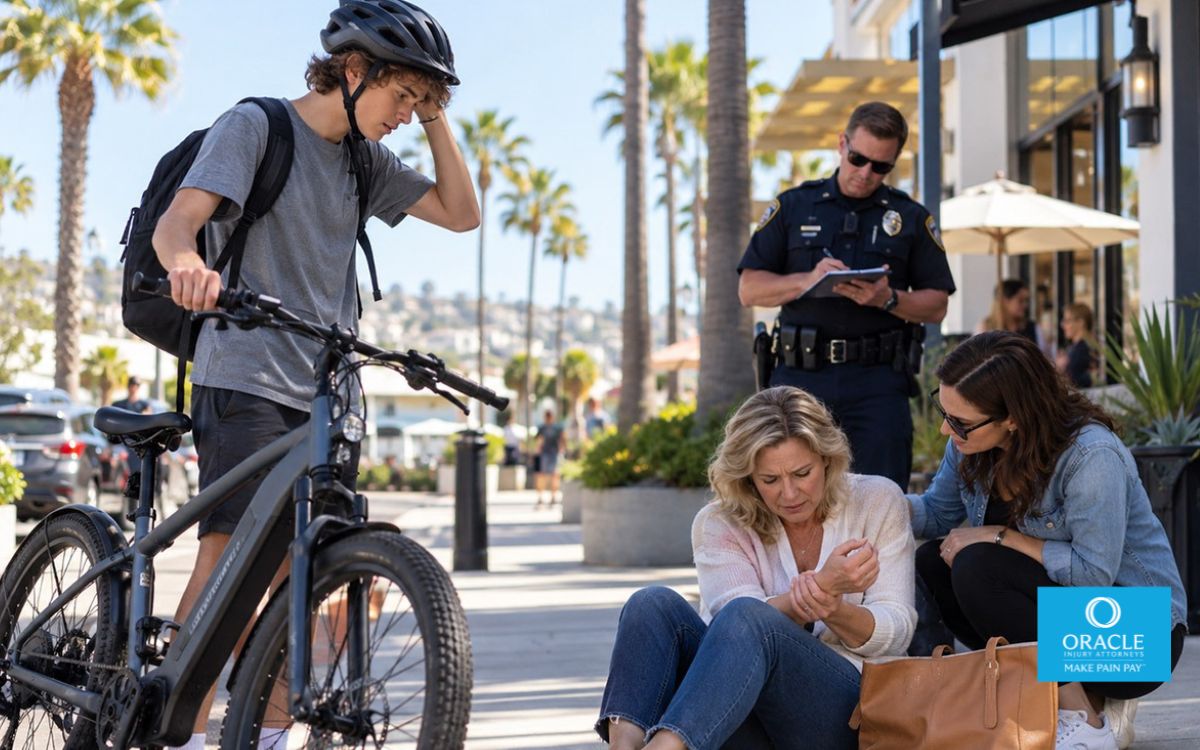
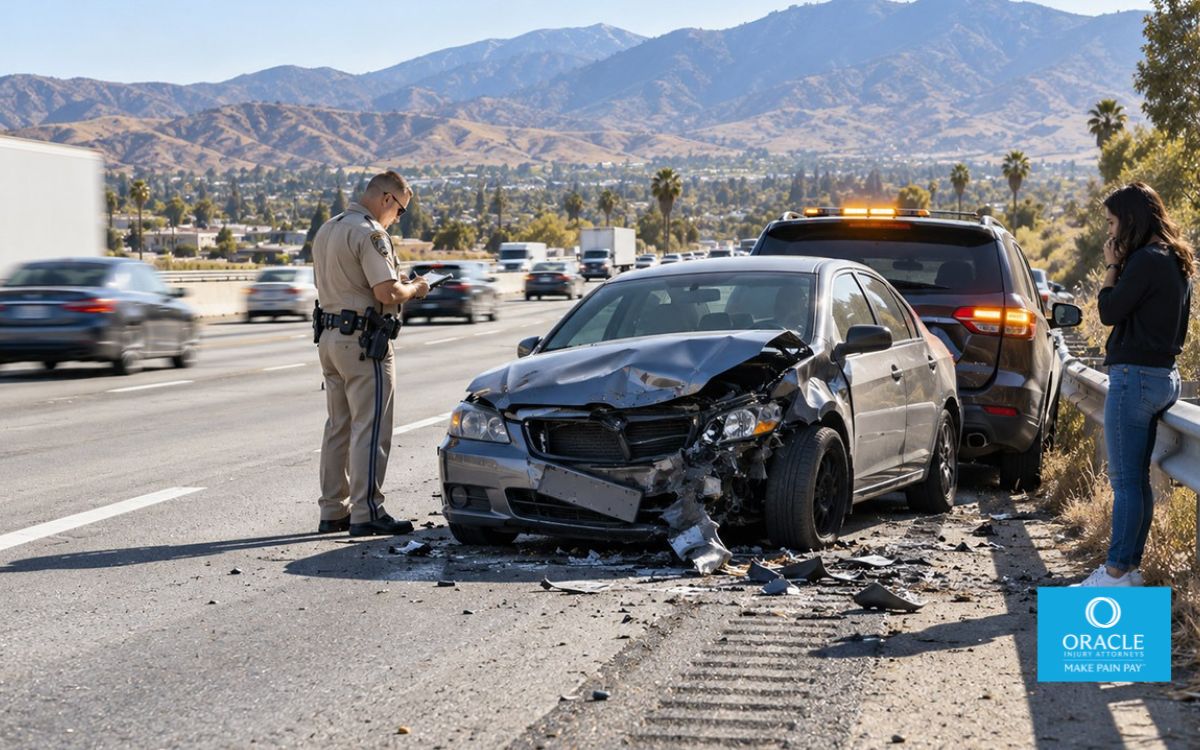
Pasadena car accident claims run through a different legal system than most of Southern California’s personal injury cases. As a city within Los Angeles County, Pasadena places its accident victims into the LA County Superior Court’s jurisdiction, not Orange County’s — a distinction that affects which courthouse handles litigation, which judicial calendars govern pretrial timelines, and which local ordinances layer on top of California’s statewide traffic laws. For anyone navigating a car accident claim here, understanding that LA County framework alongside the specific crash dynamics of Pasadena’s freeways, surface streets, and event corridors is the starting point for protecting a claim effectively.
LA County Jurisdiction — What It Means for Your Pasadena Claim
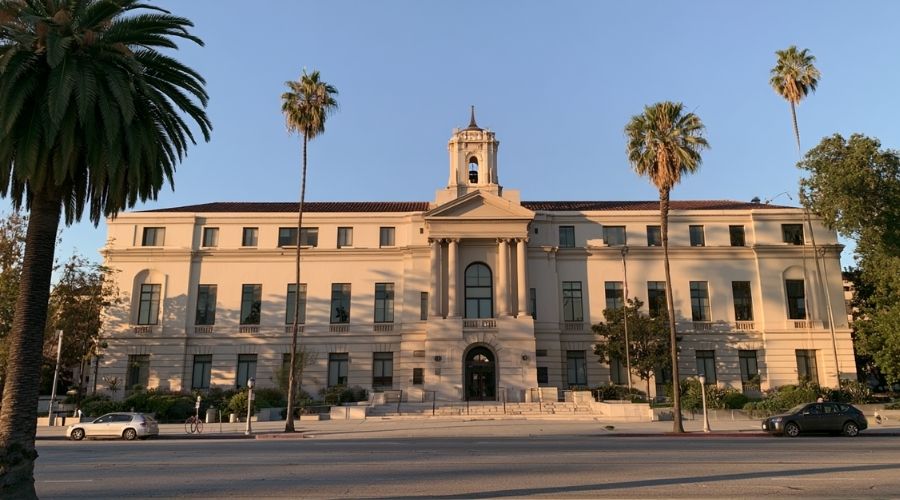
The most practically significant difference between a Pasadena injury claim and one arising in Orange County is the court system. When a Pasadena car accident case reaches litigation, it is filed at the Pasadena Courthouse — 300 East Walnut Street — the Northeast District branch of the Los Angeles County Superior Court. This courthouse has jurisdiction over civil cases from Pasadena, Altadena, Arcadia, Monrovia, and Sierra Madre. Its pretrial timelines, judicial assignments, and standing orders operate entirely independently of Orange County’s court system, and an attorney unfamiliar with the Northeast District’s specific practices will navigate it less efficiently than one who files there regularly.
The courthouse and the bench you draw shape the entire pretrial calendar. Knowing the standing orders and law-and-motion calendars, and understanding the procedural expectations specific to each judge, makes a measurable difference in how efficiently a case moves through the system and how credibly a settlement demand is received. Los Angeles County also operates one of the highest-volume court systems in the country, which affects discovery timelines, mediation scheduling, and the pace at which cases move from filing to resolution. A disputed-liability case with surgery, lost-income claims, or commercial vehicle exposure can take twelve to twenty-four months and may require filing in the LA Superior Court Pasadena Courthouse. According to the LA County Superior Court, the Northeast District handles a significant civil docket that rewards familiarity with its procedures.
Pasadena’s Local Traffic Ordinances — A Separate Layer of Liability
California state traffic law governs most of what happens on Pasadena’s roads, but Pasadena adds its own layer. Pasadena Municipal Code Title 10 includes specific traffic regulations concerning speed limits, parking, and procedures for implementing traffic-control devices, with Chapter 10.16 providing instructions for placing and maintaining traffic-control devices that help maintain traffic order and improve safety. These local ordinances govern specific intersections, school zones, and commercial corridors throughout the city in ways that state law alone does not address.
The legal significance for injury claims is direct. When a driver violates a Pasadena-specific ordinance — a local speed limit reduction near a school or hospital zone, a city-mandated signal timing rule at a specific intersection — that violation constitutes negligence per se under California Evidence Code Section 669, establishing negligence without requiring additional proof of careless conduct. An attorney familiar with Pasadena’s local ordinances can identify these violations and use them as evidence in a way that a general practice attorney unfamiliar with the municipal code would not.
The 210 and 134 Freeways — Pasadena’s Primary Crash Corridors
The Foothill Freeway — Interstate 210 — is the dominant crash corridor in Pasadena, running east-west through the city and carrying one of the highest commuter volumes of any freeway in the San Gabriel Valley. Residents and crash data consistently identify the 210 as one of the worst roads in the Pasadena area, not only due to road surface conditions in sections but also the significant speeding and reckless driving on this major corridor. The interchange where the 210 meets the 134 Freeway at Pasadena’s northern edge creates severe congestion during peak hours, with speed differentials between through traffic and merging vehicles producing rear-end and side-impact crashes that generate some of the county’s more serious injury claims.
The 134 Freeway itself — running along Pasadena’s northern boundary and connecting to Glendale and the I-5 corridor to the west — carries significant commercial freight traffic in addition to commuter volume. When a commercial vehicle is involved in a crash on either corridor, the FMCSA federal regulatory layer described in detail in our guide on truck accident claims in California applies in full — adding federal regulations, multiple potentially liable parties, and time-sensitive electronic evidence that must be preserved within hours of the crash.
The Arroyo Seco Parkway — California’s Oldest Freeway
The 110 Freeway — formally the Arroyo Seco Parkway — holds the distinction of being California’s first freeway, built in 1940 and terminating in Pasadena. Its age is directly relevant to the crash patterns it produces. Pre-dating modern safety engineering by decades, the Arroyo Seco Parkway features narrow lanes, tight curves with reduced sightlines, short on-ramps that require vehicles to merge at low speed into traffic already traveling at freeway pace, and a near-total absence of modern emergency shoulders. These structural characteristics create a crash environment that is qualitatively different from contemporary freeway design and cannot be evaluated using the same liability framework.
Speed differential crashes — where a merging vehicle and through traffic cannot safely reconcile their speeds within the limited ramp distance available — are a recurring crash type specific to the Arroyo Seco Parkway. When these crashes occur, the analysis of whether the merging driver, the through driver, or a road design defect maintained by Caltrans bears responsibility is more nuanced than a standard freeway merge crash. Caltrans has been aware of the 110’s safety profile for decades, and the history of prior complaints and maintenance decisions is relevant evidence in any infrastructure-related claim on this corridor — subject to the six-month Government Tort Claim deadline.
Colorado Boulevard and Pasadena’s Pedestrian-Heavy Surface Streets
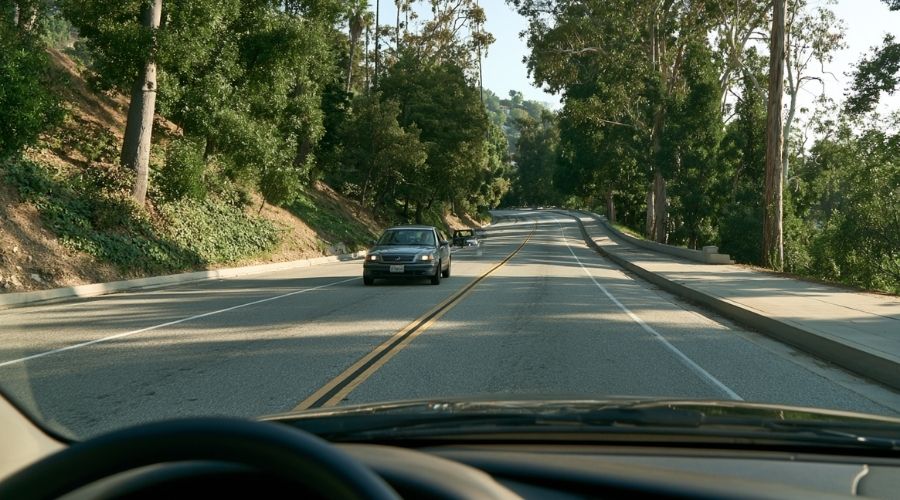
Colorado Boulevard is the commercial and cultural spine of Pasadena, running east-west through the Old Pasadena shopping district, the Playhouse District, and the broader city center. Its combination of high vehicle volume, dense pedestrian activity, active rideshare pickup and drop-off zones, and tourist-unfamiliar driving behavior produces a consistent pattern of T-bone collisions at signalized intersections, rear-end collisions in stop-and-go commercial traffic, and pedestrian-vehicle conflicts at and between marked crossings.
The intersection of Fair Oaks Avenue and Orange Grove Boulevard presents elevated risk due to its complicated traffic signals and multiple pedestrian crossings. The streets near Huntington Memorial Hospital, Caltech, and the medical office buildings along Del Mar Avenue and Holliston Avenue generate pedestrian, cyclist, and vehicle conflicts that produce specific crash patterns tied to the institutional population density in those corridors. Lake Avenue, which crosses both the 210 and Colorado Boulevard at major signalized intersections, generates high-frequency crash activity at both crossing points that Pasadena’s local roadway safety data consistently documents as priority locations for engineering intervention.
Rose Bowl Events — When Out-of-Area Drivers Change the Liability Picture
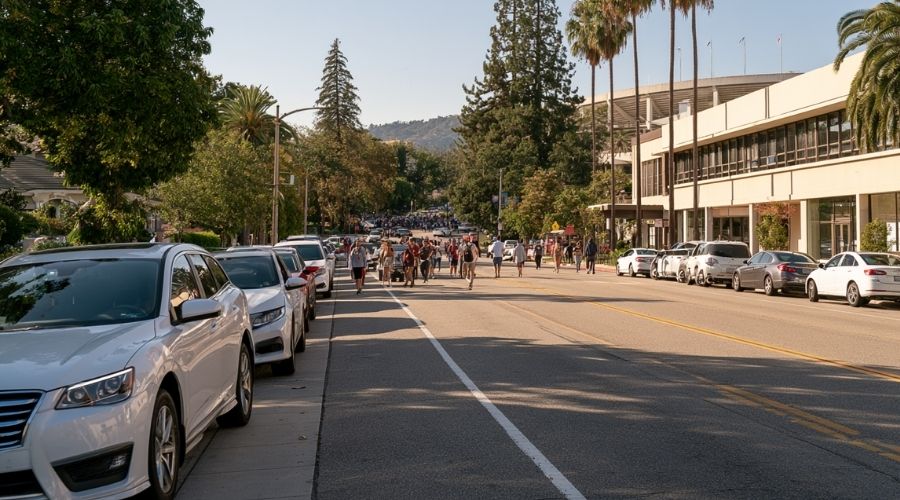
The Rose Bowl Stadium draws tens of thousands of visitors to Pasadena multiple times per year for football games, concerts, the Tournament of Roses, and other major events. Each event produces a concentrated surge of out-of-area drivers navigating streets they do not know, intersections whose signal timing they cannot anticipate, and parking patterns that push vehicle traffic into residential corridors not designed to absorb it. On game days and event weekends, Pasadena’s streets near the Rose Bowl and Brookside Park see traffic volumes that exceed normal capacity, and out-of-area drivers unfamiliar with local intersections create a documented elevated crash risk.
For injury claims arising during Rose Bowl events, several factors alter the standard liability analysis. Out-of-state drivers operating rental vehicles add coverage layers beyond the driver’s personal policy — layers that an experienced Pasadena car accident attorney will identify and pursue rather than accepting only what the most obvious policy offers. Rideshare vehicles transporting event attendees are subject to the active-trip vs. waiting-period insurance distinction that applies in any rideshare-involved crash, and resolving which coverage tier applies requires documentation of the app’s trip status at the time of the collision. Post-event traffic congestion can also affect the quality of CHP or Pasadena PD incident reports when multiple crashes occur simultaneously and officers are stretched across several scenes.
Pasadena Car Accident Attorney: How the Claims Process Unfolds Here
A Pasadena car accident attorney navigating a claim in the LA County system manages a process that differs from Orange County in both timeline and venue. Most claims — approximately 95 to 97 percent of California personal injury matters — resolve through negotiated settlement before trial, typically following the completion of medical treatment and a formal demand package submitted to the insurer. In straightforward cases with clear liability and documented soft tissue injuries, resolution in three to six months is realistic. Cases involving surgical intervention, significant lost income, disputed liability, or commercial vehicles can extend to twelve to twenty-four months, particularly when the Pasadena Courthouse’s civil calendar is involved.
The insurer’s posture in an LA County claim is shaped by their familiarity with the local litigation environment. Major carriers know which law firms file regularly in the Pasadena Courthouse, understand the Northeast District’s median verdicts, and calibrate their settlement offers accordingly. An attorney whose practice does not include regular Pasadena Courthouse filings presents a less credible litigation threat — and insurers price their offers to reflect that. This is one of the more concrete ways in which local legal experience translates directly into financial outcomes for accident victims. Our personal injury attorneys at Oracle Law Firm handle car accident claims throughout Pasadena and the San Gabriel Valley on a contingency basis with no upfront fees.
Filing Deadlines That Apply in Pasadena
California’s personal injury statute of limitations is two years from the date of the accident under Code of Civil Procedure Section 335.1. This deadline applies to claims against private parties. Claims against government entities — the city of Pasadena for a road defect at a municipal intersection, Caltrans for a hazardous condition on the 210, 134, or 110, or any other public agency with potential responsibility for the crash — require a formal Government Tort Claim filed within six months of the accident date before any lawsuit can proceed. The Arroyo Seco Parkway’s documented infrastructure profile makes Caltrans a more frequently relevant potential defendant in Pasadena than in most other cities, which makes identifying this six-month deadline early particularly important.
The SR-1 DMV reporting requirement also applies: any driver involved in a crash causing injury, death, or more than $1,000 in property damage must file directly with the California DMV within 10 days — separately from the police report and any insurance filing. Missing this deadline can result in a license suspension even for drivers who were not at fault. At Oracle Law Firm, our personal injury attorneys identify and track every applicable deadline from the first consultation.
Frequently Asked Questions
Where are Pasadena car accident lawsuits filed?
Does Pasadena have its own traffic laws beyond California state law?
How does Rose Bowl event traffic affect liability in a Pasadena accident claim?
Why is the Arroyo Seco Parkway particularly dangerous compared to modern freeways?
How long does a Pasadena car accident claim typically take to resolve?
Injured in Pasadena? Talk to an Attorney — No Cost, No Obligation
LA County’s claims environment is high-volume and experience-dependent. Oracle Law Firm | Accident & Injury Attorneys handles car accident claims throughout Pasadena and the San Gabriel Valley with no upfront fees — you only pay if we recover compensation for you. Contact our team today before any deadlines close.