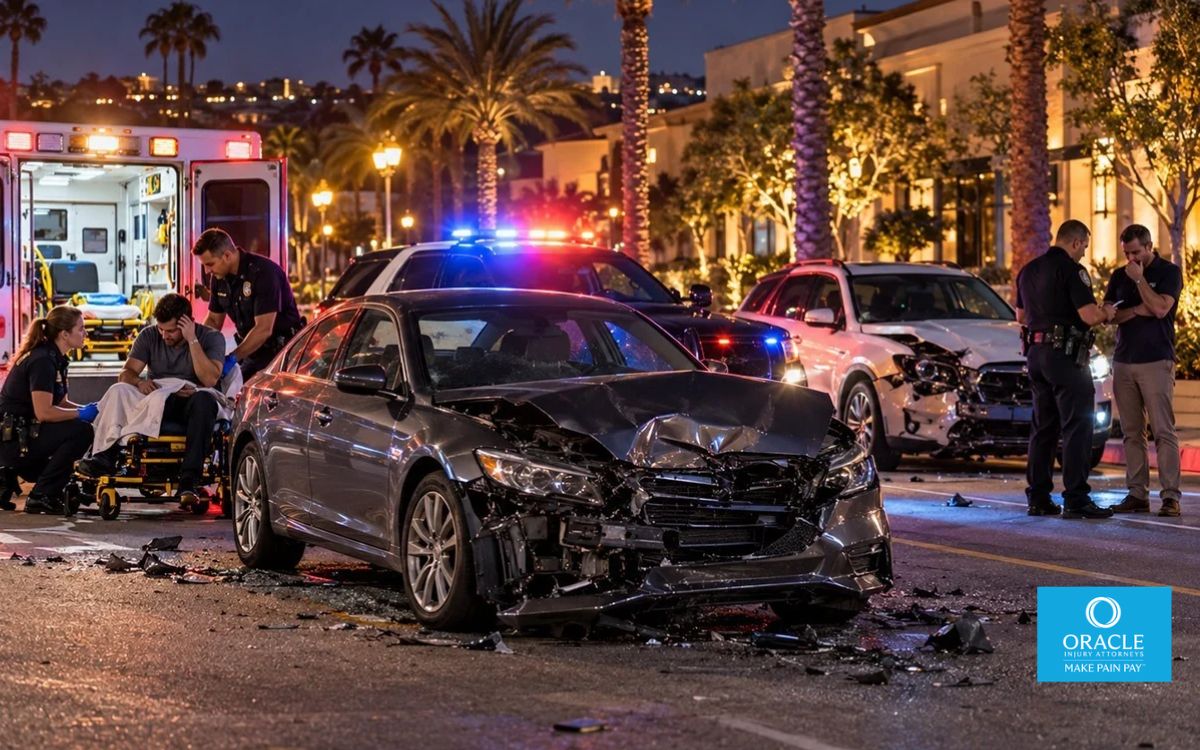
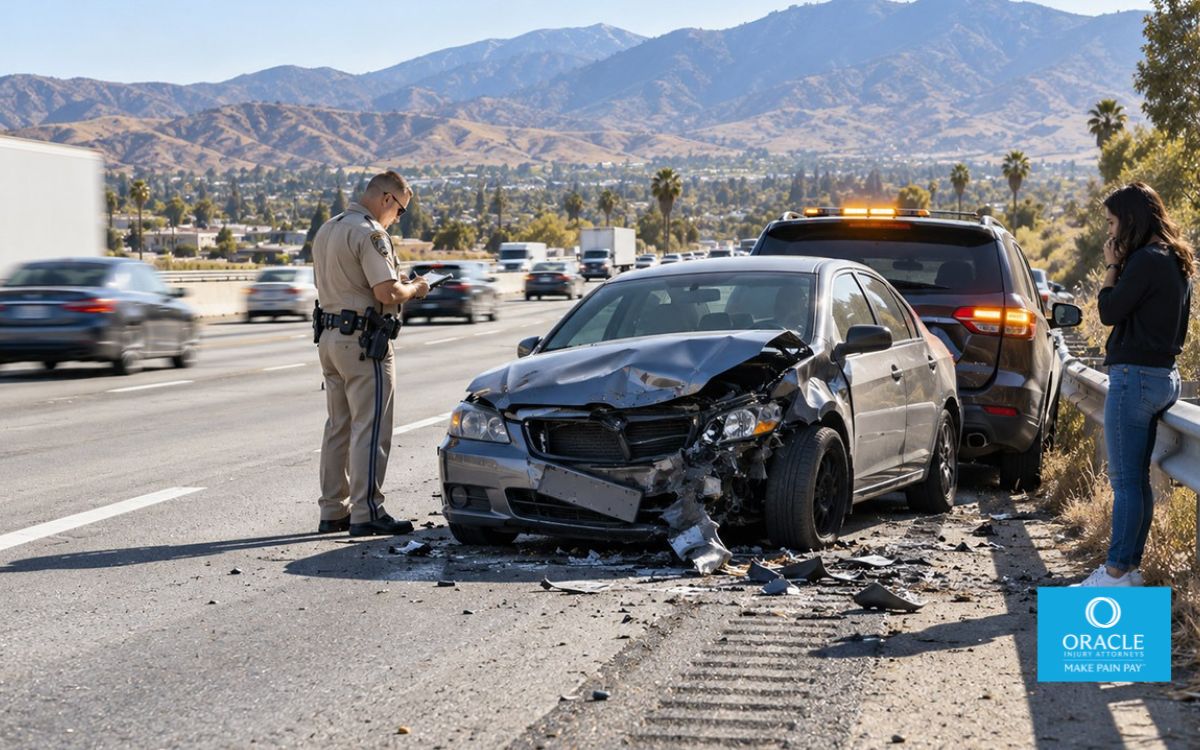
A Long Beach personal injury attorney who handles port-area accident claims is dealing with something qualitatively different from a standard car accident case. The 710 Freeway corridor — which connects the Port of Long Beach directly to the nation’s inland freight network — carries one of the heaviest concentrations of commercial truck traffic of any urban freeway in the United States. When an accident happens here, the liability picture often involves multiple commercial parties, federal and state regulations that do not apply anywhere else in California, and insurance defense teams that mobilize within hours of a serious crash. Understanding what you are up against is the foundation of protecting your claim.
Long Beach’s Traffic Safety Crisis — The Numbers Behind the Risk
Long Beach is not just a busy city — it is statistically one of the most dangerous in Southern California for people on its roads. In 2025, the city recorded 53 fatal traffic collisions, the most in more than a decade and a sharp increase from 2024. Thirty-two of those deaths involved pedestrians, cyclists, or e-scooter riders — a number that eclipsed the city’s 29 homicides in the same year. According to the Federal Motor Carrier Safety Administration, the freeway corridors surrounding the Port of Long Beach carry the highest concentration of commercial truck traffic in California, adding a layer of crash severity that urban surface street data alone does not capture.
Los Angeles County recorded 1,731 truck accidents involving injury in 2024, with 44 deaths and over 2,300 total injuries from commercial truck impacts. Long Beach sits at the epicenter of that data — its port, freeways, and surrounding surface streets generate a disproportionate share of the county’s most serious commercial vehicle crashes.
The 710 Freeway — An Industrial Corridor, Not Just a Commuter Road
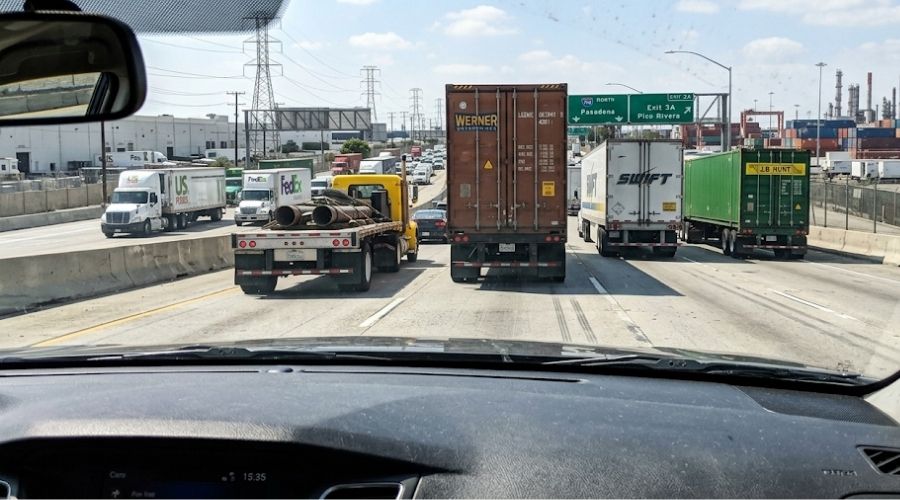
The I-710, also called the Long Beach Freeway, runs roughly 23 miles from the port terminals at its southern end up through Long Beach, Compton, South Gate, and into the San Gabriel Valley. For much of its length, it is less a commuter highway than an industrial conveyor belt. According to the California Department of Transportation, the stretch of the 710 near the port handles some of the heaviest commercial vehicle traffic of any urban freeway in the United States. The mix of container trucks, tanker rigs, and oversized loads navigating tight interchanges alongside passenger cars creates a collision environment unlike most other freeways in the region.
Recent incidents illustrate the ongoing severity of crashes along this corridor. In April 2026, a semi-truck crash on the 91 Freeway near the 710 Freeway interchange in Long Beach caused a major multi-vehicle incident and lane closures lasting several hours. A tanker truck spilled oil on the northbound 710 near Del Amo Boulevard, creating hazardous conditions across multiple lanes. These are not isolated events — they reflect the daily reality of a freeway system being used far beyond what its original design anticipated.
Port of Long Beach — Why Drayage Truck Accidents Are Different
Long Beach is home to the Port of Long Beach, the second-busiest container port in the United States. Thousands of commercial trucks travel the I-710 Freeway and surrounding surface streets — Ocean Boulevard, Alameda Street — daily to service port operations. Together, the Ports of Los Angeles and Long Beach form the busiest container port complex in North America, generating approximately 40% of all U.S. container imports.
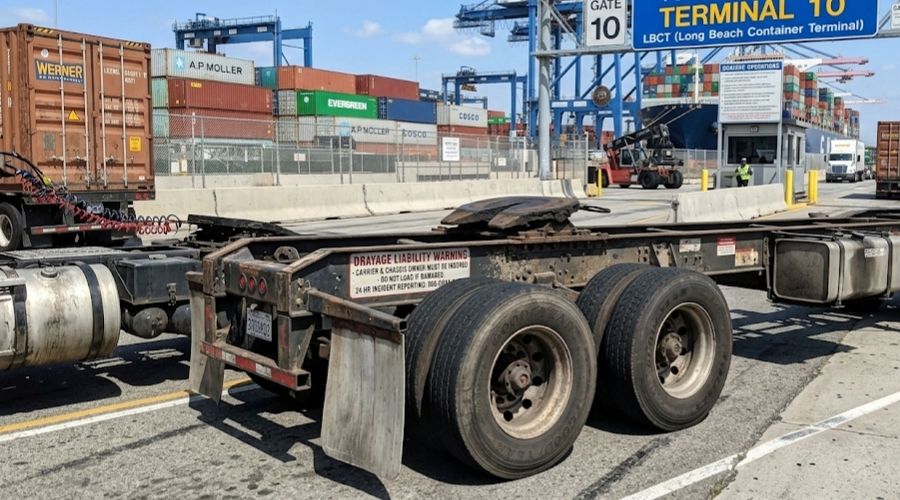
The trucks operating in and out of the port — known as drayage trucks — are a distinct category of commercial vehicle with their own regulatory framework. Port drayage carriers must comply with the Port of Long Beach’s Clean Truck Program in addition to standard FMCSA requirements, which imposes vehicle emission standards, driver registration requirements, and compliance documentation that creates its own paper trail. When a drayage truck is involved in an accident, the liability web can include the driver, the drayage carrier, the shipping company that contracted for the cargo movement, and in some cases the port terminal operator itself — a set of defendants with multiple insurance policies and legal teams who begin protecting their interests immediately after a crash.
California Vehicle Code 22406 — The 55 mph Truck Speed Rule
One of the most commonly violated — and most legally significant — rules on the 710 and surrounding freeways is the commercial truck speed limit. California Vehicle Code Section 22406 limits trucks over 10,000 pounds to 55 mph on all California highways regardless of the posted speed limit for passenger vehicles. On freeways where the general speed limit is 65 mph, commercial trucks are still required to travel at 55 mph or below. On a corridor as heavily trafficked as the 710, where trucks and passenger vehicles share lanes at significantly different speed limits, speed differential crashes are a predictable consequence.
When a commercial truck exceeds 55 mph and causes or contributes to a crash, that speed violation constitutes negligence per se under California Evidence Code Section 669 — meaning the violation itself establishes negligence without requiring additional proof of careless conduct. This is one of the strongest liability arguments available in a truck accident case on the 710 corridor, and it requires establishing the truck’s actual speed through black box data, ELD records, or other objective evidence gathered before that data is overwritten.
Who Can Be Held Liable in a Port-Area Accident
Port-area accidents near Long Beach rarely involve just one liable party. Commercial truck crashes involve layers of defendants — drivers, trucking companies, cargo owners, maintenance contractors, and their insurers — who go on the offensive within hours of the collision. Identifying every party with potential liability, rather than stopping at the most obvious defendant, is one of the most consequential early steps in a port-area personal injury claim.
The truck driver bears direct liability for their own negligent conduct — speeding, distracted driving, hours of service violations, or failure to maintain control. The drayage carrier or trucking company faces liability under respondeat superior for an employee driver’s conduct, and independently for negligent hiring, negligent maintenance, and failure to comply with FMCSA regulations. The cargo owner or shipping company may bear liability if improper cargo loading contributed to the crash — an unsecured or improperly distributed container load can cause a truck to jackknife or roll over independently of driver error. The maintenance contractor is liable if a documented mechanical defect — failed brakes, tire blowout, steering failure — resulted from deferred or negligent service. In cases where a road defect, inadequate signage, or infrastructure failure on port-area surface streets contributed to the crash, Caltrans or the city of Long Beach may carry their own liability — subject to the six-month Government Tort Claim deadline.
Dangerous Surface Streets in the Port Corridor
The 710 Freeway carries the highest volume of port traffic, but the crashes that most often involve passenger vehicles alongside commercial trucks happen on the surface streets connecting port operations to the freeway system. Ocean Boulevard runs parallel to the port’s northern boundary and sees constant heavy truck traffic feeding on and off the 710. Alameda Street is the primary north-south surface corridor connecting the port to the rail yards and distribution centers further inland, with sections carrying truck volumes that rival freeway ramps in intensity.
Pacific Coast Highway through Long Beach adds a separate crash profile — high-speed surface street travel through commercial and residential zones, with pedestrian crossings, bicycle traffic, and the distraction of ocean-adjacent driving. A woman was killed crossing Pacific Coast Highway in Long Beach in January 2026, and another fatality occurred at West Pacific Coast Highway and Cedar Avenue in December 2025. These pedestrian deaths reflect a pattern on PCH that extends beyond the port corridor and into the city’s broader traffic safety crisis.
Evidence That Disappears Fastest in Port-Area Cases
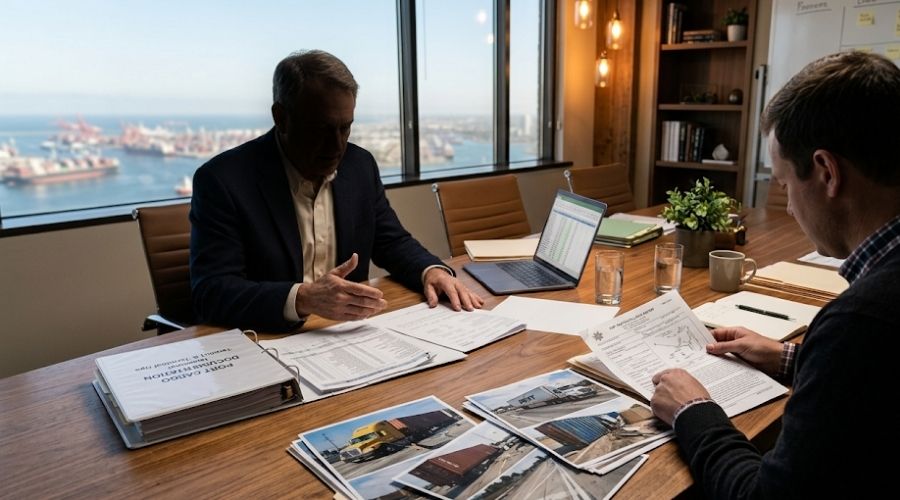
Port-area accident cases generate evidence categories that are both more valuable and more time-sensitive than standard car accident cases. ELD data recording the truck driver’s hours of service in the days before the crash is frequently overwritten on short cycles — sometimes within 24 to 72 hours — and must be preserved through a formal spoliation letter sent to the trucking company and port carrier on the first day an attorney is involved. Black box or ECM data capturing speed, braking, and engine performance in the seconds before impact is equally critical and equally vulnerable to overwriting.
Port terminal records — gate logs showing when a truck entered and exited the terminal, dispatch records, cargo manifests, and container inspection documentation — can establish driver fatigue patterns, pressure to meet cargo deadlines, and vehicle condition at the time of the crash. These records are maintained by port operators and drayage carriers and are not automatically shared after an accident. A preservation demand directed specifically at port terminal operators, in addition to the trucking company, is a step that most general practice attorneys overlook and that an experienced Long Beach personal injury attorney will take immediately.
Long Beach Personal Injury Attorney: What Local Experience Actually Means
A Long Beach personal injury attorney who regularly handles port-area and 710 Freeway claims brings case-specific knowledge that matters at every stage of the process. They know the specific intersection patterns on Ocean Boulevard and Alameda Street where fault is most frequently contested. They understand the port drayage regulatory framework and which compliance records to demand. They know which Caltrans infrastructure complaints have been filed for specific sections of the 710 and how prior notice of a dangerous condition strengthens a government entity claim. And they know how commercial port insurers operate — their timelines, their tactics, and the specific arguments they make in disputes involving drayage carriers.
At Oracle Law Firm, our personal injury attorneys handle commercial truck and port-area accident claims throughout Long Beach and the surrounding region, working on a contingency basis with no upfront fees. We begin preserving evidence from the moment you contact us — because in port-area cases, the first 24 hours determine how much evidence survives.
What to Do After a Port-Area Accident in Long Beach
Call 911 and remain at the scene until the responding officer prepares a report. If a commercial truck is involved, photograph the DOT number and carrier identification on the cab door, the trailer identification number, any port terminal markings on the container, and the truck’s license plate before anyone moves the vehicles. Note whether the truck appears to be carrying a container, and if so, whether it shows any shipping line or cargo owner branding — that information identifies additional potentially liable parties.
Seek medical attention the same day. Port-area freeway crashes tend to involve higher speeds and heavier vehicle mass than standard collisions, which means soft tissue injuries, concussions, and internal injuries from impacts with a vehicle weighing up to 80,000 pounds are common even when they do not present obvious symptoms immediately. Do not give a recorded statement to any insurance company before speaking with an attorney — commercial trucking insurers dispatch specialized adjusters to serious crash scenes and are prepared to begin building their liability defense within hours. Contact a Long Beach personal injury attorney as soon as possible so a preservation demand can be sent before critical evidence disappears. You can reach Oracle Law Firm for a free consultation today.
Frequently Asked Questions
Why are port-area accidents in Long Beach more complex than standard car crashes?
What is a port drayage truck and does it change my accident claim?
Is there a speed limit for commercial trucks on the 710 Freeway?
How dangerous are Long Beach roads compared to the rest of California?
What should I do immediately after a port-area accident in Long Beach?
Injured Near the Port of Long Beach? Talk to an Attorney Before Evidence Disappears
Port-area accident cases move on a faster evidence timeline than any other claim type. Oracle Law Firm | Accident & Injury Attorneys handles personal injury claims throughout Long Beach and the 710 Freeway corridor with no upfront fees — you only pay if we recover compensation for you. Contact our team today — the first 24 hours are the most important.