If you’ve been hit by a teen on an e-bike in Orange County, you might need an e-bike accident lawyer, and this is what you need to keep in mind.
You may have a personal injury claim against the rider and, in some circumstances, the parents. California law limits certain forms of parental liability for a child’s misconduct, but parents may also be responsible for their own negligence, such as allowing a child to use an unsafe or improperly classified electric motorcycle. Insurance coverage can be complicated because some homeowners’ policies exclude motorized vehicles. Document the incident, seek medical care, and learn which legal deadlines apply to your case.
You were walking out of a coffee shop in Newport Beach or crossing near a school in Irvine when a teenager on an electric bike came speeding down the sidewalk. Now you have a broken wrist, medical bills, and an important question: who pays for your injuries?
Understanding e-bike accident liability in Orange County can be complicated, especially when the rider is a minor and the vehicle may not legally qualify as an e-bike. Depending on the circumstances, the rider, the parents, another negligent party, or an applicable insurance policy may play a role in your claim.
E-bike crashes involving teenagers have become an increasing concern for families, pedestrians, and local communities. Injured people may not know where to turn, while parents may be uncertain about their legal responsibilities.
This guide explains when a teen rider or parent may be liable, how California e-bike laws affect personal injury claims, which insurance policies may provide coverage, and what to do after an accident. If you need an e-bike accident lawyer in Orange County, understanding these issues can help you make informed decisions about your next steps.
Who Is Liable When a Teen on an E-Bike Causes a Crash?
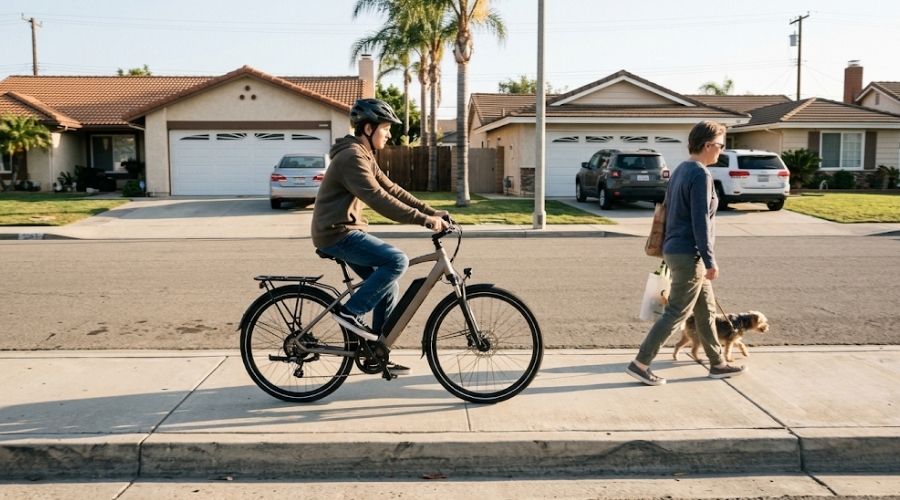
A teenager who negligently operates an e-bike may be held responsible for injuries caused by their conduct. Parents may also face liability for a child’s willful misconduct or for their own negligence. Depending on the circumstances, a motorist, property owner, or government entity could share responsibility.
Many people assume that a child cannot be held legally responsible for an accident. That is not necessarily true in California. A minor may be responsible for negligent conduct, although the applicable standard and the child’s age and circumstances can affect the analysis.
In practice, a teen may have limited personal assets or insurance. That makes parental liability and available insurance coverage important issues in an e-bike accident injury claim.
Responsibility may also be shared. Under California’s comparative fault rules, more than one party can contribute to an accident. For example, a driver who cuts off an e-bike rider may share responsibility if the rider subsequently strikes a pedestrian. A dangerous sidewalk condition could also raise questions about another party’s responsibility.
A thorough investigation can help determine who contributed to the collision and what sources of compensation may be available.
When Parents Are Responsible for a Child’s E-Bike Accident
California law provides different ways parents may face liability after a child’s e-bike accident. One involves statutory liability for certain willful misconduct by a minor. Another involves a parent’s own negligence, such as providing an inappropriate vehicle or failing to take reasonable precautions despite knowing about a serious risk.
The Willful Misconduct Rule
Under California Civil Code section 1714.1, a parent or guardian may be liable for certain injuries caused by a minor’s willful misconduct, subject to statutory conditions and limits.
Willful misconduct involves more than an ordinary accident. The specific conduct and evidence matter when determining whether the statutory requirements have been met.
The law limits this particular form of parental liability. The monetary cap is subject to statutory adjustments, so the amount quoted in older articles may no longer be current. Before relying on a specific figure, confirm the applicable limit with the current statute and official California court materials.
Importantly, this statutory rule does not mean parents are automatically liable for every accident involving their child.
When Parents Were Careless Themselves
A separate question is whether parents contributed to the accident through their own negligence. Under California Civil Code section 1714, people may be responsible for harm caused by their failure to exercise ordinary care.
Depending on the evidence, potential concerns may include parents who:
- Buy or modify a high-powered electric motorcycle for a child who cannot legally or safely operate it.
- Allow a child to use a vehicle that is prohibited for the child’s age or licensing status.
- Know that their child repeatedly rides recklessly and fail to take reasonable steps to address a foreseeable danger.
Whether a parent’s conduct amounts to negligence depends on the facts, including what the parent knew, what risks were reasonably foreseeable, and whether their conduct contributed to the injury.
The statutory cap for parental liability based on a child’s willful misconduct does not automatically cap a separate claim based on the parent’s own negligence. These are different legal theories that require separate analysis.
The key question is not simply whether the rider was a minor, but whether a parent independently contributed to the accident or is liable under a specific statute.
E-Bike Accident Liability in Orange County Starts With What the Teen Was Riding
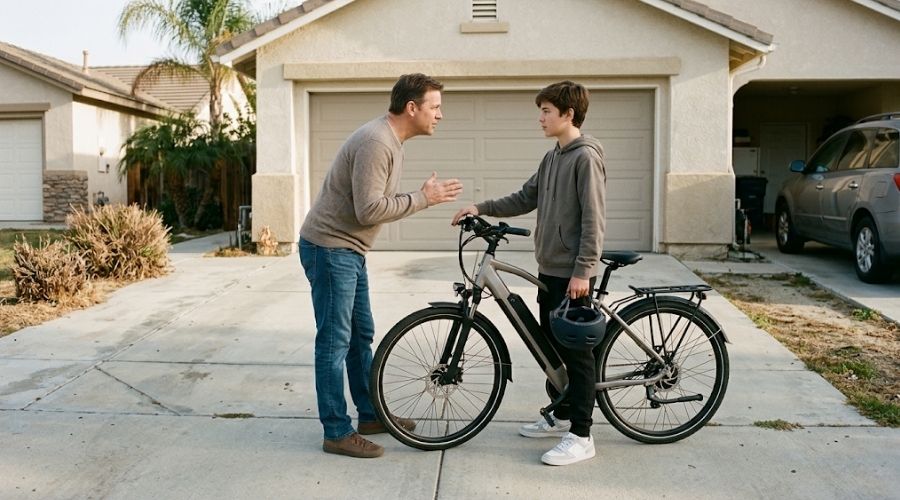
The type of vehicle involved can significantly affect an e-bike accident claim. A vehicle that meets California’s legal definition of an electric bicycle is treated differently from a high-powered electric motorcycle or moped.
California defines electric bicycles and their classifications under Vehicle Code section 312.5. Generally:
- Class 1 e-bikes provide pedal assistance up to 20 mph.
- Class 2 e-bikes provide motor assistance up to 20 mph, including through a throttle.
- Class 3 e-bikes provide pedal assistance up to 28 mph and are subject to additional operating restrictions.
California’s e-bike definition includes a motor of less than 750 watts. The legal classification depends on the vehicle’s design and operation, not simply the label a seller or rider gives it.
Age restrictions also matter. Class 3 e-bike riders must generally be at least 16 years old, and California has helmet requirements for riders under 18.
Some electric two-wheelers marketed to teenagers have substantially greater power or speed capabilities than legal e-bikes. Depending on their specifications and configuration, these devices may qualify as motorcycles or mopeds and be subject to different registration, licensing, and insurance requirements.
That distinction can be important in an illegal e-motorcycle accident liability case. Evidence that a device did not meet California’s e-bike requirements may help establish relevant facts about the vehicle and its operation. However, a legal violation does not automatically resolve every question of civil liability.
If you were injured by a teen riding an electric two-wheeler, preserve photographs of the vehicle, its pedals, motor labels, modifications, and any identifying information. These details may help an attorney assess the applicable laws and potential claims.
Which Insurance Pays After an E-Bike Accident?
Insurance coverage after an e-bike accident depends on the vehicle, the parties involved, and the specific policy language. A family’s homeowners’ or renters’ policy may provide personal liability coverage, but some policies exclude certain motorized vehicles. An umbrella policy or your own insurance may also be relevant.
This is often one of the most challenging parts of an e-bike accident injury claim. California does not generally require liability insurance for a qualifying legal e-bike, and a teenage rider may not have a separate insurance policy. Potential sources of coverage include the following.
- The family’s homeowners’ or renters’ insurance. These policies may include personal liability coverage, but exclusions for motorized vehicles can affect whether an e-bike or e-moto accident is covered. A California insurance broker explains how policy definitions can affect coverage for electric bicycles.
- An umbrella insurance policy. Some households have additional liability coverage that may apply when an underlying policy provides coverage, subject to the umbrella policy’s terms and exclusions.
- Your own health insurance. Health insurance may help pay for medical treatment while you pursue a claim. Deductibles, policy terms, and potential reimbursement rights may affect the final amount you receive.
- Your auto insurance’s uninsured motorist coverage. This coverage may be worth reviewing in some cases, particularly if the device qualifies as a motor vehicle under applicable law. Whether coverage applies depends on the policy and the facts of the crash.
Do not assume coverage is unavailable simply because an insurance adjuster says the policy excludes the vehicle. Ask for the relevant policy language and have the coverage decision reviewed where appropriate.
For anyone seeking an e-bike injury attorney in Orange County, identifying every potentially applicable insurance policy can be just as important as determining who caused the crash.
Orange County’s Crackdown on Teen E-Bike Riding
Orange County communities have increasingly focused on unsafe electric bicycle use, particularly when young riders operate high-powered devices or ride dangerously around pedestrians.
According to Voice of OC, trauma activations for e-bike injuries at CHOC rose from 38 in 2022 to 201 in 2025. The report also discussed cases involving parents and teenagers connected to alleged misuse of powerful electric motorcycles.
Schools and local governments have also taken steps to address safety concerns. KTLA reported on Newport-Mesa Unified School District’s restrictions on e-bike use by elementary and middle school students. Cities including Huntington Beach, Irvine, Garden Grove, and Fullerton have also considered or adopted local measures addressing e-bike safety.
These developments may be relevant to understanding the local context, but a news report, school restriction, or criminal charge does not automatically establish civil liability in an individual injury case.
Why does this matter if you were injured? A police report, citation, witness statement, or evidence that a vehicle violated applicable laws may help establish what happened. The legal significance of that evidence depends on the circumstances and the applicable rules.
If a teenager’s conduct or an improperly classified vehicle contributed to your injuries, an investigation can help determine whether the rider, a parent, or another party may be legally responsible.
What to Do If a Teen on an E-Bike Hit You
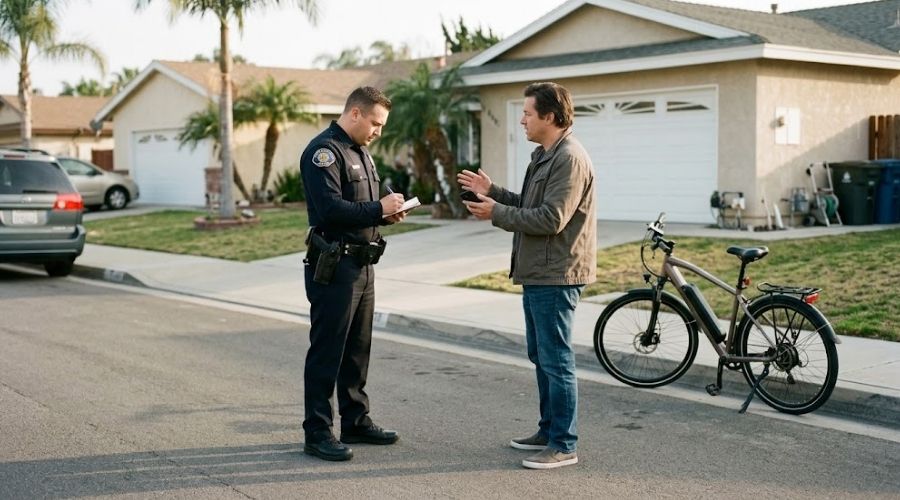
If a teenager on an e-bike hits you, prioritize medical care, report the collision when appropriate, and preserve evidence about both the incident and the vehicle. Avoid rushing into a settlement with the family or an insurer before understanding the extent of your injuries and the available coverage.
These accidents can be uncomfortable when the other rider is a child or someone from your neighborhood. Focus on documenting the facts and protecting your legal options.
Here are the most important steps to take:
- Call 911 when necessary and report the accident. Request police assistance, particularly if someone is injured or the circumstances warrant an official report.
- Get the rider’s information. Record the teenager’s name and, where appropriate, the contact details of a parent or guardian.
- Photograph the electric bike. Capture the pedals, motor label, identifying information, and visible modifications that may help determine whether the device is a legal e-bike or another type of vehicle.
- Identify witnesses. Obtain contact information and ask nearby businesses or residents whether they have relevant surveillance or doorbell camera footage.
- Seek medical care. Get evaluated promptly, follow your healthcare provider’s recommendations, and retain medical records and bills.
- Preserve communications and expenses. Keep repair estimates, receipts, photographs, and records of missed work.
- Do not sign a release prematurely. Before accepting money or signing settlement documents, understand what claims you may be giving up.
In most cases, California’s personal injury statute of limitations is two years under Code of Civil Procedure section 335.1. Different rules may apply in certain situations. For example, claims involving a government entity can require an administrative claim within a much shorter period, often six months, depending on the circumstances.
Evidence about the vehicle may disappear if it is sold, modified, or discarded. Acting promptly can help preserve information needed to evaluate an e-bike accident injury claim.
If your injuries include a head injury, do not ignore symptoms simply because they initially seem mild. Concussions and traumatic brain injuries can require prompt evaluation. Our brain injury attorneys can help you understand the legal issues associated with these injuries.
The Bottom Line
If a teenager hits you while riding an e-bike in Orange County, you may have options for pursuing compensation. The rider’s conduct, the parents’ actions, the vehicle’s legal classification, and the available insurance coverage can all affect your claim.
The most important first steps are to obtain medical care, document the vehicle and accident scene, identify potential witnesses, and determine which legal deadlines apply. A careful investigation can help establish whether the rider, a parent, or another party may be responsible.
Whether the crash happened near a school in Irvine, along the boardwalk in Newport Beach, or on a busy street in Costa Mesa, our personal injury team can help you understand your options following an accident in Orange County.
Been in an accident or hurt on the job? You don’t have to navigate insurance companies alone. Oracle Law Firm fights to get you the compensation, control, and clarity you deserve.
Get a Free Consultation or call 888.597.4099.
Disclaimer: This article is for general information only and is not legal advice. Reading it does not create an attorney-client relationship. Every case depends on its own facts, and past results do not guarantee future outcomes. For advice about your situation, speak with a licensed California attorney.
Frequently Asked Questions
Can I sue a minor who hit me on an e-bike in California?
Yes. Minors in California can be held responsible for their own negligence, though their age and experience are considered. Because teens rarely have money or insurance, these claims often focus on the parents’ liability and on any insurance policy that covers the household.
Are parents liable if their child causes an e-bike accident?
They can be. Under Civil Code section 1714.1, parents may be responsible for a child’s willful misconduct, up to a capped amount that was $52,700 per incident as of July 2023. Parents can face broader liability for their own negligence, such as buying a child an illegal e-moto or ignoring known reckless riding.
Does homeowner’s insurance cover e-bike accidents?
Occasionally. Many homeowner’s and renter’s policies include personal liability coverage but exclude motorized vehicles, and some define any self-propelled device as a motor vehicle. Whether a specific crash is covered depends on the exact policy language, so it is worth having a lawyer review it.
What is the difference between an e-bike and an e-moto in California?
A legal e-bike has working pedals, a motor of 750 watts or less, and fits into Class 1, 2, or 3. Devices that exceed those limits are treated as mopeds or motorcycles, which require registration, a motorcycle license, and insurance. Riding one illegally can be evidence that the rider was careless.
How long do I have to file a claim after an e-bike rider hits me?
Most California personal injury lawsuits must be filed within two years of the injury. If a city sidewalk or road defect played a role, a claim against the government may need to be filed within six months. Acting early also helps preserve evidence about the device.