Getting pulled over without a valid driver’s license in California is one of those situations that feels manageable in the moment — until you realize how quickly the consequences can pile up. Depending on why you do not have a license and whether this is your first time being caught, you could be looking at fines, a criminal charge, a vehicle impounded on the spot, and lasting complications if an accident is involved. Understanding exactly what you are facing is the first step toward handling it the right way.
What California Law Actually Says
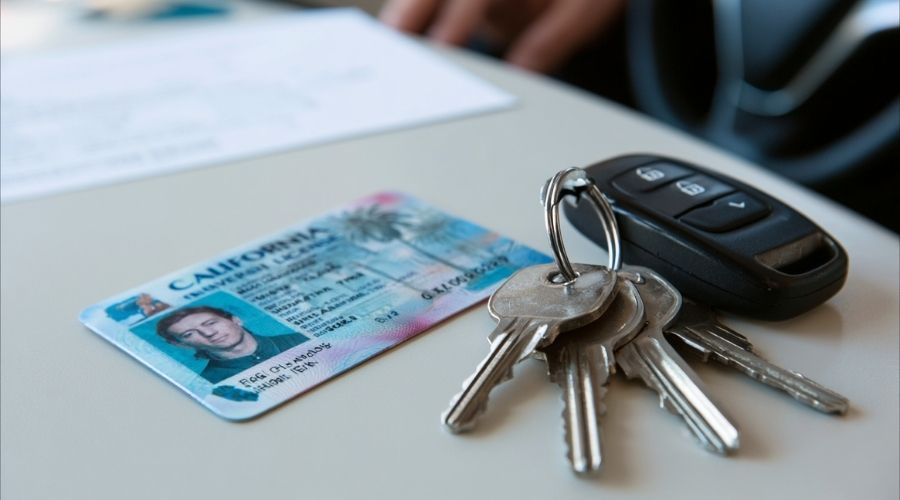
California Vehicle Code Section 12500 makes it illegal to operate any motor vehicle — cars, motorcycles, and commercial vehicles included — without holding a valid driver’s license issued by the California DMV. There is no gray area here: the law requires every driver to have an appropriate, current license in their possession while driving.
It is worth noting the distinction California courts draw between two very different situations. The first is forgetting your license at home. If you are a licensed driver who simply left their wallet on the kitchen counter, that is a lesser offense under Vehicle Code Section 12951. You may receive a ticket, but it can often be dismissed when you present your valid license to the court. The second — and far more serious — situation is driving without a license at all: never having obtained one, having it expired, or having it suspended or revoked. That is where Vehicle Code 12500 applies and where the real legal exposure begins.
The “Wobbler” — Infraction or Misdemeanor?
Under California law, driving without a license is what is called a “wobbler” offense. That means it can be charged either as an infraction or as a misdemeanor, and the distinction matters enormously. AB 1754, which took effect in January 2024, confirmed this wobbler status explicitly.
A first-time offense with no aggravating factors is typically charged as an infraction, which carries a base fine of up to $250. That sounds manageable, but California courts add penalty assessment fees on top of base fines, which can multiply the total you actually owe. If the charge is elevated to a misdemeanor — which is more likely for repeat offenses, or when the license was suspended due to a DUI or other serious violation — the penalties escalate sharply: up to six months in county jail and a fine of up to $1,000, plus those same penalty assessments on top.
California driving without a license — fines & penalties 2026
Vehicle Code 12500 (no license) vs. Vehicle Code 14601 (suspended/revoked)
VC 12500 — no valid license
Base fine
Up to $250
+ penalty assessments (can 3–5× total)
Fine + jail
Up to $1,000
+ up to 6 months county jail
Vehicle impound
Up to 30 days
+ daily storage & tow fees
VC 14601 — suspended or revoked license
About penalty assessments: California courts add multiple fee multipliers on top of every base fine. A $250 base fine can reach $1,000–$1,500 in total. A $1,000 base fine can exceed $4,000. Impound storage fees are typically $50–$85/day and are billed separately from all fines. Penalty structure confirmed unchanged for 2024–2026 (AB 1754, Jan 2024).
Your Vehicle Can Be Impounded on the Spot
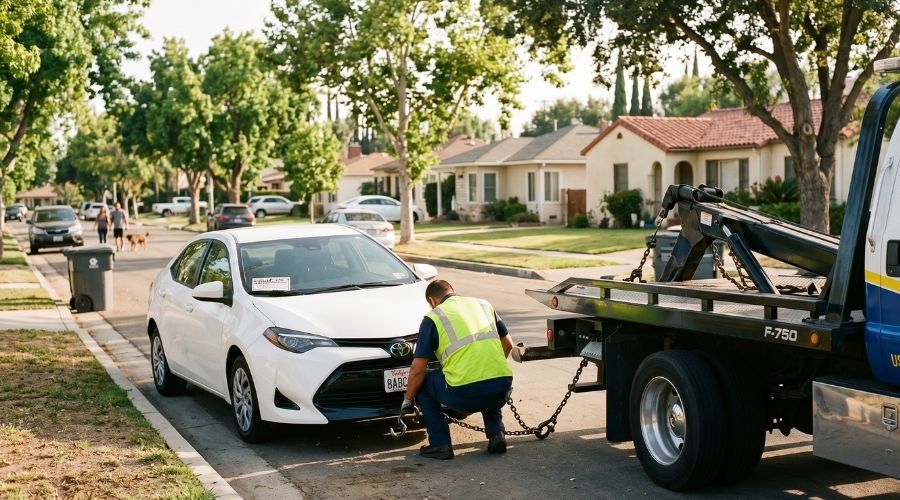
One of the most immediate and costly consequences of being caught driving without a license is vehicle impoundment. California law gives officers the authority to impound a vehicle for up to 30 days in these situations, and they frequently do so. Once your car is in impound, you are on the hook for towing fees and daily storage costs — charges that accumulate fast and can easily exceed the fine itself before you even get a chance to address the underlying citation.
To retrieve your vehicle, you will typically need to show proof of a valid license and pay every outstanding fee in full. If you cannot quickly obtain a valid license, the financial pressure of a mounting impound bill becomes its own serious problem.
Driving on a Suspended or Revoked License Is a Separate — and Harsher — Offense
There is an important line between never having obtained a license and having had one taken away. Driving on a suspended or revoked license falls under Vehicle Code 14601 and related statutes, and California treats it much more seriously than a simple failure to obtain a license. The penalties under 14601 include mandatory minimum fines, potential jail time, and a more complicated path to reinstatement. If the suspension resulted from a DUI conviction, the consequences are harsher still — and a subsequent unlicensed driving charge will compound everything that came before it.
Licenses can be suspended for a range of reasons beyond DUI: unpaid traffic tickets, failure to appear in court, certain medical conditions reported to the DMV, failure to pay child support, or accumulating too many points on your driving record. Whatever the reason, driving during a suspension period creates serious legal exposure that is worth understanding before getting behind the wheel.
What Happens if You Are in an Accident Without a License
This is where things become most legally complex. If you are involved in a car accident while driving without a license, the consequences extend well beyond the traffic violation itself.
First, the good news: driving without a license does not, by itself, eliminate your right to seek compensation if another driver caused the accident through their own negligence. California’s personal injury laws focus on who was at fault for the collision — not on whether both drivers had valid licenses. If the other driver ran a red light and hit you, that driver’s negligence does not disappear because of your license status. You may still be entitled to recover economic damages including medical expenses and lost wages.
However, insurance companies are keenly aware of license violations and will use them as leverage to reduce settlement offers or argue that your fault percentage is higher than it actually is. Having an experienced attorney who can counter those tactics makes a measurable difference in what you ultimately recover. Our team at Oracle Law Firm regularly handles cases involving complicated liability questions, including those where one or both drivers had non-standard license situations at the time of the crash.
The Critical Difference: No License vs. No Insurance
It is worth being clear about a distinction that trips many people up. Driving without a license and driving without insurance are two separate violations — and when it comes to accident compensation, driving without insurance has far more severe consequences than driving without a license.
California’s Proposition 213 (Civil Code Section 3333.4) bars uninsured drivers from recovering non-economic damages — things like pain and suffering — in a personal injury claim, even if the other driver was entirely at fault. That restriction does not apply simply because you lacked a license. The license issue affects your criminal exposure; the insurance issue affects your civil rights in court. If you were driving without either, you are dealing with both sets of consequences simultaneously, which is exactly when legal guidance becomes essential. You can learn more about navigating this situation in our guide on dealing with accidents caused by uninsured drivers.

Steps to Take if You Are Pulled Over Without a License
How you handle the stop itself matters. Stay calm, be respectful to the officer, and do not volunteer information beyond what is legally required. You are not obligated to explain your entire driving history on the roadside. Accept any citation issued without argument. If your vehicle is being impounded, document the process — note the tow company, the impound lot location, and the officer’s badge number.
If the stop is connected to an accident, do not make statements about fault to anyone at the scene — not to the other driver, not to witnesses, and not to insurance adjusters who may call you in the days that follow. Contact an attorney before you give any recorded statement. The legal picture after an accident is always more complicated than it appears at the roadside, and protecting your rights starts with the words you choose in those first moments.
Frequently Asked Questions
Is driving without a license a misdemeanor or infraction in California?
What is the fine for driving without a license in California?
Can my car be impounded if I am caught driving without a license?
What is the difference between not having a license and driving on a suspended license?
Can I still recover compensation after a car accident if I was driving without a license?
Hurt in an Accident? Talk to an Attorney — No Cost, No Obligation
Whether or not you had a valid license at the time of a crash, if someone else’s negligence caused your injuries, you have rights worth protecting. Oracle Law Firm | Accident & Injury Attorneys offers free, confidential consultations across California with no upfront fees — you only pay if we win your case. Contact our team today to find out exactly where you stand.